

10XO image
Deposition Date 2026-02-11
Release Date 2026-06-03
Last Version Date 2026-07-01
Entry Detail
PDB ID:
10XO
Title:
Streptomyces lividans DnaA DI protein in the P6(1)22 space group
Biological Source:
Source Organism(s):
Expression System(s):
Method Details:
Experimental Method:
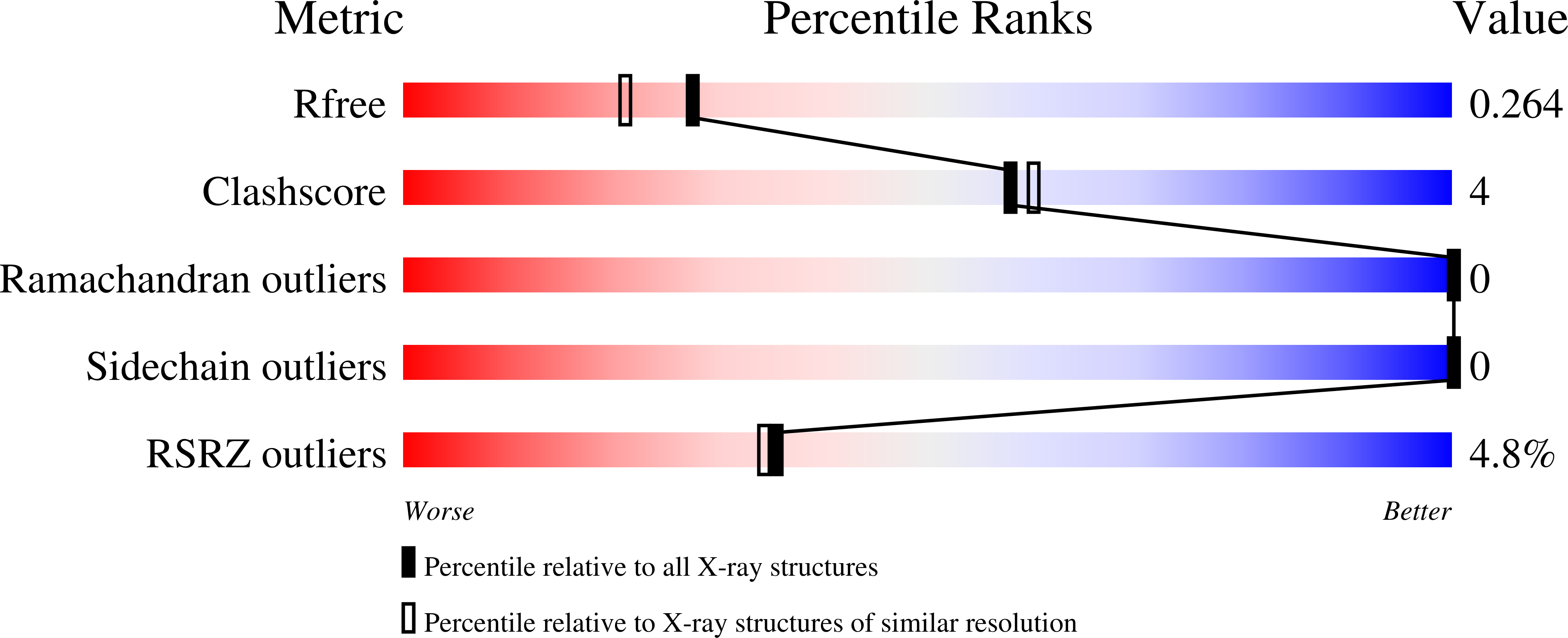
Resolution:
2.00 Å
R-Value Free:
0.26
R-Value Work:
0.22
R-Value Observed:
0.23
Space Group:
P 61 2 2
Macromolecular Entities
Polymer Type:polypeptide(L)
Molecule:Chromosomal replication initi
Gene (Uniprot):dnaA
Chain IDs:A
Chain Length:93
Number of Molecules:1
Biological Source:Streptomyces lividans
Primary Citation
Structures of DnaA domain I reveal a dimer conserved across Actinomycetes.
Nucleic Acids Res. 54 ? ? (2026)
PMID: 42301917 DOI: 10.1093/nar/gkag596

Abstact

DNA replication is a fundamental process in biology, and initiation marks a key regulatory step. In bacteria, DNA replication is initiated by the DnaA protein. DnaA exhibits multidomain architecture, consisting of an N-terminal domain I, linker region, AAA+ family ATPase cassette, and C-terminal DNA-binding motif. Taxon-specific regulatory functions are primarily coordinated by the DnaA domain I (DnaADI), which exhibits substantial sequence variation across bacteria. Notably, although DnaADI has been shown to be essential, its contributions to initiation are not completely understood. Previous studies suggested a role for DnaADI in the assembly of the initiation complex at the origin. However, the molecular mechanisms behind DnaADI functions have not been resolved. Here, we report the DnaADI structures from 10 species in the class Actinomycetes. Strikingly, all structures reveal the same, unique dimer, and our analyses show that key elements that support DnaADI self-interaction are broadly conserved across the class Actinomycetes. Further, a suite of biochemical oligomerization assays and HDX-MS (hydrogen-deuterium exchange mass spectrometry) studies support the formation of dimers with microM affinities. These findings suggest that weak DnaADI dimerization, which is a broadly conserved mechanism across the Actinomycetes, likely contributes to proper replication initiation in these bacteria.

Legend

Protein

Chemical

Disease

Primary Citation of related structures
Feedback Form
Name
Email
Institute
Feedback