

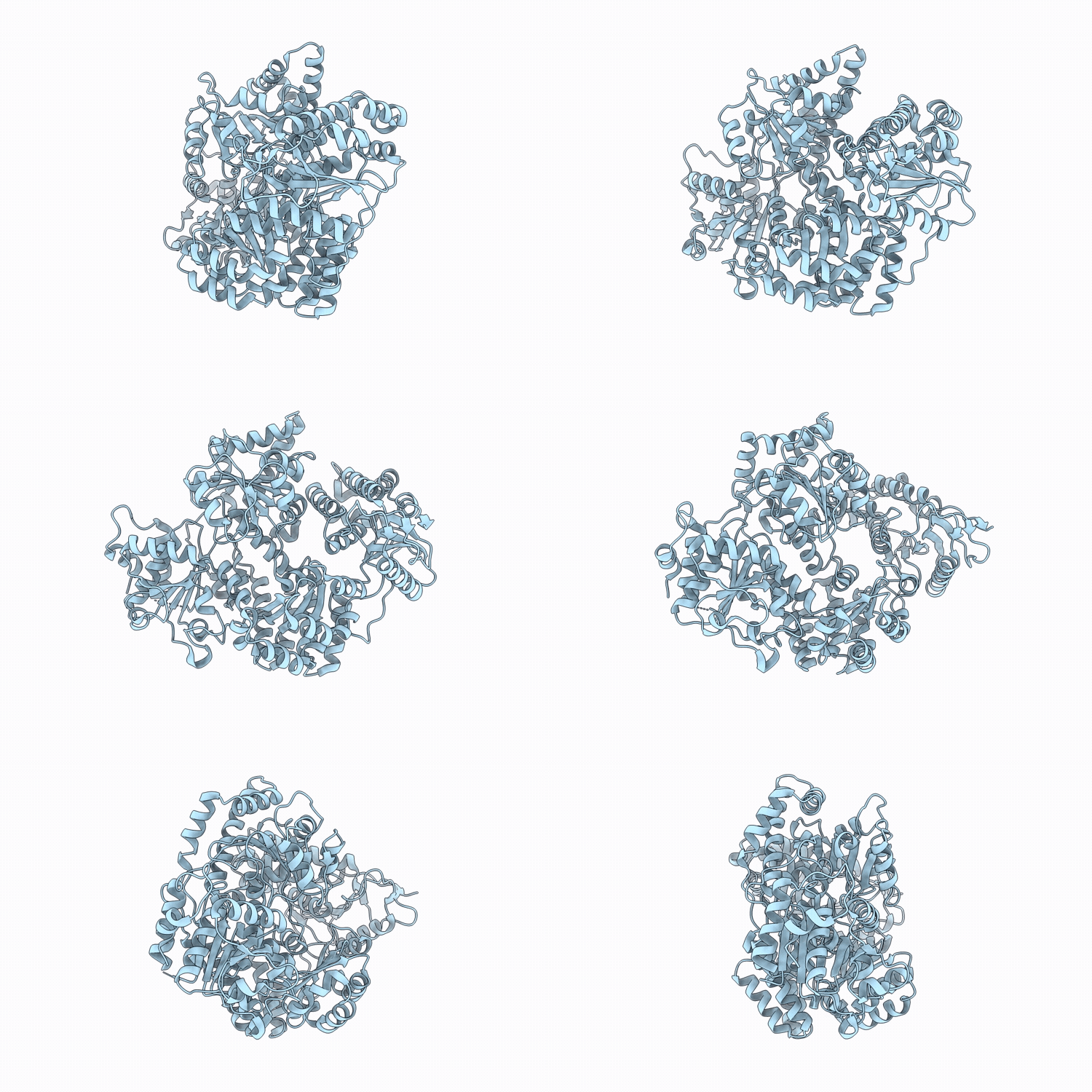
10UJ image
Deposition Date 2026-02-09
Release Date 2026-06-03
Last Version Date 2026-06-03
Entry Detail
PDB ID:
10UJ
Keywords:
Title:
Hna Monomer
Biological Source:
Source Organism(s):
Expression System(s):
Method Details:
Experimental Method:
Resolution:
3.90 Å
Aggregation State:
PARTICLE
Reconstruction Method:
SINGLE PARTICLE

Macromolecular Entities
Structures with similar UniProt ID
Protein Blast
Polymer Type:polypeptide(L)
Molecule:Helicase ATP-binding domain-c
Gene (Uniprot):SMa2245
Chain IDs:A
Chain Length:845
Number of Molecules:1
Biological Source:Sinorhizobium meliloti
Ligand Molecules
Primary Citation
Phage-encoded factor stimulates DNA degradation by the Hna anti-phage defense system.
Nat Commun ? ? ? (2026)
PMID: 42151145 DOI: 10.1038/s41467-026-73157-2

Abstact

Prokaryotic organisms have evolved unique strategies to acquire immunity against the constant threat of bacteriophage (phage) and mobile genetic elements. Hna is a broadly distributed anti-phage immune system that confers resistance against diverse phage by eliciting an abortive infection response. Using a combination of biochemistry, cryo-electron microscopy, and single-molecule fluorescence imaging, we reveal that Hna functions as a 3'-5' single-stranded DNA exonuclease that forms an auto-inhibited dimer under physiological ATP concentrations. Biochemical and mutational analyses demonstrate that Hna catalytic outputs are governed by kinetic partitioning between ATPase and nuclease active sites. Disruption of this balance enhances DNA cleavage and causes cellular toxicity. Furthermore, we show that a phage-encoded single-stranded DNA-binding protein (5 A SSB) destabilizes the autoinhibited Hna dimer and shifts catalytic partitioning toward dysregulated nuclease activation. Conversely, phage escape mutants encode SSB variants that evade Hna surveillance by adopting higher order stoichiometries with enhanced DNA binding affinity. Our work establishes the molecular basis of Hna-mediated anti-phage activity and provides insights into how phage-encoded proteins can directly stimulate a bacterial immune response.

Legend

Protein

Chemical

Disease

Primary Citation of related structures
Feedback Form
Name
Email
Institute
Feedback