

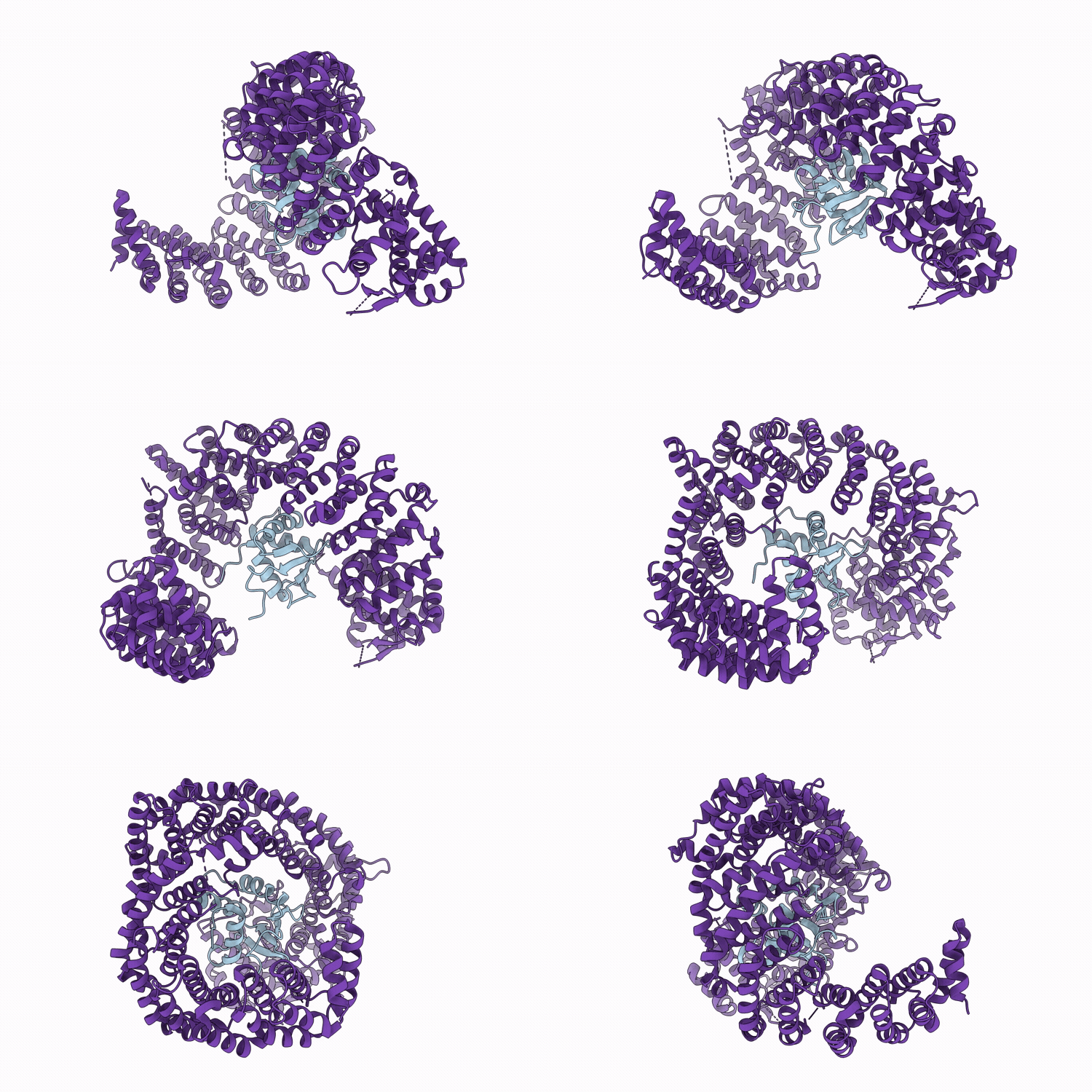
10SM image
Deposition Date 2026-02-05
Release Date 2026-05-27
Last Version Date 2026-05-27
Entry Detail
PDB ID:
10SM
Keywords:
Title:
Importin-9 bound to ETS homologous factor (EHF)
Biological Source:
Source Organism(s):
Homo sapiens (Taxon ID: 9606)
Expression System(s):
Method Details:
Experimental Method:
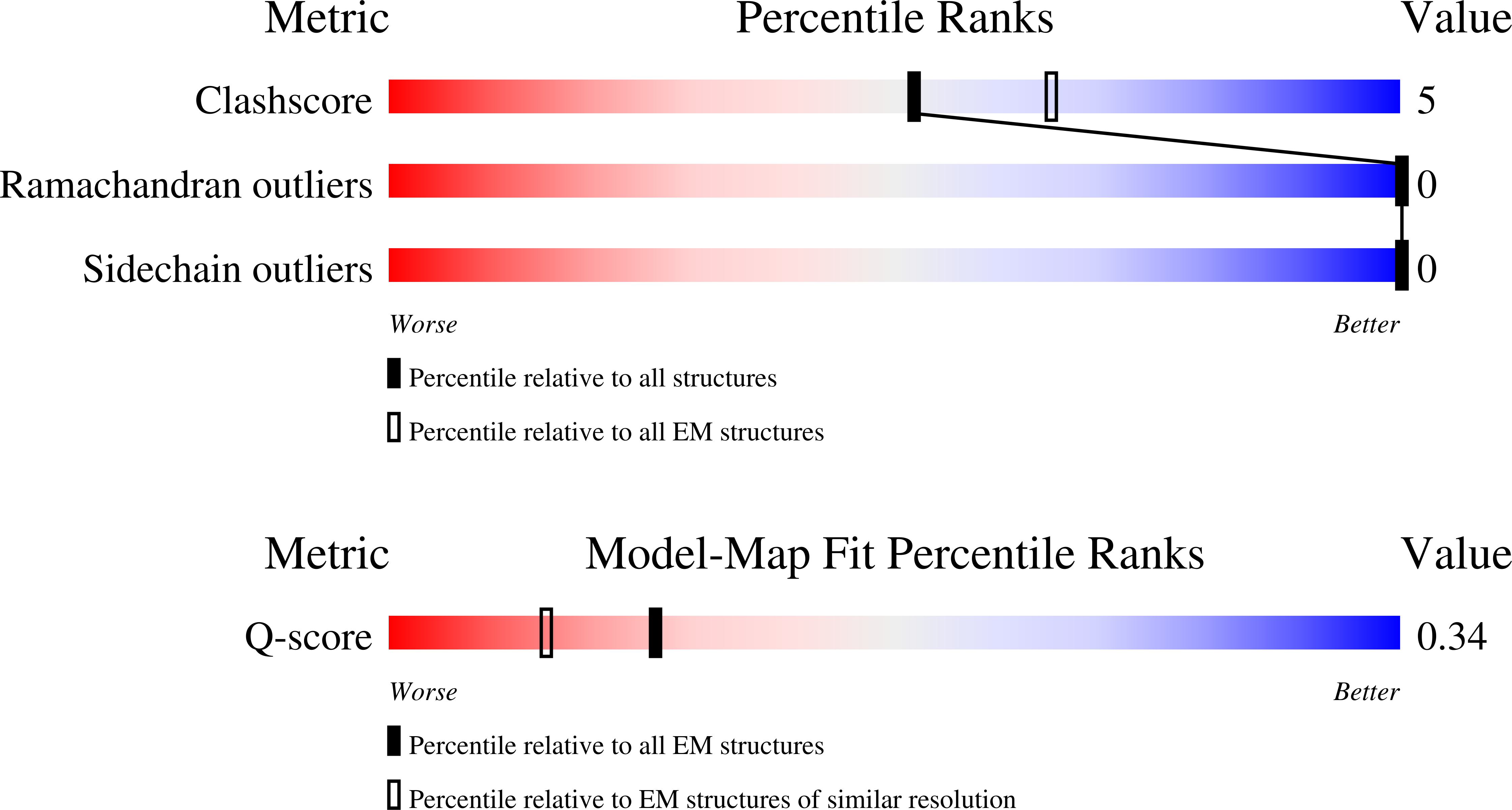
Resolution:
3.50 Å
Aggregation State:
PARTICLE
Reconstruction Method:
SINGLE PARTICLE
Macromolecular Entities
Structures with similar UniProt ID
Protein Blast
Polymer Type:polypeptide(L)
Molecule:ETS homologous factor
Gene (Uniprot):EHF
Chain IDs:A
Chain Length:300
Number of Molecules:1
Biological Source:Homo sapiens
Structures with similar UniProt ID
Protein Blast
Polymer Type:polypeptide(L)
Molecule:Importin-9
Gene (Uniprot):IPO9
Chain IDs:B (auth: D)
Chain Length:1041
Number of Molecules:1
Biological Source:Homo sapiens
Ligand Molecules
Primary Citation
Importin-9 recognizes the winged-helix fold of ETS transcription factors to mediate nuclear import.
Proc.Natl.Acad.Sci.USA 123 e2536763123 e2536763123 (2026)
PMID: 42066049 DOI: 10.1073/pnas.2536763123

Abstact

Protein trafficking between the cytoplasm and the nucleus is a fundamental process in eukaryotic cell biology. While linear nuclear localization signals (NLSs) are well characterized, many nuclear proteins lack a predictable NLS. Here, we identify the ETS domain, a DNA-binding winged-helix fold, from ETS family transcription factors as a structure-encoded NLS. We show that ETS domains mediate nuclear import through direct nanomolar affinity recognition by IPO9. Cryo-electron microscopy analysis of the EHF:IPO9 complex reveals that the IPO9 wraps around the ETS domain and engages structural features throughout the winged-helix fold. Biochemical studies demonstrate that the ETS domain DNA-binding helix is critical for importin recognition and for NLS activity in mammalian cells. Comparison of IPO9 bound to EHF and the histone H2A:H2B dimer reveals distinct interaction hotspots, illustrating how IPO9 employs unique combinatorial binding surfaces to accommodate structurally diverse cargos. These findings define a unique class of globular NLSs and highlight the adaptability of importins in recognizing distinct protein folds.

Legend

Protein

Chemical

Disease

Primary Citation of related structures
Feedback Form
Name
Email
Institute
Feedback