

10QY image
Deposition Date 2026-02-02
Release Date 2026-09-30
Last Version Date 2026-09-30
Entry Detail
PDB ID:
10QY
Title:
Cryo-EM structure of the Rad1-Rad10-Saw1 complex
Biological Source:
Source Organism(s):
Expression System(s):
Method Details:
Experimental Method:
Resolution:
3.70 Å
Aggregation State:
PARTICLE
Reconstruction Method:
SINGLE PARTICLE
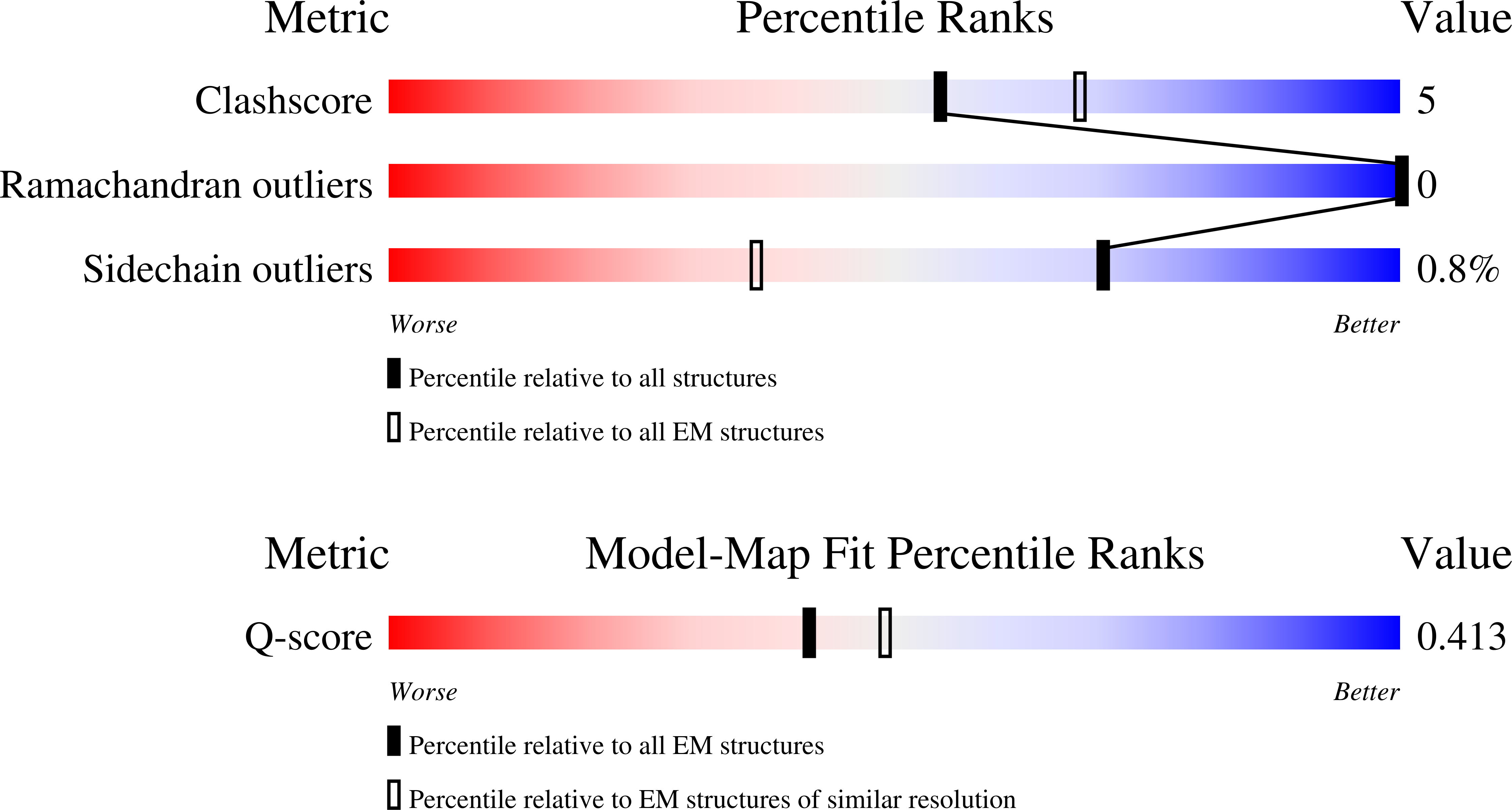
Macromolecular Entities
Polymer Type:polypeptide(L)
Molecule:DNA repair protein RAD1
Gene (Uniprot):RAD1
Chain IDs:A
Chain Length:0
Number of Molecules:1
Biological Source:Saccharomyces cerevisiae
Polymer Type:polypeptide(L)
Molecule:DNA repair protein RAD10
Gene (Uniprot):RAD10
Chain IDs:B
Chain Length:0
Number of Molecules:1
Biological Source:Saccharomyces cerevisiae
Polymer Type:polypeptide(L)
Molecule:Single-strand annealing weake
Gene (Uniprot):SAW1
Chain IDs:C
Chain Length:0
Number of Molecules:1
Biological Source:Saccharomyces cerevisiae
Ligand Molecules
Primary Citation
Rad1-Rad10 uses different interfaces to interact with pathway-specific DNA repair factors.
Nucleic Acids Res. 54 ? ? (2026)
PMID: 42745665 DOI: 10.1093/nar/gkag888

Abstact

Saccharomyces cerevisiae Rad1-Rad10 (XPF-ERCC1 in humans) is a 3'-flap endonuclease with key roles in DNA repair. Pathway-specific repair factors determine its recruitment to specific DNA substrates. Saw1 recruits it to 3' non-homologous tail recombination intermediates, while Rad14 recruits it to UV-lesions repaired by nucleotide excision repair. However, the exact recruitment mechanisms are unknown. We determined the cryo-EM structure of the Rad1-Rad10-Saw1 complex at 3.7 A resolution. The structure reveals that Saw1 wraps around the helicase-like domain of Rad1 defining an extensive interface. Point mutations on this surface disrupt the interaction and inhibit double-strand break repair without compromising nucleotide excision repair, indicating that Rad1-Rad10 uses different surfaces to interact with pathway-specific repair factors. Mutational analyses confirm that Rad14 and Saw1 bind to opposite faces of Rad1. Accordingly, defects on the Rad14-binding interface disrupt nucleotide excision repair without affecting double-strand break repair. In contrast to XPF-ERCC1, Rad1-Rad10 does not adopt an auto-inhibited conformation in the absence of DNA indicating that substrate binding may be regulated differently across species. Collectively, our data provide structural insight into how targeting factors interact with Rad1-Rad10 to recruit it to different DNA repair intermediates.

Legend

Protein

Chemical

Disease

Primary Citation of related structures
Feedback Form
Name
Email
Institute
Feedback