

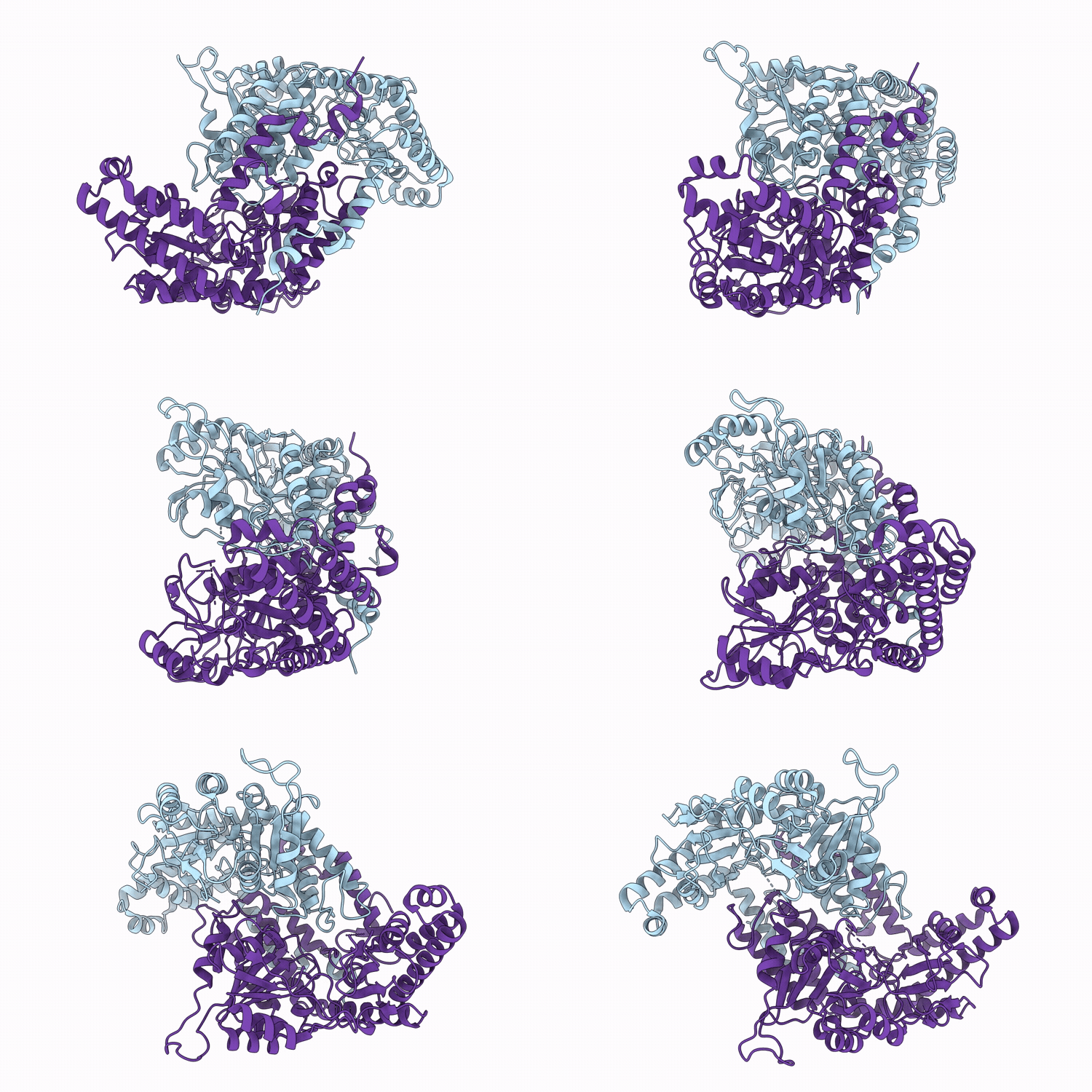
10NM image
Deposition Date 2026-01-28
Release Date 2026-04-08
Last Version Date 2026-04-22
Entry Detail
PDB ID:
10NM
Keywords:
Title:
CRYO-EM STRUCTURE OF THE A149T DIMER VARIANT OF SERINE HYDROXYMETHYLTRANSFERASE 8 FROM SOYBEAN CULTIVAR ESSEX IN COMPLEX WITH PLP
Biological Source:
Source Organism(s):
Glycine max (Taxon ID: 3847)
Expression System(s):
Method Details:
Experimental Method:
Resolution:
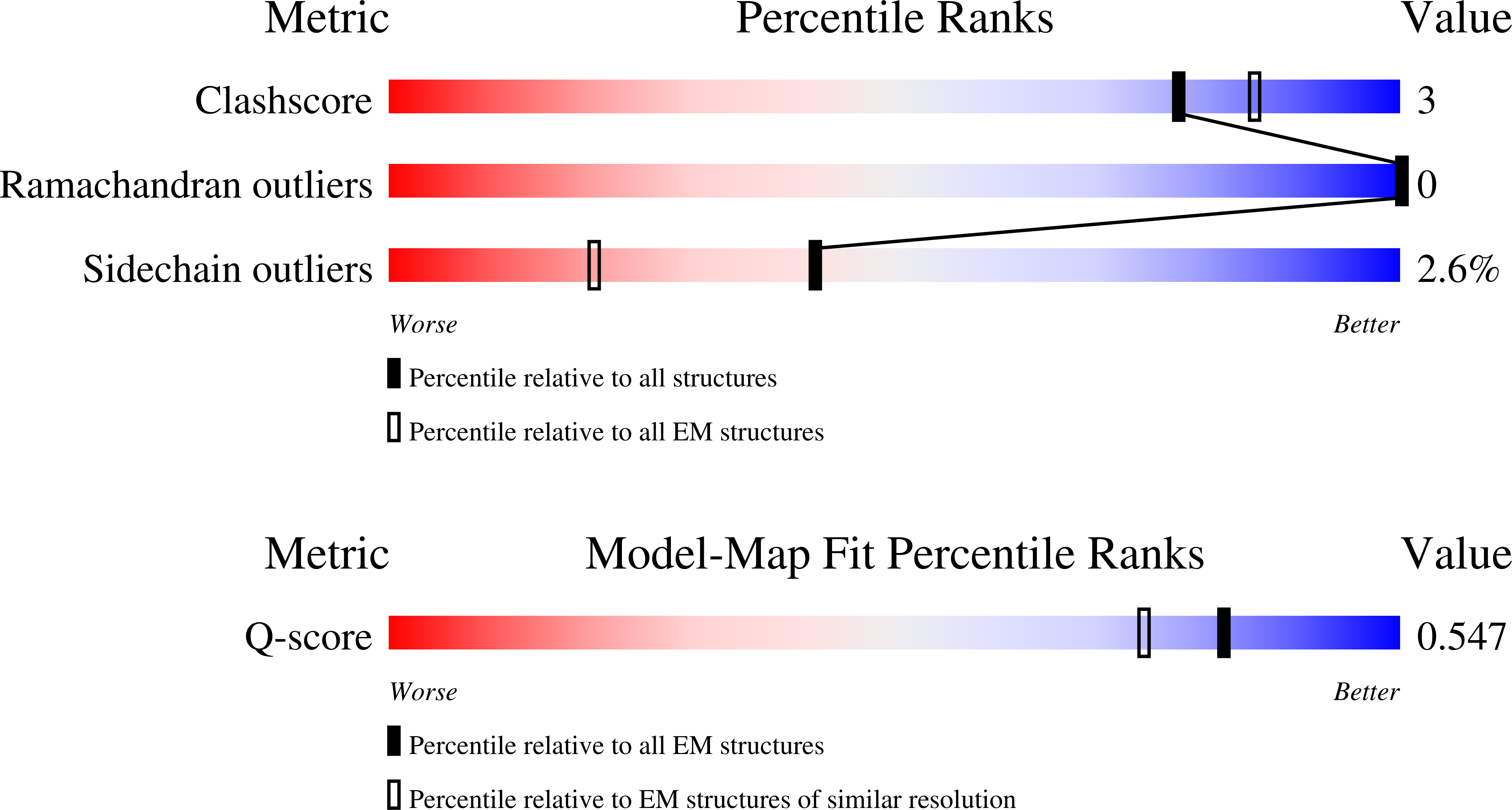
2.92 Å
Aggregation State:
PARTICLE
Reconstruction Method:
SINGLE PARTICLE
Macromolecular Entities
Structures with similar UniProt ID
Protein Blast
Polymer Type:polypeptide(L)
Molecule:Serine hydroxymethyltransfera
Gene (Uniprot):SHMT
Mutagens:A149T
Chain IDs:A, B
Chain Length:492
Number of Molecules:2
Biological Source:Glycine max
Modified Residue
Compound ID Chain ID Parent Comp ID Details 2D Image
LLP A LYS modified residue
Ligand Molecules
Primary Citation
Oligomeric defects in soybean serine hydroxymethyltransferase 8: tetramer destabilization by A149T and other variants associated with soybean cyst nematode resistance.
FEBS J. ? ? ? (2026)
PMID: 41914311 DOI: 10.1111/febs.70528

Abstact

Serine hydroxymethyltransferase (SHMT) is a conserved enzyme in folate-mediated one-carbon metabolism, where it contributes to nucleotide biosynthesis, methylation capacity, and cellular stress responses. Amino acid polymorphisms of soybean SHMT8 are known to affect the resistance of soybean to its primary pathogen, the soybean cyst nematode (SCN). A set of SHMT8 variants from ethyl methanesulfonate (EMS)-mutagenized soybean populations has been identified with varying resistance phenotypes, but their biochemical consequences remain poorly understood. Here, we use biochemical and structural studies to assess the impacts of the A149T variant on soybean SHMT8. Despite the conservative nature of the substitution, A149T reduces folate binding, pyridoxal-5'-phosphate-dependent catalysis, and thermal stability. High-resolution crystal structures (1.9-2.3 A resolution) reveal only very minor structural changes. However, while the usual tetrameric assembly of the enzyme is retained at the high protein concentration in crystals, multiple other methods including a 2.9 A cryo-electron microscopy (cryo-EM) structure show that the A149T variant is predominantly a dimer. Significant structural changes in the dimer are consistent with the observed biochemical impacts of the variant and help explain the well-known reduction in activity associated with dimerization of SHMT in other systems. We also find destabilization of the tetrameric assembly in other SHMT8 variants associated with changes in SCN resistance, suggesting that weakened oligomerization may be a common consequence of such mutations. Together, these results highlight quaternary structure as a critical determinant of SHMT8 activity and stability and suggest a potential mechanistic link between enzyme biochemistry and soybean defense.

Legend

Protein

Chemical

Disease

Primary Citation of related structures
Feedback Form
Name
Email
Institute
Feedback