

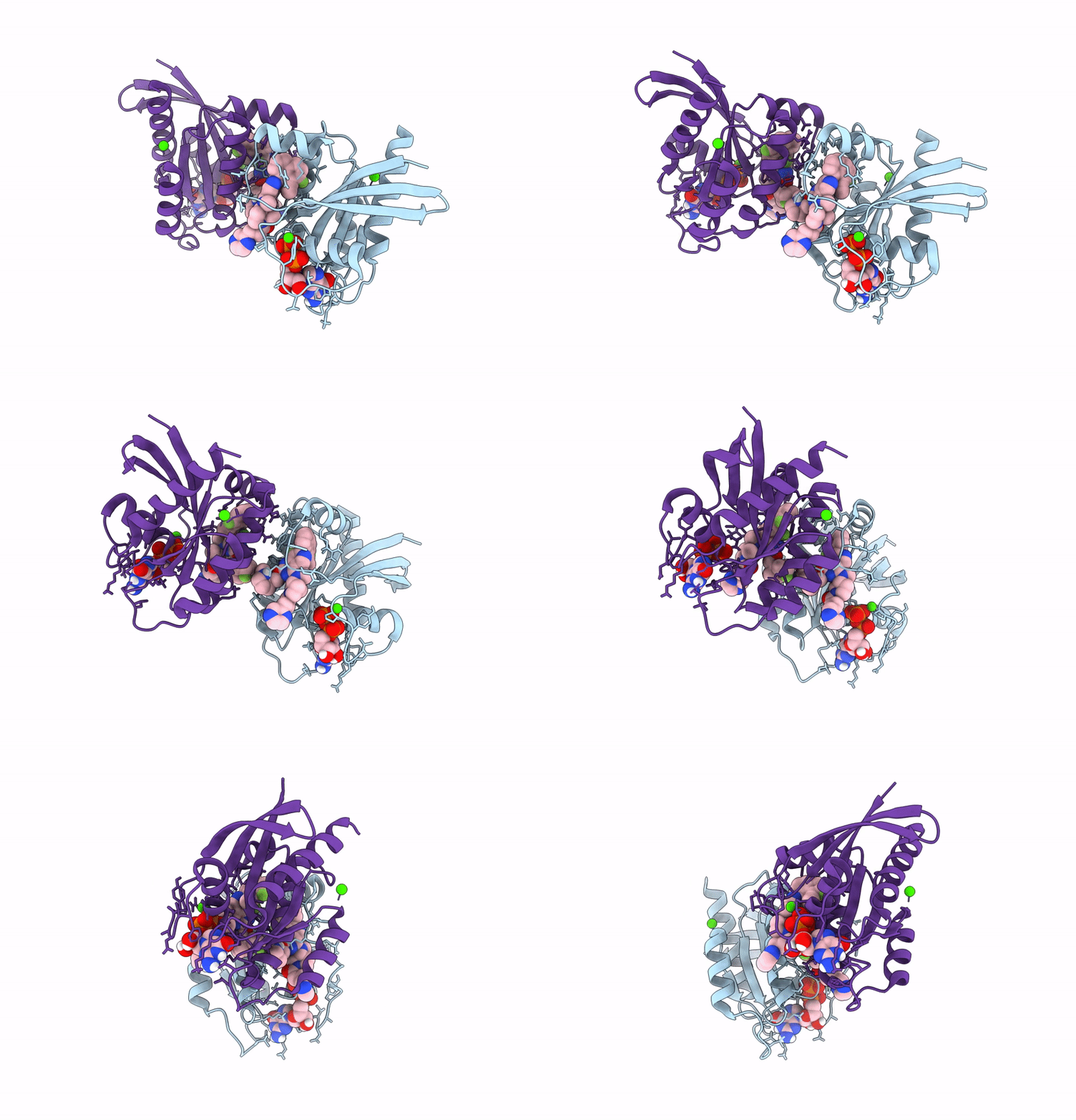
10JT image
Deposition Date 2026-01-22
Release Date 2026-03-04
Last Version Date 2026-03-18
Entry Detail
PDB ID:
10JT
Keywords:
Title:
CRYSTAL STRUCTURE OF KIRSTEN RAT SARCOMA G12C COMPLEXED WITH GMPPNP AND COVALENTLY BOUND TO 1-[(2R,3R)-3-{[(7P)-7-(8-ethynyl-7-fluoronaphthalen-1-yl)-8-fluoro-2-{ [(2R,4R,7aS)-2-fluorotetrahydro-1H-pyrrolizin-7a(5H)-yl]methoxy}pyrido[4,3-d] pyrimidin-4-yl](methyl)amino}-2-methylpyrrolidin-1-yl]-3-(pyrazin-2-yl)propan-1-one
Biological Source:
Source Organism(s):
Homo sapiens (Taxon ID: 9606)
Expression System(s):
Method Details:
Experimental Method:
Resolution:
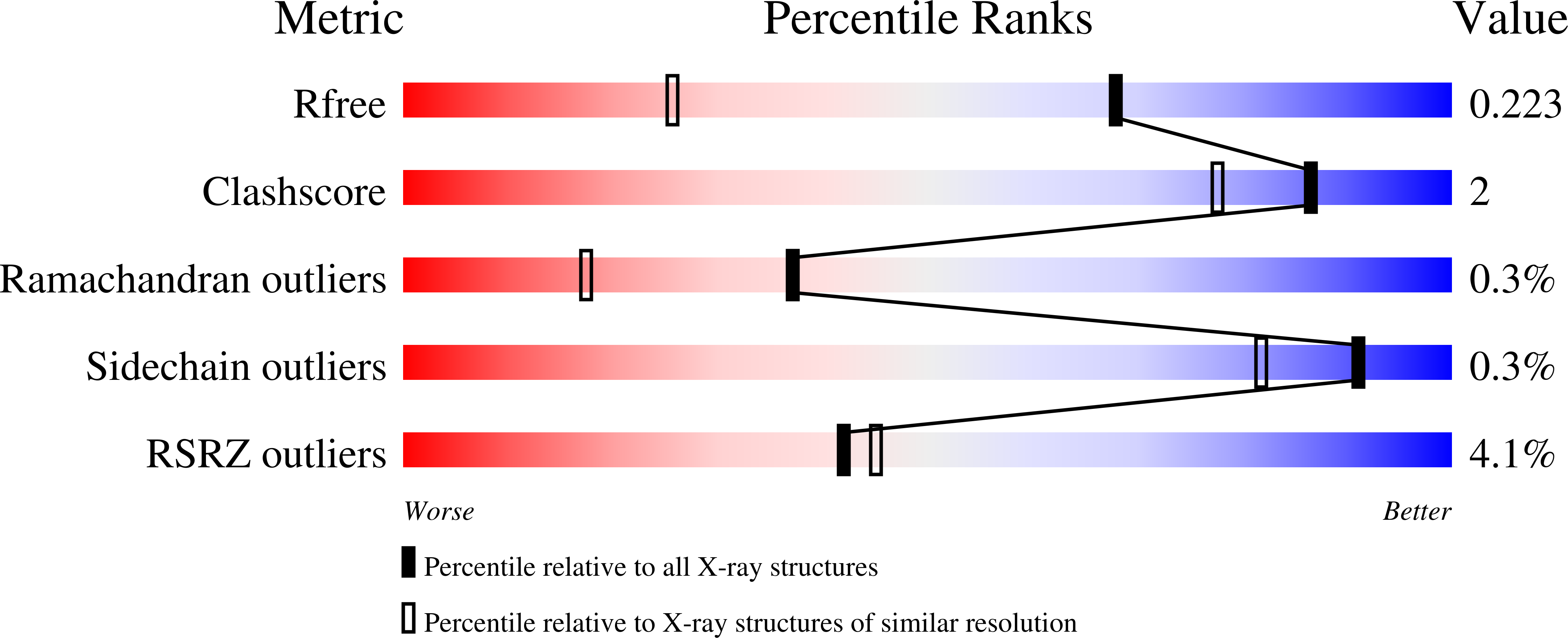
1.49 Å
R-Value Free:
0.22
R-Value Work:
0.20
R-Value Observed:
0.20
Space Group:
P 1
Macromolecular Entities
Structures with similar UniProt ID
Protein Blast
Polymer Type:polypeptide(L)
Molecule:Isoform 2B of GTPase KRas
Gene (Uniprot):KRAS
Chain IDs:A, B
Chain Length:172
Number of Molecules:2
Biological Source:Homo sapiens
Primary Citation

Abstact

We describe here the impact of the covalent warhead trajectory on biochemical active-state potency, covalent kinetics, cellular potency, and pharmacokinetic parameters for KRAS(G12C) inhibitors. Using structure-based design augmented with computational models, trajectories were identified that successfully enhanced compound potency without requiring any additional optimization of the parent scaffold. In contrast to the trajectories of approved and clinical-stage KRAS(G12C) inactive state-selective inhibitors, which largely consist of a collinear arrangement of the core, (di)amine linker, and covalent warhead, these trajectories were characterized by an angled disposition of the covalent warhead. A cocrystal structure implicated an increased distance from the bound nucleotide of KRAS(G12C) as the basis for this increase in potency, suggesting a general design principle for targeting the active state of KRAS.

Legend

Protein

Chemical

Disease

Primary Citation of related structures
Feedback Form
Name
Email
Institute
Feedback