

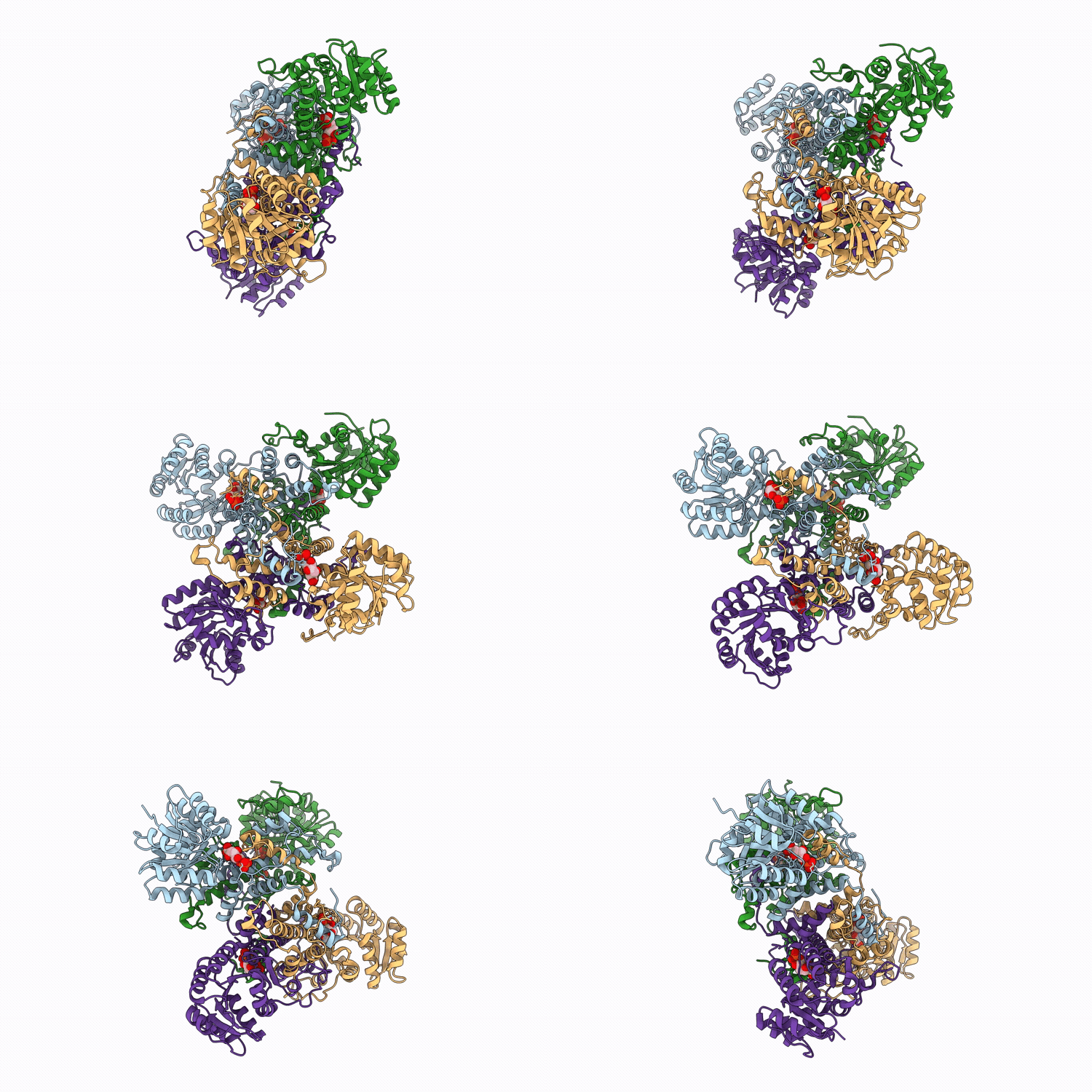
10GW image
Deposition Date 2026-01-19
Release Date 2026-03-18
Last Version Date 2026-03-18
Entry Detail
PDB ID:
10GW
Keywords:
Title:
Crystal structure of tetrameric 6-phosphogluconate dehydrogenase from Gluconobacter oxydans in complex with 6-phosphogluconate
Biological Source:
Source Organism(s):
Method Details:
Experimental Method:
Resolution:
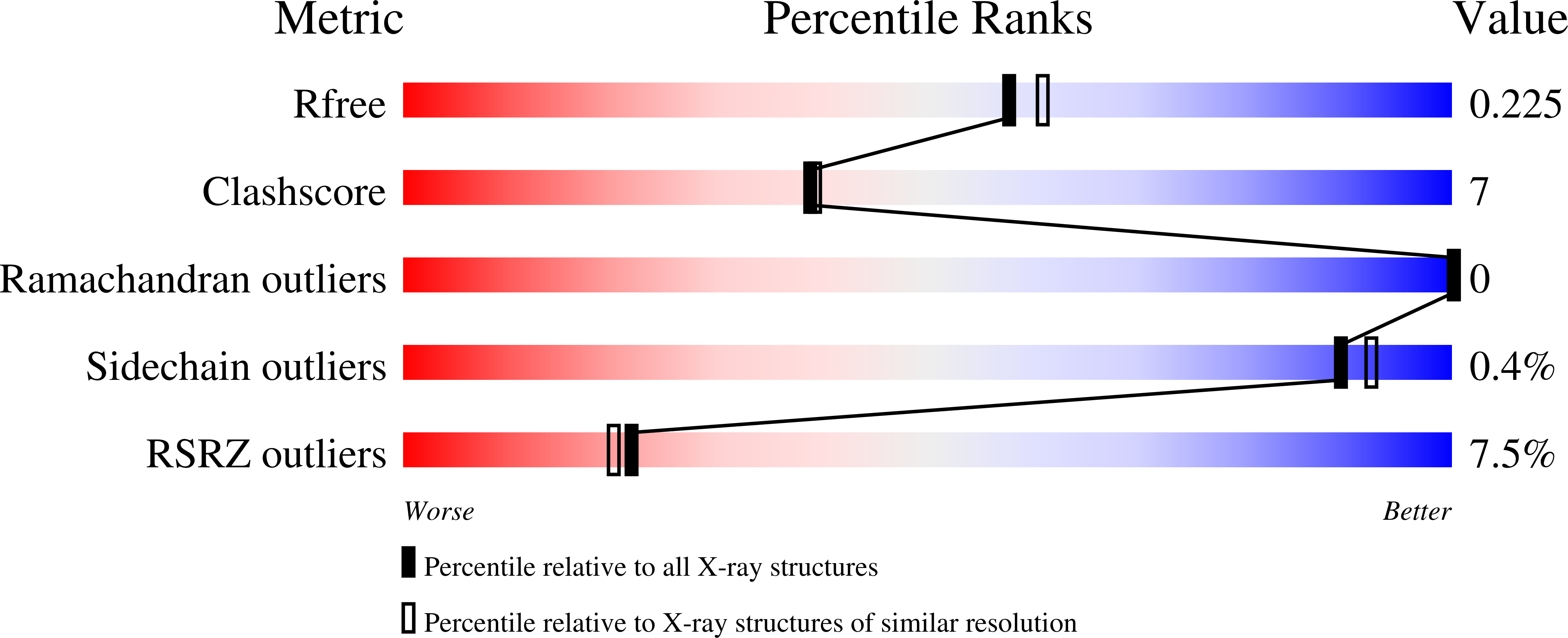
2.00 Å
R-Value Free:
0.22
R-Value Work:
0.19
R-Value Observed:
0.19
Space Group:
P 1
Macromolecular Entities
Structures with similar UniProt ID
Protein Blast
Polymer Type:polypeptide(L)
Molecule:6-phosphogluconate dehydrogen
Gene (Uniprot):GOX1705
Chain IDs:A, B, C, D
Chain Length:353
Number of Molecules:4
Biological Source:Gluconobacter oxydans
Ligand Molecules
Primary Citation
Structural, dynamic, and evolutionary determinants of substrate binding in the tetrameric 6-phosphogluconate dehydrogenase from Gluconobacter oxydans.
Arch. Biochem. Biophys. 779 110779 110779 (2026)
PMID: 41765070 DOI: 10.1016/j.abb.2026.110779

Abstact

6-Phosphogluconate dehydrogenases (6PGDHs) catalyze a key oxidative step in the oxidative pentose phosphate pathway (oxPPP), a route essential for NAD(P)H generation and carbon metabolism in bacteria and eukaryotes. While the structural basis of substrate recognition is well established for long-chain dimeric 6PGDHs, the mechanisms used by short-chain tetrameric enzymes remain poorly defined. Here, we present a 2.0 A crystal structure of tetrameric 6PGDH from Gluconobacter oxydans (Go6PGDH) in complex with 6-phosphogluconate (6PG) and integrate it with evolutionary, computational, and functional analyses. The structure shows that, unlike dimeric homologs, tetrameric Go6PGDH does not undergo a domain-closure transition upon ligand binding. Instead, 6PG induces a compaction of the tetramer mediated by two conserved C-terminal elements: an inter-protomer ionic "lock" and an intra-subunit C-terminal "latch" that together stabilize a closed catalytic pocket. Molecular-dynamics simulations identify His328 as a central residue that couples C-terminal tail closure to direct ligand coordination, and mutagenesis analysis confirms its essential role in catalytic efficiency. Thermodynamic measurements reveal that 6PG binding is strongly enthalpy-driven, consistent with the formation of an ordered hydrogen-bonding and electrostatic network in the closed conformation. These findings define a substrate-induced quaternary-tightening mechanism unique to tetrameric 6PGDHs and illustrate how a conserved C-terminal module has been adapted across the family to regulate substrate binding and catalysis.

Legend

Protein

Chemical

Disease

Primary Citation of related structures
Feedback Form
Name
Email
Institute
Feedback