

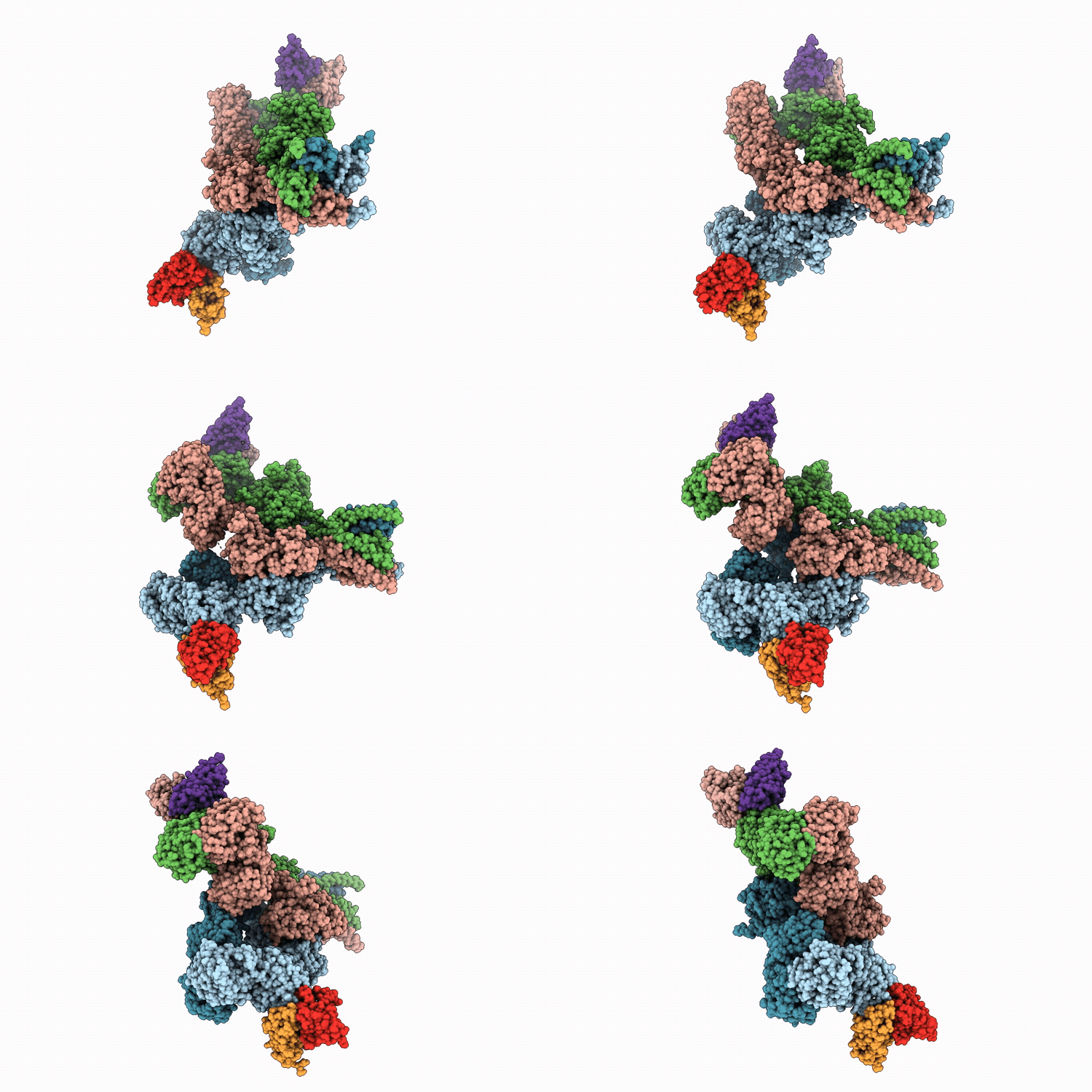
10EV image
Deposition Date 2026-01-15
Release Date 2026-03-25
Last Version Date 2026-04-08
Entry Detail
PDB ID:
10EV
Title:
OX1-Matured in complex with GluN1-GluN2B, full refinement
Biological Source:
Source Organism(s):
Homo sapiens (Taxon ID: 9606)
Expression System(s):
Method Details:
Experimental Method:
Resolution:
4.20 Å
Aggregation State:
PARTICLE
Reconstruction Method:
SINGLE PARTICLE
Macromolecular Entities
Structures with similar UniProt ID
Protein Blast
Polymer Type:polypeptide(L)
Molecule:Isoform 4 of Glutamate recept
Gene (Uniprot):GRIN1
Chain IDs:A, C
Chain Length:817
Number of Molecules:2
Biological Source:Homo sapiens
Structures with similar UniProt ID
Protein Blast
Polymer Type:polypeptide(L)
Molecule:Glutamate receptor
Gene (Uniprot):GRIN2B
Chain IDs:B, D
Chain Length:787
Number of Molecules:2
Biological Source:Homo sapiens
Protein Blast
Polymer Type:polypeptide(L)
Molecule:Heavy chain
Chain IDs:E (auth: F), G (auth: H)
Chain Length:119
Number of Molecules:2
Biological Source:Homo sapiens
Protein Blast
Polymer Type:polypeptide(L)
Molecule:Light chain
Chain IDs:F (auth: G), H (auth: I)
Chain Length:113
Number of Molecules:2
Biological Source:Homo sapiens
Ligand Molecules
Primary Citation

Abstact

Autoimmunity and anti-cancer immunity lie on the same biological continuum(1,2), but their link remains obscure. The paraneoplastic neurological syndrome ANRE (anti-NMDA receptor (NMDAR) encephalitis) is a paradigm for their connectivity(3), given that intratumoural NMDAR expression is correlated with the generation of anti-NMDAR antibodies(4,5). Here we verify ectopic expression of GluN1 and GluN2B NMDAR subunits in triple-negative breast cancer (TNBC)(6) and model this using orthotopic TNBC tumours with inducible expression of GluN1-GluN2B NMDARs. We show that NMDAR expression is sufficient to induce the recruitment of B cells and their affinity maturation, consistent with an integrated adaptive immune response. Reconstruction of extended intratumoural B cell phylogenies and cryogenic electron microscopy structural analyses demonstrate that affinity-matured hypermutated and class-switched antibodies emerged from pre-existing germline-configuration lower-affinity anti-NMDAR antibodies. Distinct matured antibodies targeted specific epitopes and induced conformational rearrangements within the NMDAR amino-terminal domain, predictive of their functional effects, ranging from inhibition to potentiation. Passive transfer of an NMDAR-potentiating antibody caused autonomic dysregulation and lowered the seizure threshold in healthy female mice, recapitulating key diagnostic criteria of ANRE(4,5). We further identify a correlation between intratumoural NMDAR expression and anti-NMDAR antibody titres in patients with TNBC. Taken together, our data establish a direct connection between intratumoural NMDAR expression, antibody maturation and the onset of autoimmunity. These findings suggest that germline-encoded anti-NMDAR antibodies contribute to immune surveillance but can also trigger autoimmune disease after maturation, revealing a mechanistic trade-off between cancer immunity and neurotoxicity.

Legend

Protein

Chemical

Disease

Primary Citation of related structures
Feedback Form
Name
Email
Institute
Feedback