

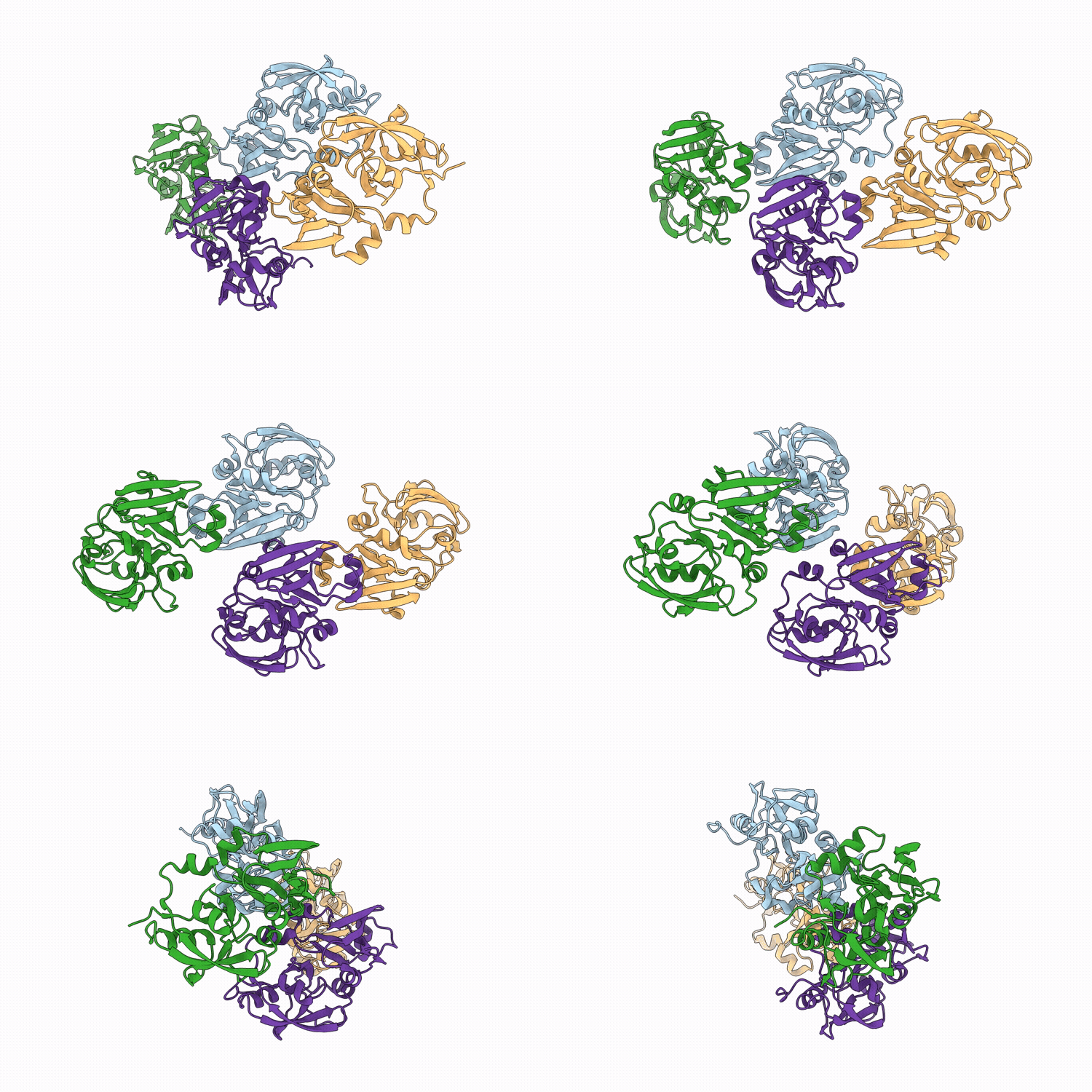
10BR image
Deposition Date 2026-01-09
Release Date 2026-06-17
Last Version Date 2026-06-17
Entry Detail
PDB ID:
10BR
Keywords:
Title:
Crystal structure of B. burgdorferi HtrA PDZ1-2 domains
Biological Source:
Source Organism(s):
Expression System(s):
Method Details:
Experimental Method:
Resolution:
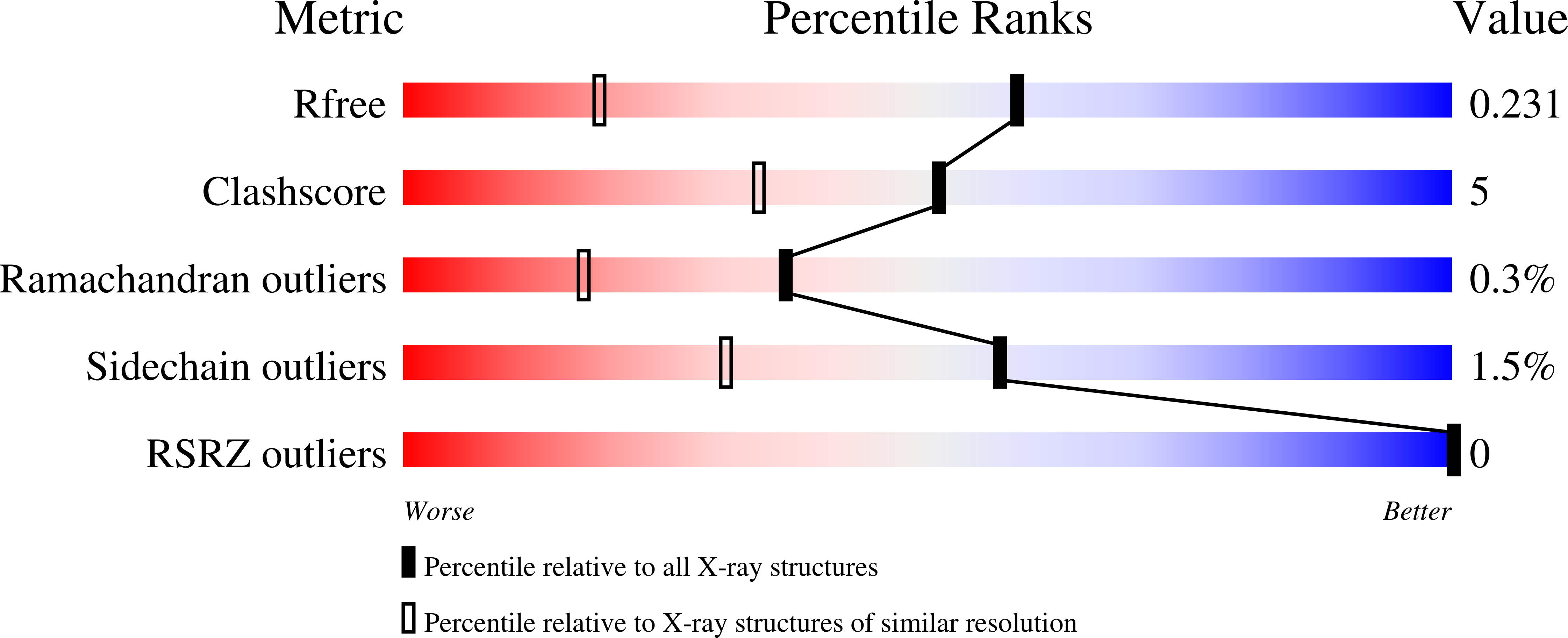
1.50 Å
R-Value Free:
0.22
R-Value Work:
0.18
R-Value Observed:
0.18
Space Group:
P 1
Macromolecular Entities
Structures with similar UniProt ID
Protein Blast
Polymer Type:polypeptide(L)
Molecule:Periplasmic serine protease D
Gene (Uniprot):BB_0104
Chain IDs:A, B, C, D
Chain Length:204
Number of Molecules:4
Biological Source:Borreliella burgdorferi B31
Primary Citation
Assembly and Flexibility of Borrelia burgdorferi Periplasmic HtrA Hexamers.
J.Mol.Biol. 438 169813 169813 (2026)
PMID: 41999937 DOI: 10.1016/j.jmb.2026.169813

Abstact

The chaperone/protease HtrA from the Lyme disease pathogen Borrelia burgdorferi (BbHtrA) functions in the maturation of the periplasmic protein BB0323 involved in pathogen infectivity and in the degradation of several other key host and spirochete proteins. Hence, BbHtrA is considered an anti-borrelial drug target candidate. BbHtrA contains a N-terminal serine protease domain followed by two PDZ domains (PDZ1-2). Here, we report a 3.4 A resolution single particle cryo-EM reconstruction of hexameric BbHtrA whose active site serine was replaced by an alanine, and the 2.0 A and 1.5 A resolution crystal structures of the recombinant protease catalytic domain and PDZ1-2 fragment, respectively. The BbHtrA cryo-EM structure forms an asymmetric dimer of trimers unlike the symmetric oligomers of other HtrA family members. The different conformations of the six linkers between the protease domains and their respective PDZ1-2 break the symmetry, nevertheless, pairs of PDZ2 domains mediate trimer-trimer interactions through identical interfaces unique to BbHtrA. Features associated with the cryo-EM electron potential map at each protease active site were modeled as a nine-residue peptide of unknown sequence, which could originate from the expression host organism. The crystal structures recapitulate at higher resolution trimer interactions via the catalytic domains and trimer-trimer association via PDZ2-PDZ2 interactions. The serine protease oxyanion hole that stabilizes the substrate transition state is malformed in the crystal structure and fully formed in the peptide-bound BbHtrA cryo-EM structure, suggesting a regulatory mechanism intended to avoid undesired cleavage.

Legend

Protein

Chemical

Disease

Primary Citation of related structures
Feedback Form
Name
Email
Institute
Feedback