IBIA: Indian Biological Images Archive
Image Data Submission Report
Generated on: 24 October 2026

| Project Accession: | IBIAP_1000000016 |
| Title: | Dry fruit image dataset for machine learning applications |
| Representative Image: | 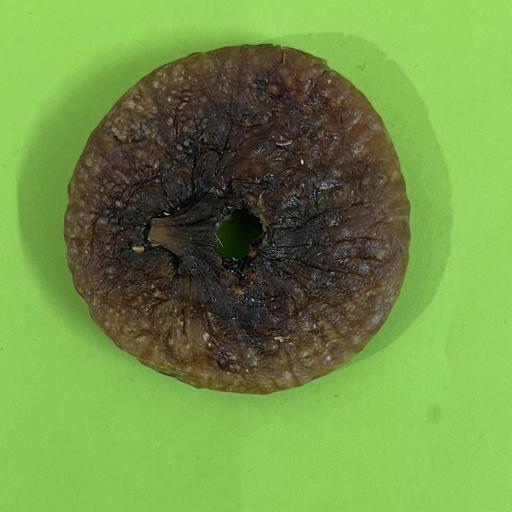 |
| Description: | The "Dry Fruit Image Dataset" is a collection of 11500+ processed high-quality images representing 12 distinct classes of dry fruits. The 4 dry fruits—Almonds, Cashew Nuts, Raisins, and Dried Figs (Anjeer)—along with 3 sub-types of each are contained in the sub-folders, making a total of 12 distinct classes. These pictures were taken with a high-definition camera on cell phones. The dataset contains images in different lighting conditions as well as with different backgrounds. This dataset can be used for building machine learning models for the classification and recognition of Dry Fruits, requiring neat, appropriately tagged, and high-quality images. The dry fruit classification algorithm can be trained, tested, and validated using this dataset. Furthermore, it is beneficial for dry fruit research, education, and medicinal purposes. |
| Publications: | https://doi.org/10.1016/j.dib.2023.109325 |
| Associated Codes (URL only): | N/A |
| Funding agency: | N/A |
| Grant Number: | N/A |
| Ethics Statement: | Download |
| Any Other Information : | The original version of the dataset is available at Mendeley Data (https://data.mendeley.com/datasets/yfhgn8py5f/1). The Mendeley Data citation is: Choudhary, Chetan; Kale, Atharva ; Rajput, Jaideep; Meshram, Vishal; Meshram, Vidula (2023), “Dry Fruit Image Dataset”, Mendeley Data, V1, doi: 10.17632/yfhgn8py5f.1. Please refer to Table 3 of published article, for Artificial light specifications. |
| Additional File: | Download |
| Acknowledgments: | No specific grant was provided for this research by public, private, or not-for-profit funding organizations. |
| Sr.No | First name | Last name | Organization | Designation | |
|---|---|---|---|---|---|
| 1 | Vishal | Meshram | vishal.meshram@viit.ac.in | Vishwakarma Institute of Information Technology, Pune, India | Principal Investigator |
| 2 | Chetan | Choudhary | N/A | Vishwakarma Institute of Information Technology, Pune, India | Unspecified |
| 3 | Atharva | Kale | N/A | Vishwakarma Institute of Information Technology, Pune, India | Unspecified |
| 4 | Jaideep | Rajput | N/A | Vishwakarma Institute of Information Technology, Pune, India | Unspecified |
| 5 | Vidula | Meshram | N/A | Vishwakarma Institute of Information Technology, Pune, India | Unspecified |
| 6 | Amol | Dhumane | N/A | Pimpri Chinchwad College of Engineering, Pune, India | Unspecified |
| Study Accession: | PPS_1000000020 |
| Title: | Dry fruit image dataset for machine learning applications |
| Imaging Type: | Plant Photography (PP) |
| Imaging Sub-type: | Not Applicable |
| Summary: | Dry fruits are convenient and nutritious snacks that can provide numerous health benefits. They are packed with vitamins, minerals, and fibres, which can help improve overall health, lower cholesterol levels, and reduce the risk of heart disease. Due to their health benefits, dry fruits are an essential part of a healthy diet. In addition to health advantage, dry fruits have high commercial worth. The value of the global dry fruit market is estimated to be USD 6.2 billion in 2021 and USD 7.7 billion by 2028. The appearance of dry fruits is utilized for assessing their quality to a great extent, requiring neat, appropriately tagged, and high-quality images. Hence, this dataset is a valuable resource for the classification and recognition of dry fruits. With over 11500+ high-quality processed images representing 12 distinct classes, this dataset is a comprehensive collection of different varieties of dry fruits. The four dry fruits included in this dataset are Almonds, Cashew Nuts, Raisins, and Dried Figs (Anjeer), along with three subtypes of each. This makes it a total of 12 distinct classes of dry fruits, each with its unique features, shape, and size. The dataset will be useful for building machine learning models that can classify and recognize different types of dry fruits under different conditions, and can also be beneficial for dry fruit research, education, and medicinal purposes. Due to their nutritional value and health advantages, dry fruits have been consumed for a very long time. One of the best strategies to improve general health is to include dry fruits in the diet. |
| Keywords: | Computer vision; Dehydrated fruits; Fruit Classification; Fruit detection; Image classification; Machine learning |
| Additional / Any Other Information: | N/A |
| Release Date: | April 24, 2025 |
| Access Licence Type: | Open Access |
Table 1. The sample types registered under this study are as follows:
The total number of samples registered under this study is: 11520
| Sample Type ID | Organism | Taxon ID | Biological Entity | Laterality | Source Tissue | Source Cell/Cell-line | Cell Organelle |
|---|---|---|---|---|---|---|---|
| PPSMT_10000000045 | Prunus dulcis | 3755 | Seed | Not Applicable | N/A | N/A | N/A |
| PPSMT_10000000046 | Anacardium occidentale | 171929 | Seed | Not Applicable | N/A | N/A | N/A |
| PPSMT_10000000047 | Ficus carica | 3494 | Fruit | Not Applicable | N/A | N/A | N/A |
| PPSMT_10000000048 | Vitis vinifera | 29760 | Fruit | Not Applicable | N/A | N/A | N/A |
Table 3. The experiment types registered under this study are as follows:
| Experiment Type ID | Instrument Name | Instrument Type | Manufacturer | Model |
|---|---|---|---|---|
| PPET_10000000018 | Camera | Mobile | Apple/Motorola | iPhone13/Moto G40 fusion |
| Experimental Design Summary (PPET_10000000018) |
|---|
| The dry fruit images were captured using two different makes of camera, that were Apple's iPhone 13 and Motorola's Moto G40 fusion mobiles' rear camera having high resolution. In all, 11500+ images were captured with a camera and then stored in various folders according to their category and classification. Four different backgrounds, two lighting conditions, and various angles are used for capturing the images of dry fruit. The Dry Fruit Image Dataset was created to include high-quality images of major dry fruits that are consumed and exported. It consists of four types of dry fruit each, namely, Almond, Cashew, Dried Fig, and Raisins. Each type of dry fruit is further categorized into three major subclasses. Almond has three subclasses namely, Regular, Sanora, and Mamra. Cashew has subclasses namely, Regular, Special, and Jumbo. Raisin has subclasses namely, Black, Grade 1, and Premium. Fig has subclasses namely, Small, Medium, and Jumbo. Hence, a total of 12 different classes are contained in the dataset. The dry fruits were taken in various lighting conditions and backgrounds, namely, artificial light and natural light, while the backgrounds included white, black, green, and human palms. Data collection took place in February and March. In the VIIT lab, typical images were taken in a variety of lighting, background, and angle situations. The dataset utilized in this study comprises two primary light sources: Natural Sunlight and Artificial light. Natural Sunlight served as the natural light source, with a range of sunlight angles spanning from 60° to 120°. Additionally, two LEDs were employed as the Artificial light sources. Images were pre-processed using a Python script and Microsoft Power Automate. The dimensions of the images, 512 × 512 make it easier to build object classification models. |
| Acquired Images Annotation Description (PPET_10000000018) |
|---|
| After the survey in the local stores and wholesaler market, all twelve classes of dry fruits i.e. Almond Mamra, Almond Regular, Almond Sanora, Cashew Jumbo, Cashew Regular, Cashew Special, Fig Jumbo, Fig Medium, Fig Small, Raisin Black, Raisin Grade 1, Raisin Premium, were purchased from PUNE, INDIA. The photographs are taken under a range of environmental circumstances, including various lighting situations and backgrounds shot from various viewpoints. All of the images were arranged in the following order: almond, cashew, fig, and sultana. There are three separate folders for each category/grade of dry fruit, such as Mamra, Sanora, Regular for Almond, and so on. |