IBIA: Indian Biological Images Archive
Image Data Submission Report
Generated on: 24 October 2026

| Project Accession: | IBIAP_1000000003 |
| Title: | An Opportunistic screening mammography dataset from a screening-naive population |
| Representative Image: | 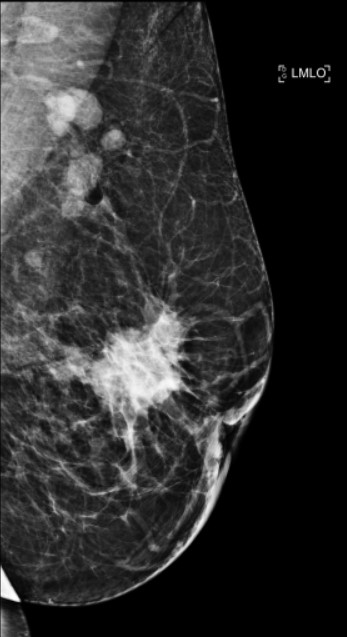 |
| Description: | Mammographic images dataset from Indian population containing 1869 FFDM images and 1708 SM images, providing breast-level imaging data (BIRADS category and breast density) along with ground truth labels based on histopathology for cancers and follow-up scans for noncancers. |
| Publications: | https://doi.org/10.59275/j.melba.2026-bd61 |
| Associated Codes (URL only): | N/A |
| Funding agency: | Ministry of Education, Government of India, India |
| Grant Number: | T-316 |
| Ethics Statement: | Download |
| Any Other Information : | The publication details have been updated as of October 7, 2026. |
| Additional File: | N/A |
| Acknowledgments: | Dr. Radhika Rajeev provided assistance in the early stages of curating this mammography dataset. |
| Sr.No | First name | Last name | Organization | Designation | |
|---|---|---|---|---|---|
| 1 | Amit | Gupta | amit.aiims2014@gmail.com | Dr. B.R.A.IRCH, All India Institute of Medical Sciences (AIIMS), New Delhi, India | Research Consultant |
| 2 | Kshitiz | Jain | kshitiz16051@iiitd.ac.in | School of Artificial Intelligence, Indian Institute of Technology (IIT), Delhi, India | Student |
| 3 | Mayank | Bhardwaj | buddybhardwaj@gmail.com | Dr. B.R.A.IRCH, All India Institute of Medical Sciences (AIIMS), New Delhi, India | Radiographer |
| 4 | Hema | Malhotra | hemamalhotraaiims.2020@gmail.com | Dr. B.R.A.IRCH, All India Institute of Medical Sciences (AIIMS), New Delhi, India | Program Manager |
| 5 | Sanjay | Thulkar | thulkar@hotmail.com | Dr. B.R.A.IRCH, All India Institute of Medical Sciences (AIIMS), New Delhi, India | Professor |
| 6 | Smriti | Hari | drsmritihari@gmail.com | Dr. B.R.A.IRCH, All India Institute of Medical Sciences (AIIMS), New Delhi, India | Professor |
| 7 | Chetan | Arora | chetan@cse.iitd.ac.in | Department of Computer Science and Engineering, Indian Institute of Technology (IIT), Delhi, India | Professor |
| 8 | Krithika | Rangarajan | krithikarangarajan@aiims.edu | Dr. B.R.A.IRCH, All India Institute of Medical Sciences (AIIMS), New Delhi, India | Principal Investigator |
| Study Accession: | MAMOS_1000000004 |
| Title: | An Opportunistic screening mammography dataset from a screening-naive population |
| Imaging Type: | Mammography (MAMO) |
| Imaging Sub-type: | Diagnostic Radiology |
| Summary: | Mammographic dataset from Indian population containing 1869 FFDM images and 1708 SM images and provides breast-level imaging data (BIRADS category and breast density) along with ground truth labels based on histopathology for cancers and follow-up scans for noncancers. |
| Keywords: | Breast cancer; Mammography; Screening |
| Additional / Any Other Information: | N/A |
| Release Date: | Sept. 10, 2024 |
| Access Licence Type: | Open Access |
Table 1. The sample types registered under this study are as follows:
The total number of samples registered under this study is: 3577
| Sample Type ID | Organism | Taxon ID | Biological Entity | Laterality | Source Tissue | Source Cell/Cell-line | Cell Organelle |
|---|---|---|---|---|---|---|---|
| MAMOSMT_10000000007 | Homo sapiens | 9606 | Breast | Both | N/A | N/A | N/A |
Table 3. The experiment types registered under this study are as follows:
| Experiment Type ID | Instrument Name | Instrument Type | Manufacturer | Model |
|---|---|---|---|---|
| MAMOET_10000000003 | Mammography Machine | Digital mammography | Hologic | Selenia |
| Experimental Design Summary (MAMOET_10000000003) |
|---|
| The mammograms included in the dataset were performed on the Hologic Selenia Dimensions system at our institute. At the time of acquisition of images present in this dataset, the standard mammographic examination for each breast comprised of two 2D views - cranio-caudal (CC) and medio-lateral oblique (MLO) along with DBT and reconstructed SM images, all acquired in a single compression (acquired in combo mode). In case of any suspicious findings on mammogram or in view of reduced sensitivity of mammography for dense breasts, a breast ultrasound (US) correlation was performed for the patient in the same sitting and the radiological report was based on findings seen on both mammogram and US in such cases. Mammography reports were generated strictly adhering to the fifth edition of BIRADS and a single BIRADS category is assigned for each breast based on the most suspicious finding on either mammogram or US. Standard double-reading assessment was followed for mammography reports, with the first reading by a resident radiologist (year 3-6 of training) and second reading by a specialist breast radiologist (with more than 10 years’ of experience). The second reader had access to the opinion of the first reader and the opinion of the second reader was considered in case of discrepancy. |
| Acquired Images Annotation Description (MAMOET_10000000003) |
|---|
| A composite gold standard was used. In general, the ground truth varied depending on the BIRADS category assigned to a patient. Ground truth for BIRADS 4 and 5 lesions, was based on histopathologic findings, typically from image-guided biopsy. The pathology reports were extracted manually from the electronic medical record of the hospital and report results were divided into ‘cancer’ and ‘non-cancer’. The standard protocol followed for patients with BIRADS 3 lesions is 6 monthly follow up mammograms for 2 years to demonstrate stability; and patients with BIRADS 1 and 2 assessment are referred back to their primary speciality for further advice. Since we do not have a standard screening program in the country, no routine screening is typically advised, though patients considered at high risk (ovarian cancer/ previously treated breast cancer) are advised annual or biennial screening mammograms by the referring physician. Thus, wherever available, the follow-up mammograms were seen for patients with BIRADS 1-3 assessment categories. In case of growth of lesion (in BIRADS 3 category) or appearance of new lesion (to suggest possibility of interval cancer), the histopathology results were sought for these patients. If no such finding was seen these patients were considered ‘non-cancer’. A significant number of our patients however in all 3 categories (BIRADS 1-3) do not report back for follow up mammograms. Such patients were not excluded from the dataset and were categorized as ‘non-cancer’, though a note was made of absence of follow up study. The ground truth labels thus generated were stored along with the unique patient identifiers in a csv file, available along with the dataset. |