

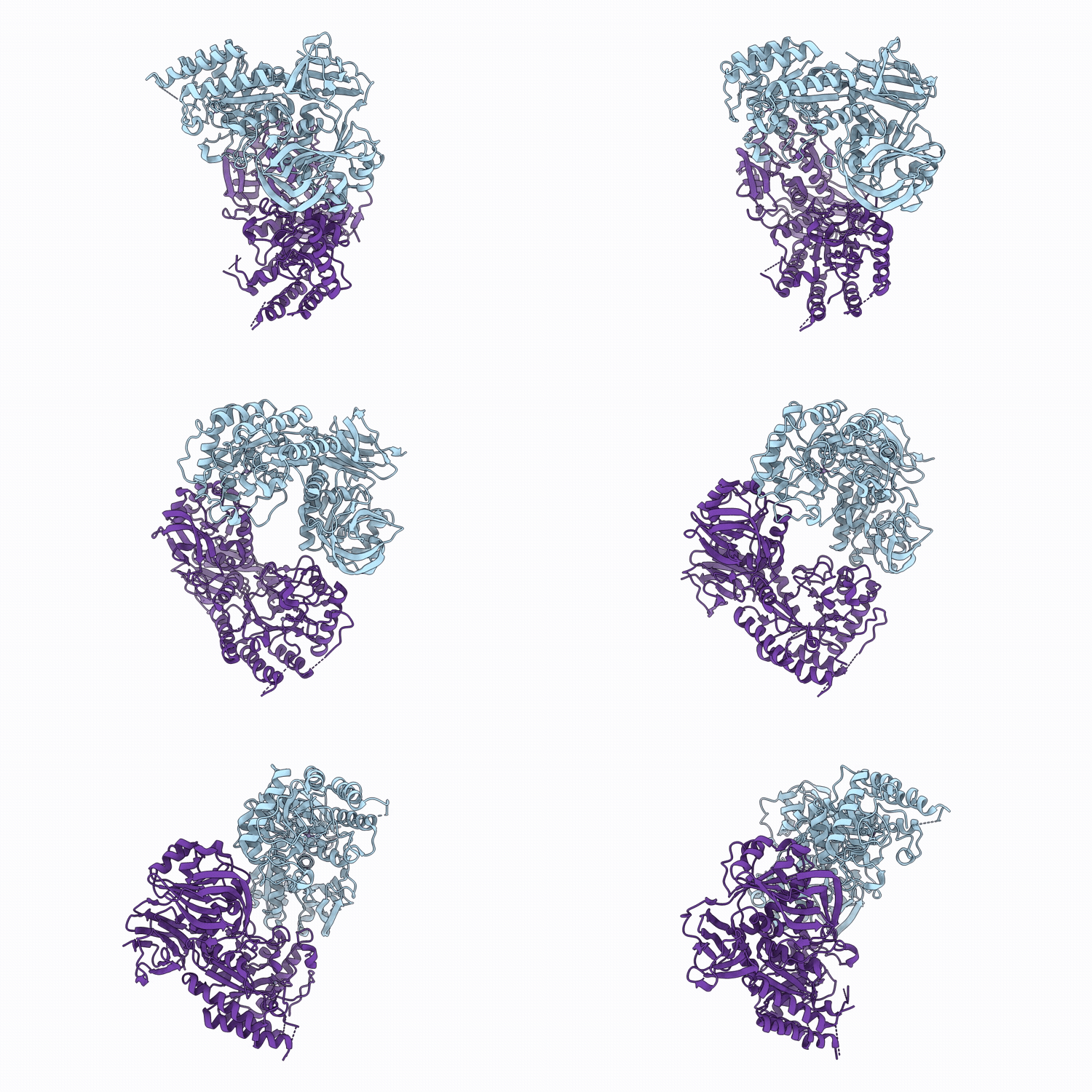
9ZAU image
Deposition Date 2025-11-19
Release Date 2026-05-20
Last Version Date 2026-05-20
Entry Detail
PDB ID:
9ZAU
Title:
Pel polysaccharide deacetylase PelA from Bacillus cereus ATCC 10987
Biological Source:
Source Organism(s):
Expression System(s):
Method Details:
Experimental Method:
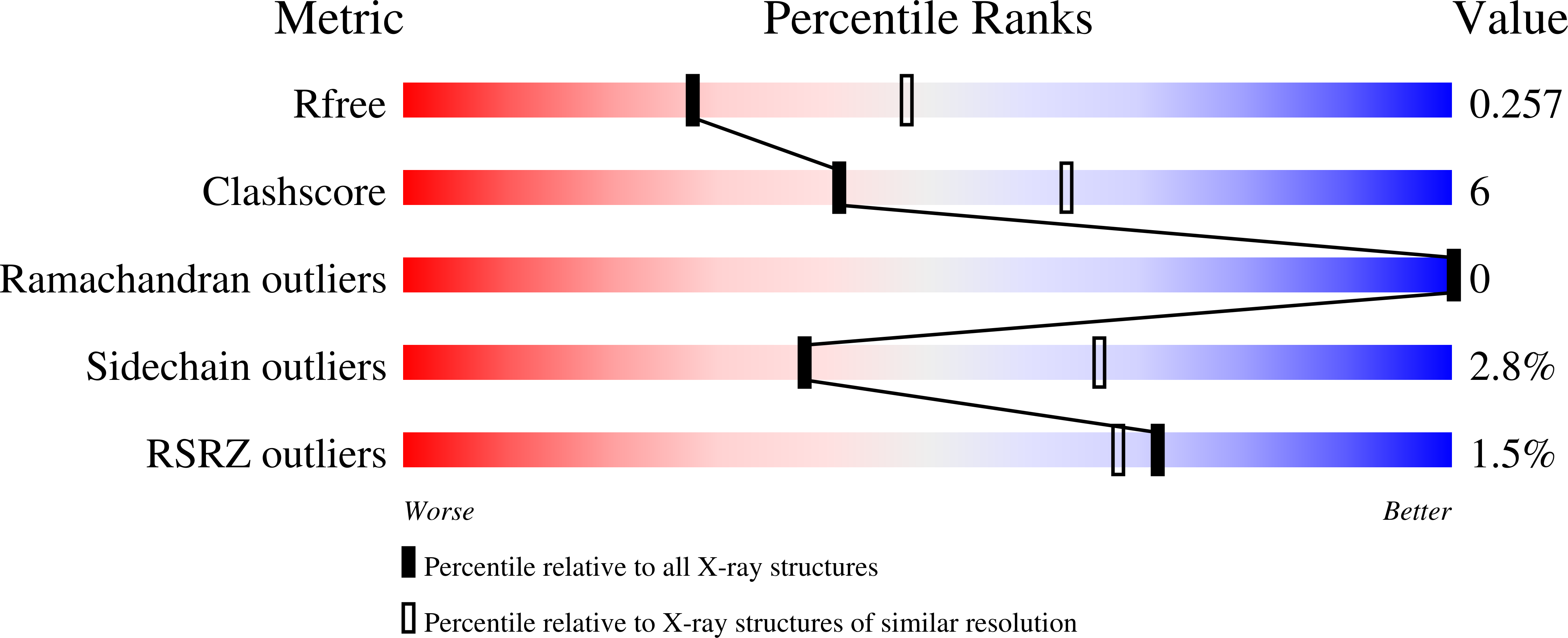
Resolution:
2.51 Å
R-Value Free:
0.25
R-Value Work:
0.19
R-Value Observed:
0.19
Space Group:
P 1 21 1
Macromolecular Entities
Structures with similar UniProt ID
Protein Blast
Polymer Type:polypeptide(L)
Molecule:Predicted membrane protein, p
Chain IDs:A, B
Chain Length:593
Number of Molecules:2
Biological Source:Bacillus cereus ATCC 10987
Ligand Molecules
Primary Citation
Bacillus cereus PelA DA is a polysaccharide de-N-acetylase required for Pel-dependent biofilm formation.
J.Biol.Chem. ? 113122 113122 (2026)
PMID: 42103218 DOI: 10.1016/j.jbc.2026.113122

Abstact

Exopolysaccharides are key matrix determinants that provide structural integrity and regulate biomechanical properties of microbial biofilms. Biofilm exopolysaccharides often undergo modifications that determine their functional properties and localization. In B. cereus ATCC 10987, PelA(DA) expressed from the pelDEA(DA)FG operon is a putative deacetylase required for Pel-dependent biofilm formation. To understand the molecular basis of Pel deacetylation in B. cereus ATCC 10987, we determined the crystal structure of PelA(DA) to 2.51 A. PelA(DA) adopts a distinct three-domain arrangement. We demonstrate in vitro that PelA(DA) deacetylates alpha-1,4-linked GalNAc substrates in a length-dependent manner and that the N-terminal domain functions as a carbohydrate binding module (CBM) capable of binding both GalNAc and partially deacetylated oligosaccharides. We found that the CBM domain together with the carbohydrate esterase (CE) domain forms an elongated carbohydrate binding cleft and that each domain is the founding member of two new CAZy families, CBMxx and CExx, respectively. Further, in vivo mutagenesis demonstrated that the catalytic activity of PelA(DA) is required for Pel biosynthesis in B. cereus ATCC 10987. Employing AlphaFold, we propose a model wherein the N-terminal transmembrane helix of PelA(DA) interacts with PelG. This interaction positions the protein to accept the polymer for deacetylation as it emerges from the cytoplasmic membrane. The work presented herein offers insight into the role of PelA(DA) in Pel biosynthesis and modification in B. cereus ATCC 10987.

Legend

Protein

Chemical

Disease

Primary Citation of related structures
Feedback Form
Name
Email
Institute
Feedback