

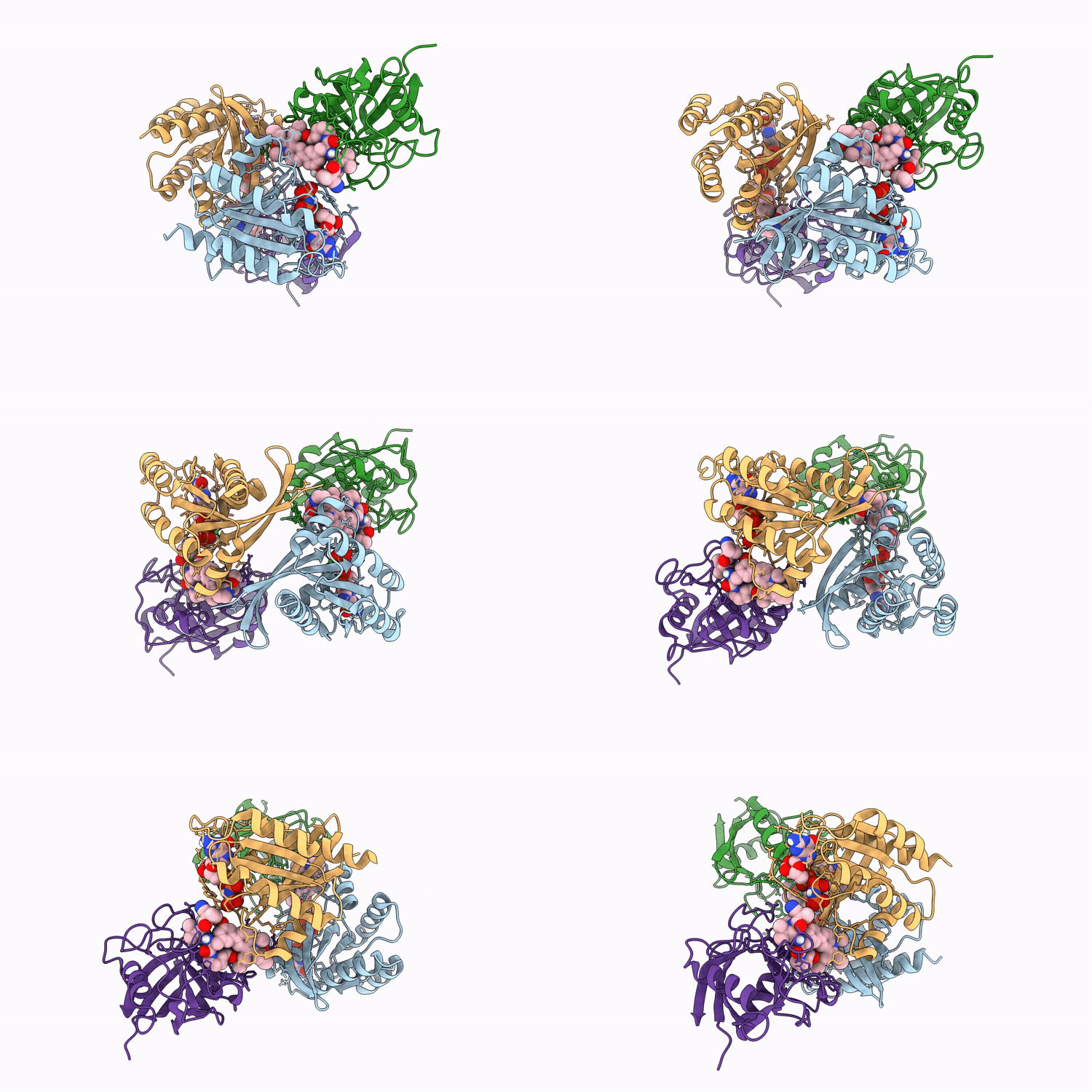
9YOW image
Deposition Date 2025-10-13
Release Date 2026-05-20
Last Version Date 2026-05-20
Entry Detail
PDB ID:
9YOW
Keywords:
Title:
Crystal structure of GMPPNP bound KRAS G12C in complex with CYPA and RMC-4791
Biological Source:
Source Organism(s):
Homo sapiens (Taxon ID: 9606)
Expression System(s):
Method Details:
Experimental Method:
Resolution:
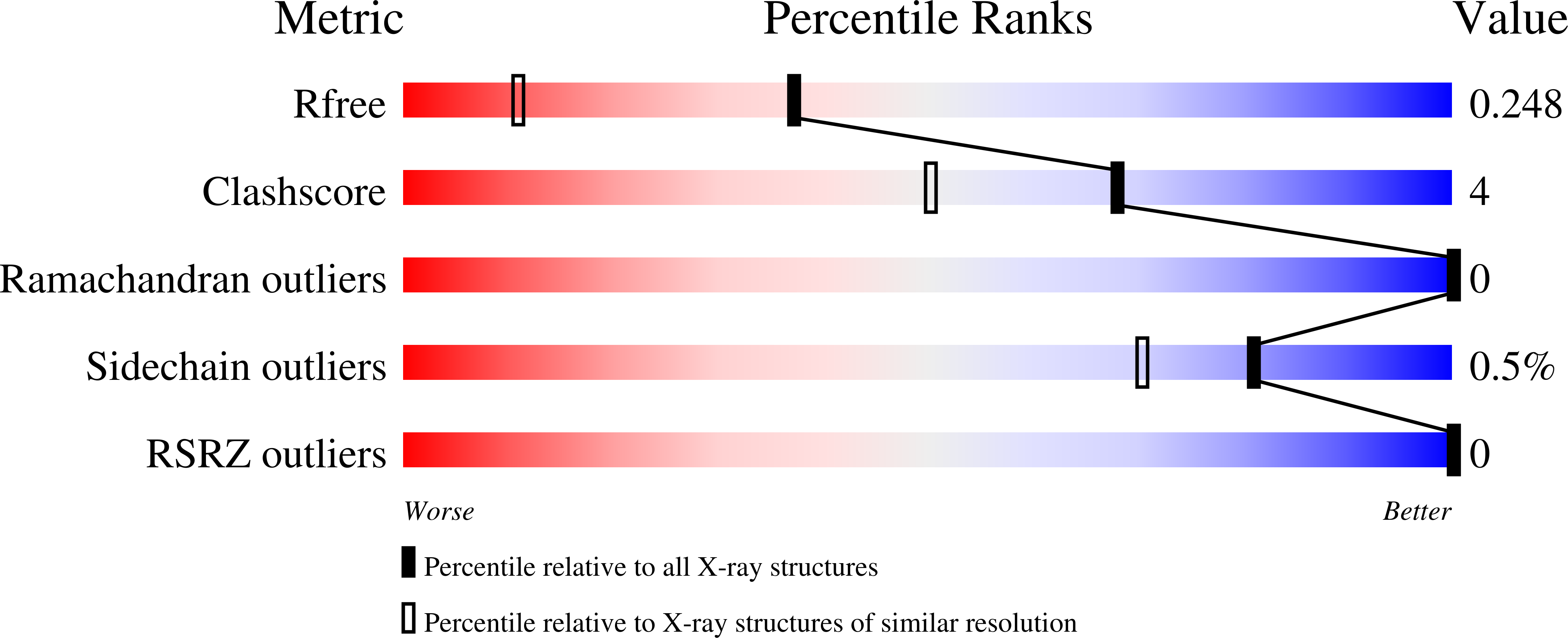
1.57 Å
R-Value Free:
0.24
R-Value Work:
0.22
R-Value Observed:
0.22
Space Group:
P 1 21 1
Macromolecular Entities
Structures with similar UniProt ID
Protein Blast
Polymer Type:polypeptide(L)
Molecule:Isoform 2B of GTPase KRas
Gene (Uniprot):KRAS
Mutagens:G12C
Chain IDs:A, B (auth: C)
Chain Length:170
Number of Molecules:2
Biological Source:Homo sapiens
Structures with similar UniProt ID
Protein Blast
Polymer Type:polypeptide(L)
Molecule:Peptidyl-prolyl cis-trans iso
Gene (Uniprot):PPIA
Chain IDs:C (auth: D), D (auth: B)
Chain Length:166
Number of Molecules:2
Biological Source:Homo sapiens
Primary Citation

Abstact

Tri-complex inhibitors (TCIs) are molecular glues that bind the active, guanosine triphosphate (GTP)-bound state of RAS and recruit cyclophilin A (CYPA) to form a synthetic complex that blocks oncogenic signaling. Although these agents have shown clinical activity in RAS mutant cancers, resistance mechanisms remain poorly defined. Here, we analyzed paired baseline and end-of-treatment samples from 40 patients treated with the RAS inhibitor daraxonrasib and identified recurrent alterations in 18 cases. Structural and functional analyses revealed that acquired mutations confer resistance by disrupting interactions essential for daraxonrasib binding to RAS, including RAS Y64 mutations, or by enhancing the RAS-RAF interaction, thereby favoring native RAS-RAF signaling, including RAS Y71 or kinase-dead/hypoactive BRAF mutations. We then identified a TCI that targets RAS Y64 mutants and combination therapies to target resistance driven by kinase-dead BRAF. These findings uncover convergent resistance mechanisms that undermine the molecular glue function and offer a mechanistic blueprint for enhancing therapeutic efficacy in RAS-driven malignancies.

Legend

Protein

Chemical

Disease

Primary Citation of related structures
Feedback Form
Name
Email
Institute
Feedback