

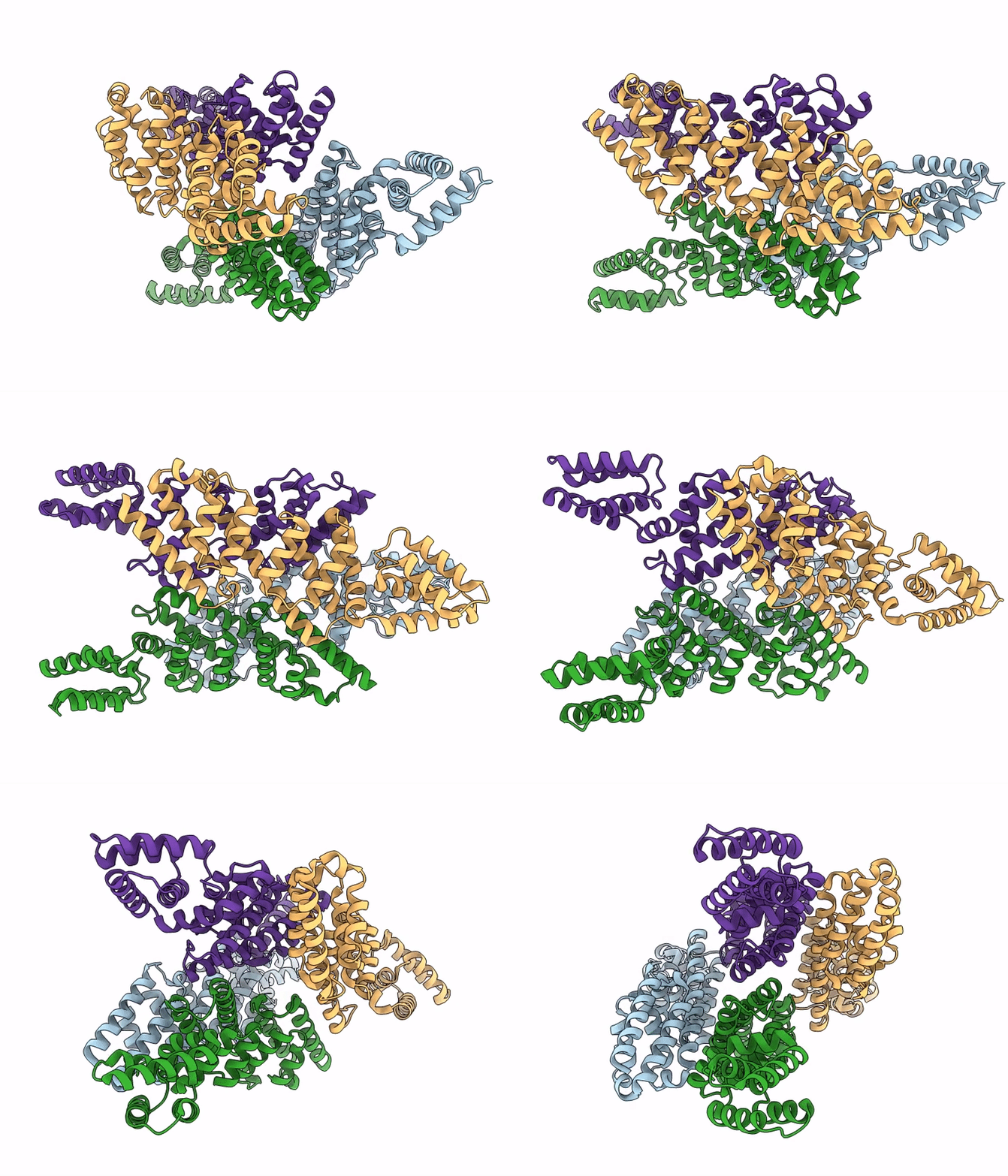
9Y93 image
Deposition Date 2025-09-13
Release Date 2026-01-21
Last Version Date 2026-02-18
Entry Detail
PDB ID:
9Y93
Title:
Tetrameric InvE from Salmonella Typhimurium
Biological Source:
Expression System(s):
Method Details:
Experimental Method:
Resolution:
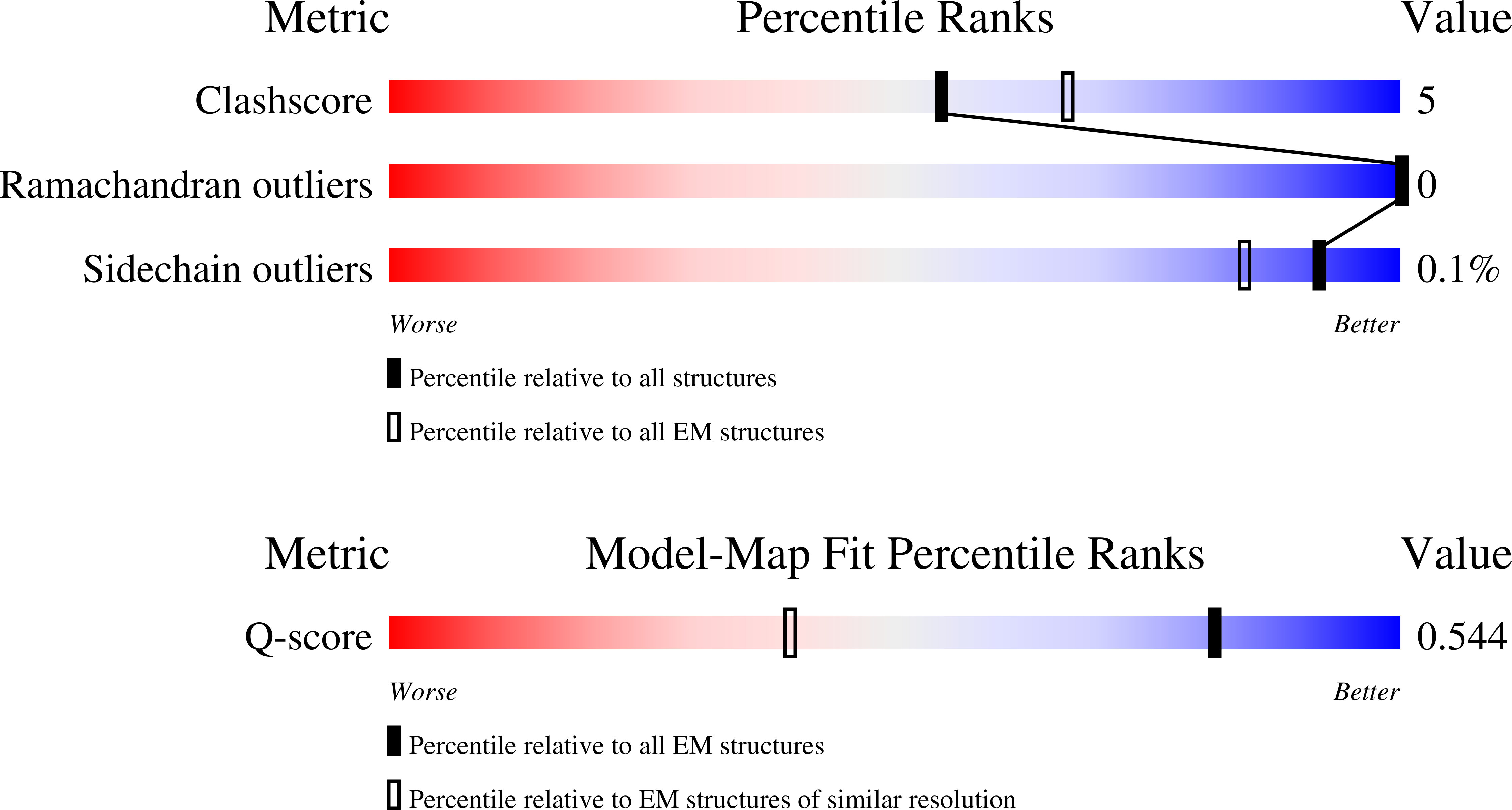
2.42 Å
Aggregation State:
PARTICLE
Reconstruction Method:
SINGLE PARTICLE
Macromolecular Entities
Structures with similar UniProt ID
Protein Blast
Polymer Type:polypeptide(L)
Molecule:Invasion protein InvE
Gene (Uniprot):invE
Chain IDs:A, B, C, D
Chain Length:401
Number of Molecules:4
Biological Source:Salmonella enterica subsp. enterica serovar Typhimurium
Ligand Molecules
Primary Citation
Oligomeric assembly of the gatekeeper InvE orchestrates hierarchical type III protein secretion in Salmonella Typhimurium.
Proc. Natl. Acad. Sci. U.S.A. 123 e2530441123 e2530441123 (2026)
PMID: 41587314 DOI: 10.1073/pnas.2530441123

Abstact

Type III secretion systems (T3SS) are critical virulence machines in many Gram-negative bacteria, enabling hierarchical secretion of translocases followed by effectors. In the Salmonella enterica serovar Typhimurium SPI-1 T3SS, the regulatory protein InvE (SctW) enforces this order. Here, we show that InvE assembles into tetramers and higher-order oligomers and that oligomerization is essential for function. A 2.4 Å cryo-electron microscopy (cryo-EM) structure reveals a tetramer built as a dimer of antiparallel dimers. Photocrosslinking maps one set of residues to the interdimer seams in this tetramer, while crosslinks from additional sites suggest lateral docking between dimers in alternative registries in vivo. Blue-native electrophoresis and SEC-MALS detect native high-molecular-weight species consistent with such assemblies. DNA-PAINT superresolution microscopy confirms the presence of higher-order InvE oligomers in vivo. Charge-reversal mutations that disrupt oligomerization collapse InvE to monomers and abolish secretion, effector translocation, invasion, and virulence. Together, these data define an oligomerization-based switch in which InvE reuses the dimeric face to form higher-order contacts that govern the transition from translocase to effector secretion.

Legend

Protein

Chemical

Disease

Primary Citation of related structures
Feedback Form
Name
Email
Institute
Feedback