

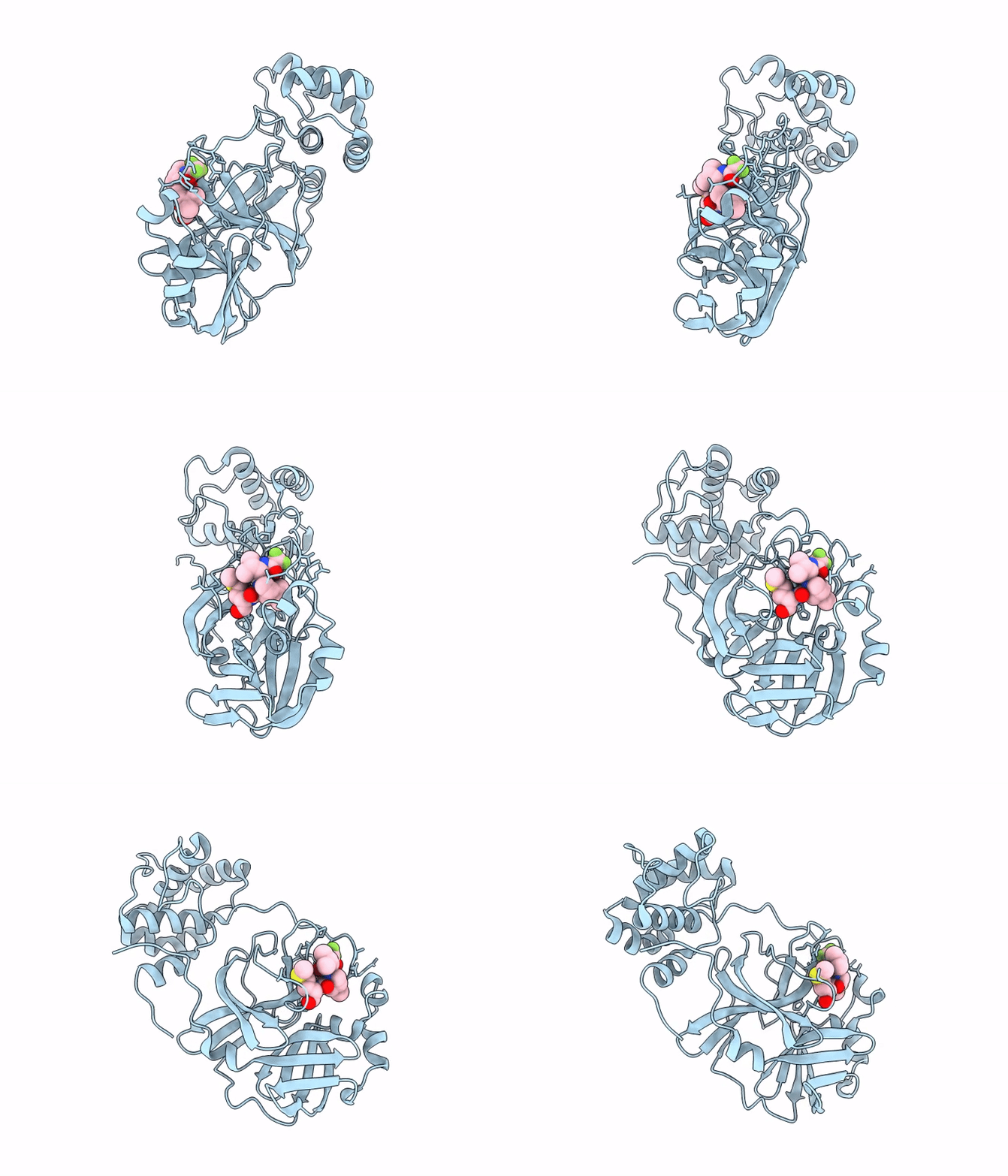
9XYM image
Deposition Date 2025-08-26
Release Date 2026-01-21
Last Version Date 2026-02-11
Entry Detail
PDB ID:
9XYM
Keywords:
Title:
Crystal Structure of SARS-CoV-2 Main Protease (Mpro) in complex with Jun13698
Biological Source:
Expression System(s):
Method Details:
Experimental Method:
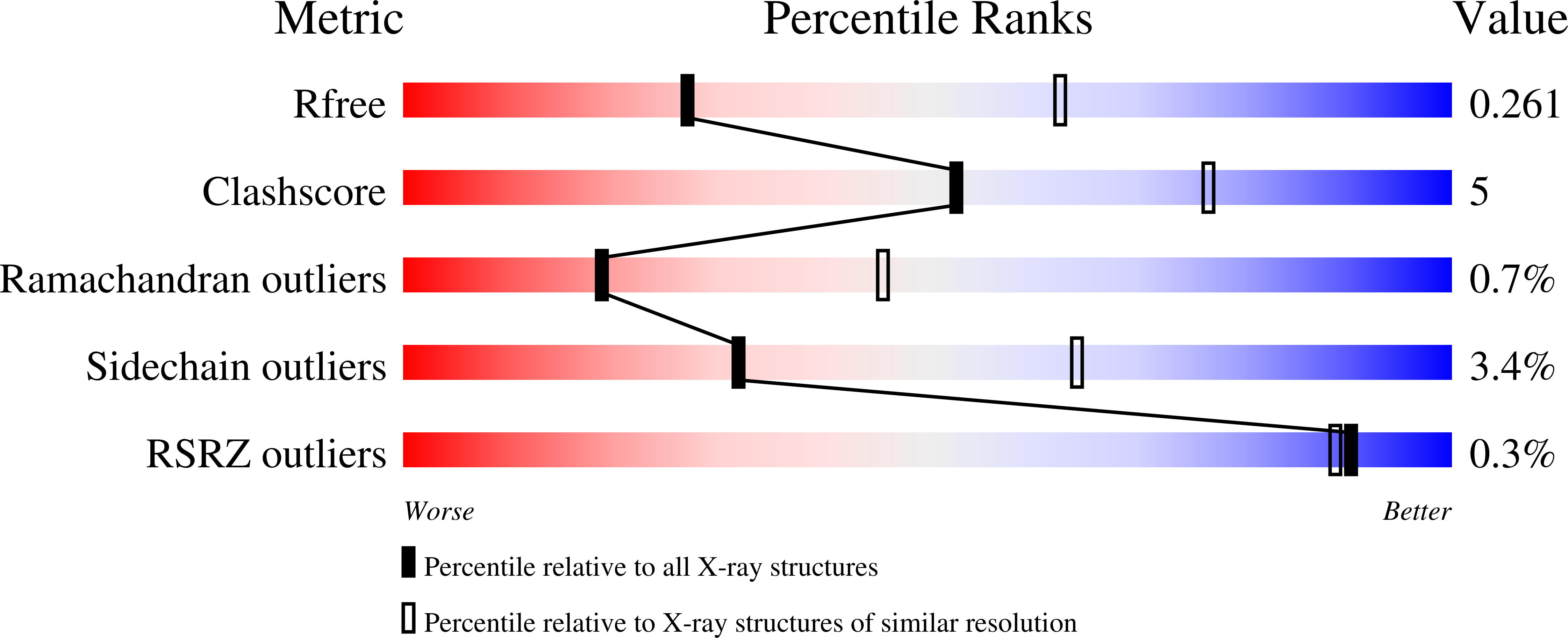
Resolution:
2.87 Å
R-Value Free:
0.25
R-Value Work:
0.19
R-Value Observed:
0.20
Space Group:
I 1 2 1
Macromolecular Entities
Structures with similar UniProt ID
Protein Blast
Polymer Type:polypeptide(L)
Molecule:3C-like proteinase nsp5
Gene (Uniprot):rep
Chain IDs:A
Chain Length:306
Number of Molecules:1
Biological Source:Severe acute respiratory syndrome coronavirus 2
Ligand Molecules
Primary Citation
Structure-Based Design of Covalent SARS-CoV‐2 Main Protease Inhibitors Targeting the Nirmatrelvir-Resistant E166 Mutants.
Jacs Au 6 233 244 (2026)
PMID: 41614164 DOI: 10.1021/jacsau.5c01178

Abstact

The COVID-19 pandemic spurred the rapid development of nirmatrelvir, a main protease (Mpro) inhibitor now widely prescribed as part of Paxlovid (nirmatrelvir plus ritonavir). However, increasing use has raised concerns about drug resistance. Resistance selection studies have identified multiple Mpro mutations, with E166V emerging as a particularly resistant variant. Sequencing data from COVID-19 patients confirms E166V as a clinically relevant mutation, and importantly, this substitution also confers cross-resistance to several next-generation Mpro inhibitors under development. In response, this study reports the rational design of inhibitors active against nirmatrelvir-resistant E166V/A mutants. The lead candidate, Jun13698, shows potent inhibition of both wild-type Mpro and the E166V/A mutants. Structural studies and molecular dynamics simulations reveal that Jun13698 forms stable complexes with wild-type and mutant proteases, consistent with its potent enzymatic and antiviral activity. Together, these findings position Jun13698 as a promising next-generation Mpro inhibitor capable of overcoming clinically relevant nirmatrelvir resistance.

Legend

Protein

Chemical

Disease

Primary Citation of related structures
Feedback Form
Name
Email
Institute
Feedback