

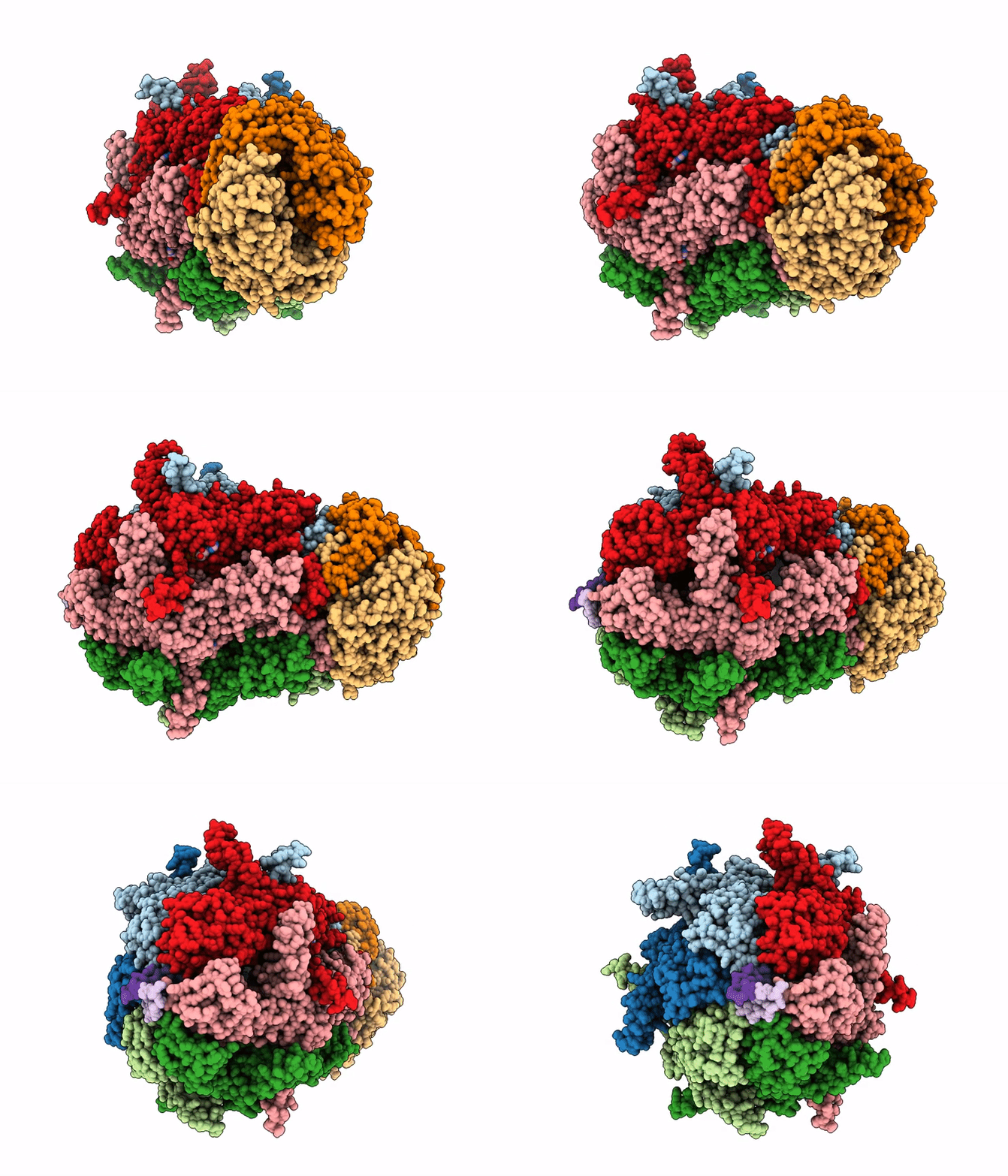
9X1M image
Deposition Date 2025-10-02
Release Date 2026-02-04
Last Version Date 2026-04-29
Entry Detail
PDB ID:
9X1M
Title:
The cryo-EM structure of HerA-NurA complex with AMPPNP and dsDNA from Thermococcus kodakarensis
Biological Source:
Source Organism(s):
Expression System(s):
Method Details:
Experimental Method:
Resolution:
2.30 Å
Aggregation State:
PARTICLE
Reconstruction Method:
SINGLE PARTICLE
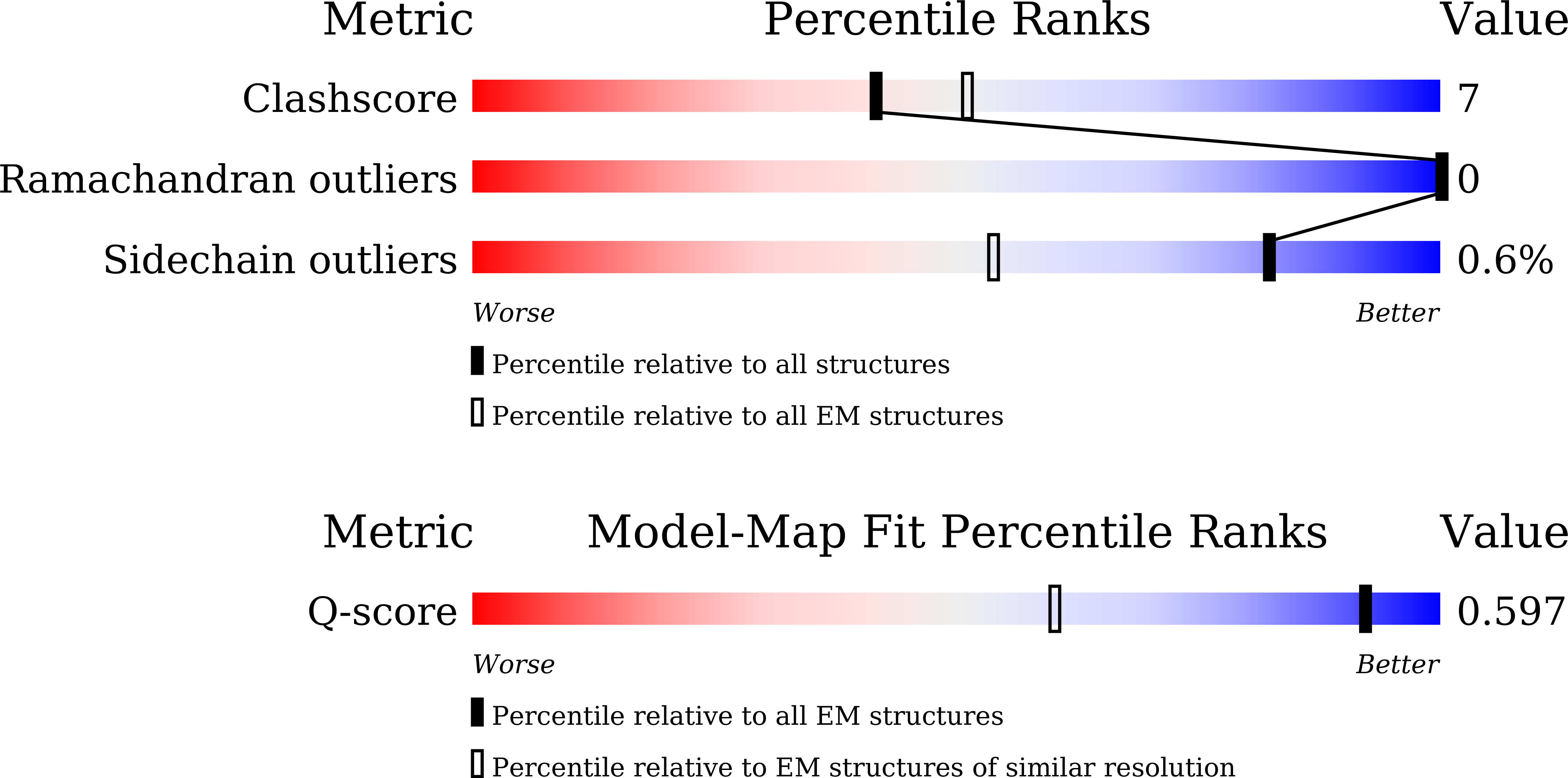
Macromolecular Entities
Structures with similar UniProt ID
Protein Blast
Polymer Type:polypeptide(L)
Molecule:DNA helicase
Gene (Uniprot):TK2213
Chain IDs:A, B, C, D, E, F
Chain Length:592
Number of Molecules:6
Biological Source:Thermococcus kodakarensis
Structures with similar UniProt ID
Protein Blast
Polymer Type:polypeptide(L)
Molecule:5'-3' nuclease, encoded next
Gene (Uniprot):TK2210
Chain IDs:G, H
Chain Length:443
Number of Molecules:2
Biological Source:Thermococcus kodakarensis
Polymer Type:polydeoxyribonucleotide
Molecule:DNA
Chain IDs:I
Chain Length:20
Number of Molecules:1
Biological Source:DNA molecule
Polymer Type:polydeoxyribonucleotide
Molecule:DNA
Chain IDs:J
Chain Length:20
Number of Molecules:1
Biological Source:DNA molecule
Primary Citation
Substrate specificity and action mechanism of the HerA-NurA nuclease from the hyperthermophilic archaeon Thermococcus kodakarensis.
Mbio 17 e0352325 e0352325 (2026)
PMID: 41641993 DOI: 10.1128/mbio.03523-25

Abstact

The HerA-NurA complex reportedly functions in DNA end resection in archaea. End resection is important to start homologous recombination by forming a single-stranded DNA region with an overhanging 3'-end, which invades double-stranded DNA (dsDNA) with a homologous sequence to form a D-loop. Here, we studied the structure and functions of HerA-NurA from the hyperthermophilic archaeon, Thermococcus kodakarensis. Our analyses demonstrated that NurA is a non-directional and single-stranded specific nuclease, but the HerA-NurA complex cleaves both strands of dsDNA in an exonucleolytic manner, regardless of the structure of the DNA end. The 3D structures of HerA-NurA and its complex with dsDNA revealed the detailed molecular mechanisms of these nuclease reactions. These results suggest that HerA-NurA may not be involved in the end resection process but instead performs other functions, such as exerting an antiviral function by degrading the dsDNA of foreign viruses, similar to recent studies in bacteria. IMPORTANCE: To understand the specific function of the HerA-NurA complex, which is believed to function in the end resection process to create a 3'-overhanging DNA for the following strand invasion in homologous recombination, we performed biochemical and structural analyses of this complex from a hyperthermophilic archaeon, Thermococcus kodakarensis, inhabiting a harsh environment where DNA is easily damaged. We found that the HerA-NurA complex cleaves both strands of double-stranded DNA in an exonucleolytic manner, regardless of the structure of the DNA end. Our structural analysis revealed the detailed characteristics of the nuclease activity exhibited by the HerA-NurA complex. Based on the presented information, it is unlikely that the HerA-NurA complex directly functions in end resection, but rather is involved in other functions, possibly in defense against viral infections.

Legend

Protein

Chemical

Disease

Primary Citation of related structures
Feedback Form
Name
Email
Institute
Feedback