

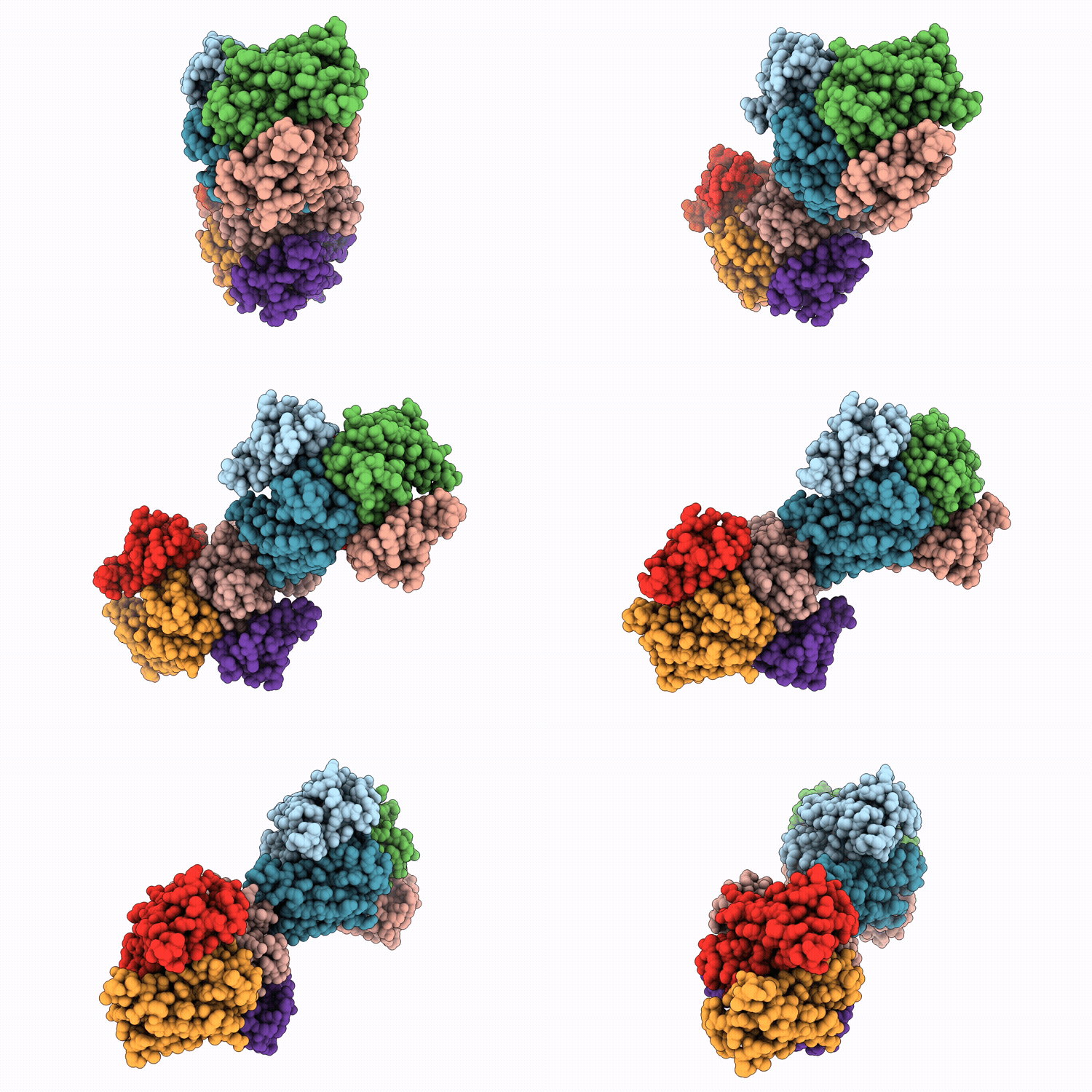
9WPB image
Deposition Date 2025-09-08
Release Date 2026-05-06
Last Version Date 2026-05-06
Entry Detail
PDB ID:
9WPB
Title:
Crystal structure of human transthyretin (TTR) with pryazole-based stabilizer
Biological Source:
Source Organism(s):
Homo sapiens (Taxon ID: 9606)
Expression System(s):
Method Details:
Experimental Method:
Resolution:
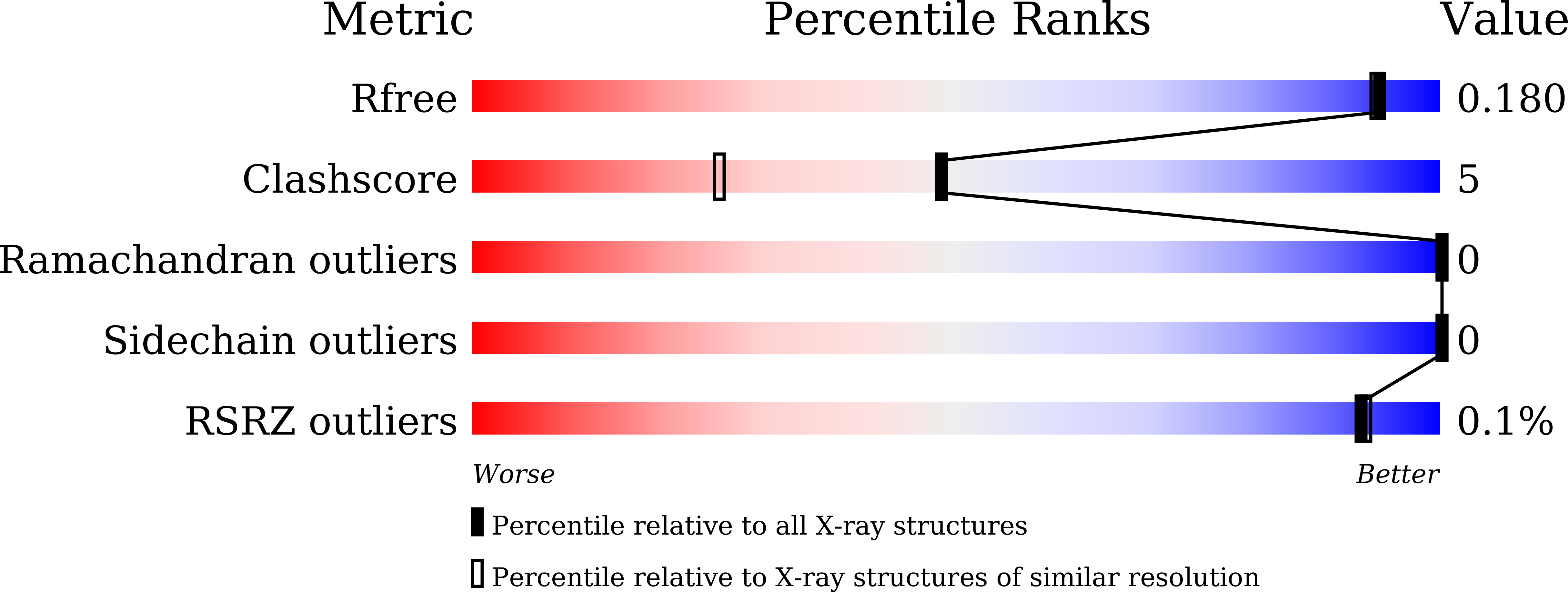
1.58 Å
R-Value Free:
0.17
R-Value Work:
0.17
R-Value Observed:
0.17
Space Group:
P 1
Macromolecular Entities
Structures with similar UniProt ID
Protein Blast
Polymer Type:polypeptide(L)
Molecule:Transthyretin
Gene (Uniprot):TTR
Chain IDs:A, B, C, D, E, F, G, H
Chain Length:130
Number of Molecules:8
Biological Source:Homo sapiens
Ligand Molecules
Primary Citation
Pyrazole-Based Transthyretin Kinetic Stabilizers Identified Using a Covalent Fluorescent Probe Assay for Selectivity Profiling in Human Serum.
J.Med.Chem. 68 26448 26465 (2025)
PMID: 41362238 DOI: 10.1021/acs.jmedchem.5c02576

Abstact

Transthyretin (TTR) amyloidosis arises from the extracellular aggregation of misfolded TTR monomers into beta-sheet-rich fibrils, leading to progressive tissue damage. To inhibit this process, we designed and synthesized pyrazole-based kinetic stabilizers targeting the thyroxine-binding sites of TTR. Structure-activity relationship studies revealed that derivatives with hydrophobic trans-alkene linkers and 3,5-substituted pyrazole rings showed enhanced stabilizing potency, particularly those bearing carboxylic acid, amide, or sulfonamide groups. A covalent fluorescent probe derived from trans-styrylpyrazole was developed to selectively react with Lys15, enabling fluorescence probe exclusion and native PAGE assays to evaluate stabilizer selectivity in human serum. Among these, 3,5-dichloropyrazole derivatives exhibited efficacy comparable to that of tafamidis and acoramidis. X-ray crystallography of the TTR-17 complex confirmed hydrogen bonding with Ser117/117' and electrostatic interactions with Lys15. Pharmacokinetic studies of compounds 16 and 17 demonstrated favorable exposure, bioavailability, and metabolic stability, supporting their preclinical development for hereditary- and wild-type TTR amyloidosis.

Legend

Protein

Chemical

Disease

Primary Citation of related structures
Feedback Form
Name
Email
Institute
Feedback