

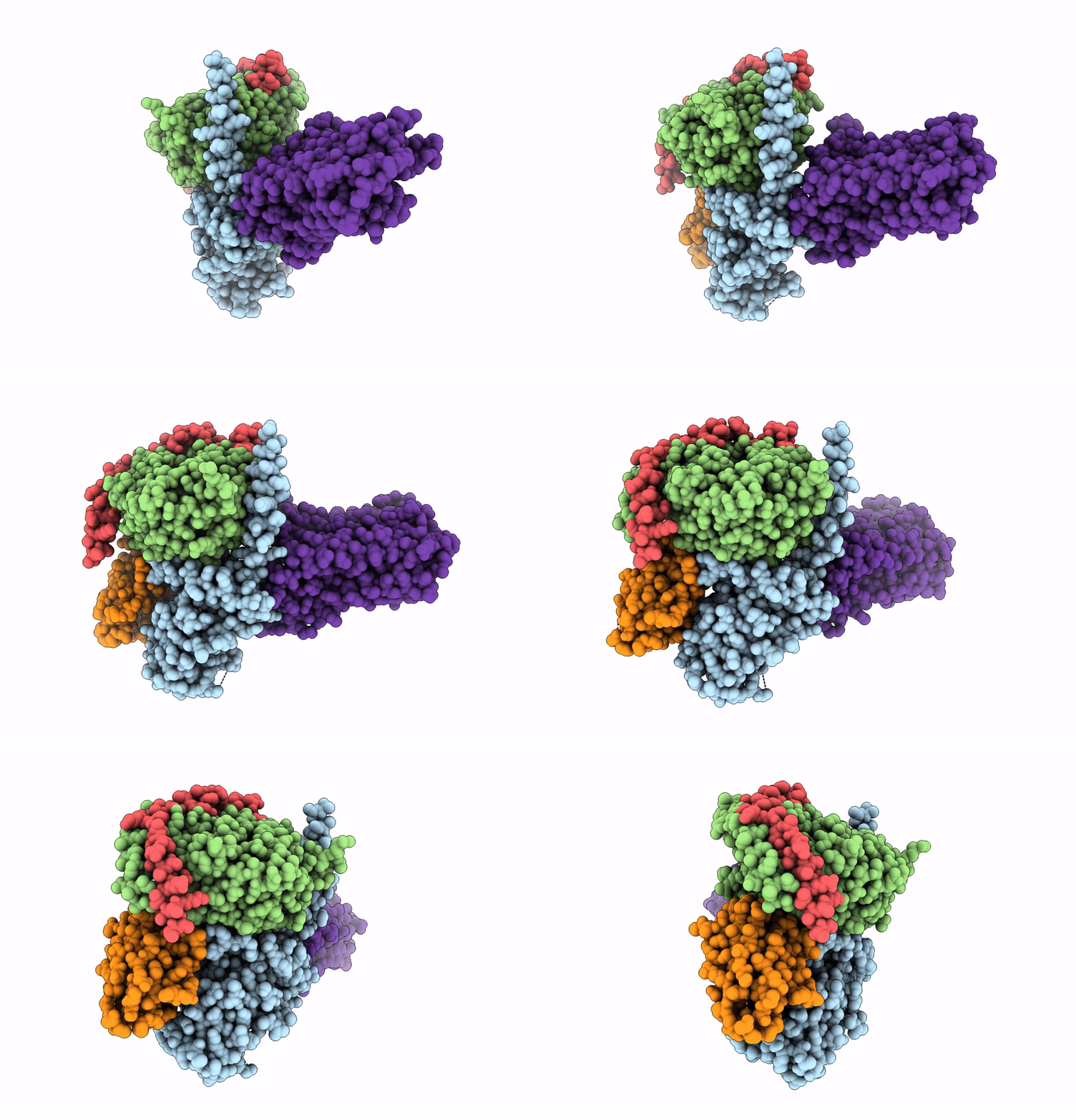
9W45 image
Deposition Date 2025-07-30
Release Date 2026-03-04
Last Version Date 2026-05-06
Entry Detail
PDB ID:
9W45
Title:
The structure of odorant-bound mouse class II odorant receptor-miniGs complex
Biological Source:
Source Organism(s):
Homo sapiens (Taxon ID: 9606)
Lama glama (Taxon ID: 9844)
Mus musculus (Taxon ID: 10090)
Method Details:
Experimental Method:
Resolution:
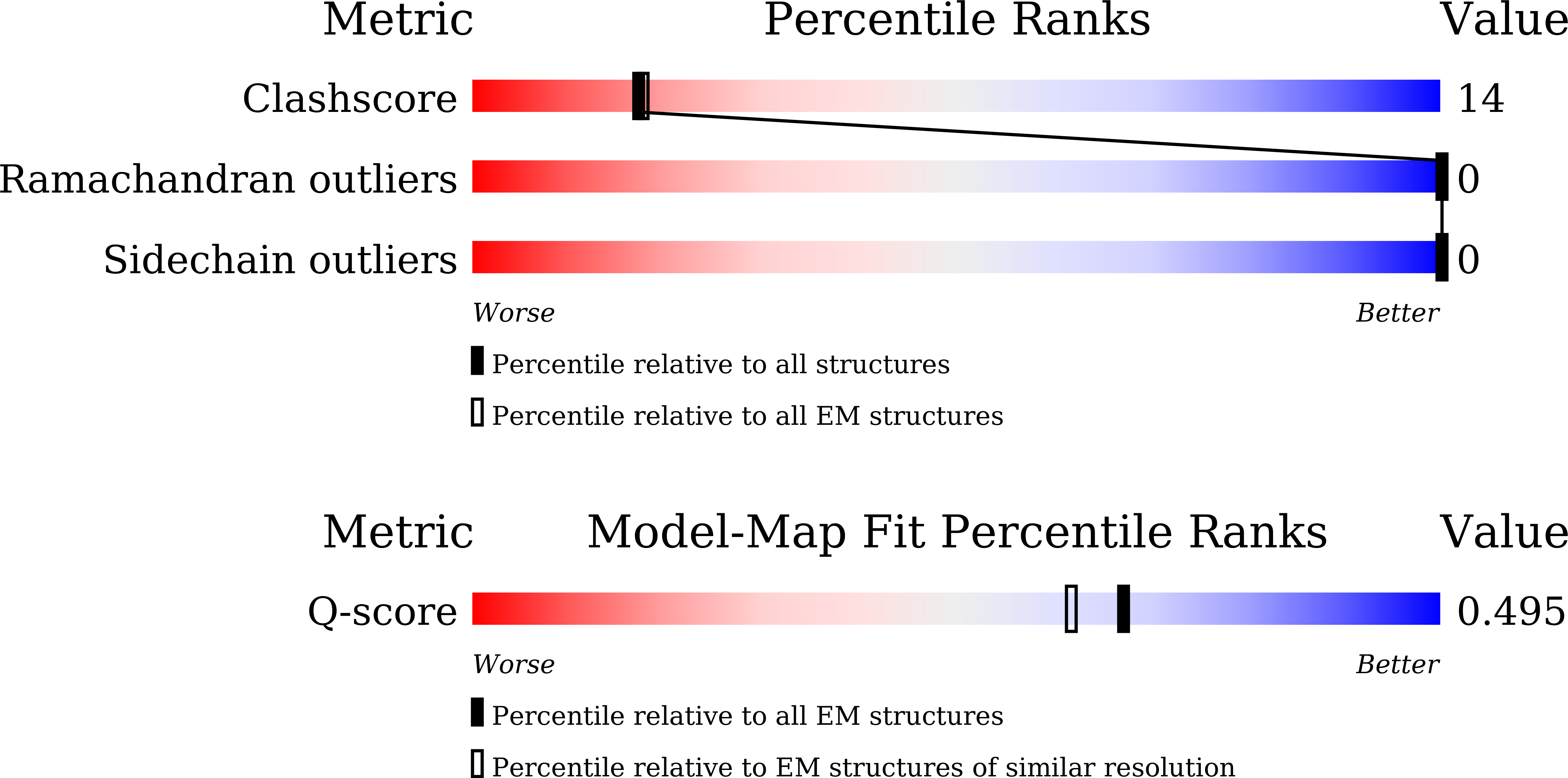
3.20 Å
Aggregation State:
PARTICLE
Reconstruction Method:
SINGLE PARTICLE
Macromolecular Entities
Structures with similar UniProt ID
Protein Blast
Polymer Type:polypeptide(L)
Molecule:Guanine nucleotide-binding pr
Gene (Uniprot):GNAS
Chain IDs:A
Chain Length:250
Number of Molecules:1
Biological Source:Homo sapiens
Structures with similar UniProt ID
Protein Blast
Polymer Type:polypeptide(L)
Molecule:Guanine nucleotide-binding pr
Gene (Uniprot):GNB1
Chain IDs:B
Chain Length:358
Number of Molecules:1
Biological Source:Homo sapiens
Structures with similar UniProt ID
Protein Blast
Polymer Type:polypeptide(L)
Molecule:Guanine nucleotide-binding pr
Gene (Uniprot):GNG2
Chain IDs:C (auth: G)
Chain Length:71
Number of Molecules:1
Biological Source:Homo sapiens
Structures with similar UniProt ID
Protein Blast
Polymer Type:polypeptide(L)
Molecule:Nanobody 35
Chain IDs:D (auth: N)
Chain Length:130
Number of Molecules:1
Biological Source:Lama glama
Structures with similar UniProt ID
Protein Blast
Polymer Type:polypeptide(L)
Molecule:Olfactory receptor
Gene (Uniprot):Or1d2
Chain IDs:E (auth: R)
Chain Length:312
Number of Molecules:1
Biological Source:Mus musculus
Ligand Molecules
Primary Citation
Structural basis of odorant recognition by a mammalian class II odorant receptor.
Sci Adv 12 eaeb9026 eaeb9026 (2026)
PMID: 41894497 DOI: 10.1126/sciadv.aeb9026

Abstact

Mammalian odorant receptors (ORs) sense diverse environmental chemicals, yet structural insights into odorant recognition by mammalian class II ORs remain limited. Here, we present the cryo-EM structure of a native mammalian class II OR, mouse Olfr412, a human OR1D2 ortholog, bound to the odorant methyl-trans-cinnamate and the G(s) protein. The odorant-binding pocket of Olfr412 is located deeper within the transmembrane domain than that of the class I OR OR51E2 and is largely composed of poorly conserved hydrophobic residues, providing a structural basis for broad odorant recognition in class II ORs. Structural and molecular dynamics analyses suggest that the conserved Y(6x55) plays a key role in odorant recognition and activation, functionally paralleling R(6x59) in class I ORs and is further stabilized by intramolecular interaction with the conserved ECL2 residue E(45x51). Together, our findings uncover structural mechanisms underlying odorant recognition and activation in class II ORs.

Legend

Protein

Chemical

Disease

Primary Citation of related structures
Feedback Form
Name
Email
Institute
Feedback