

9VRQ image
Deposition Date 2025-07-07
Release Date 2026-05-20
Last Version Date 2026-05-20
Entry Detail
PDB ID:
9VRQ
Title:
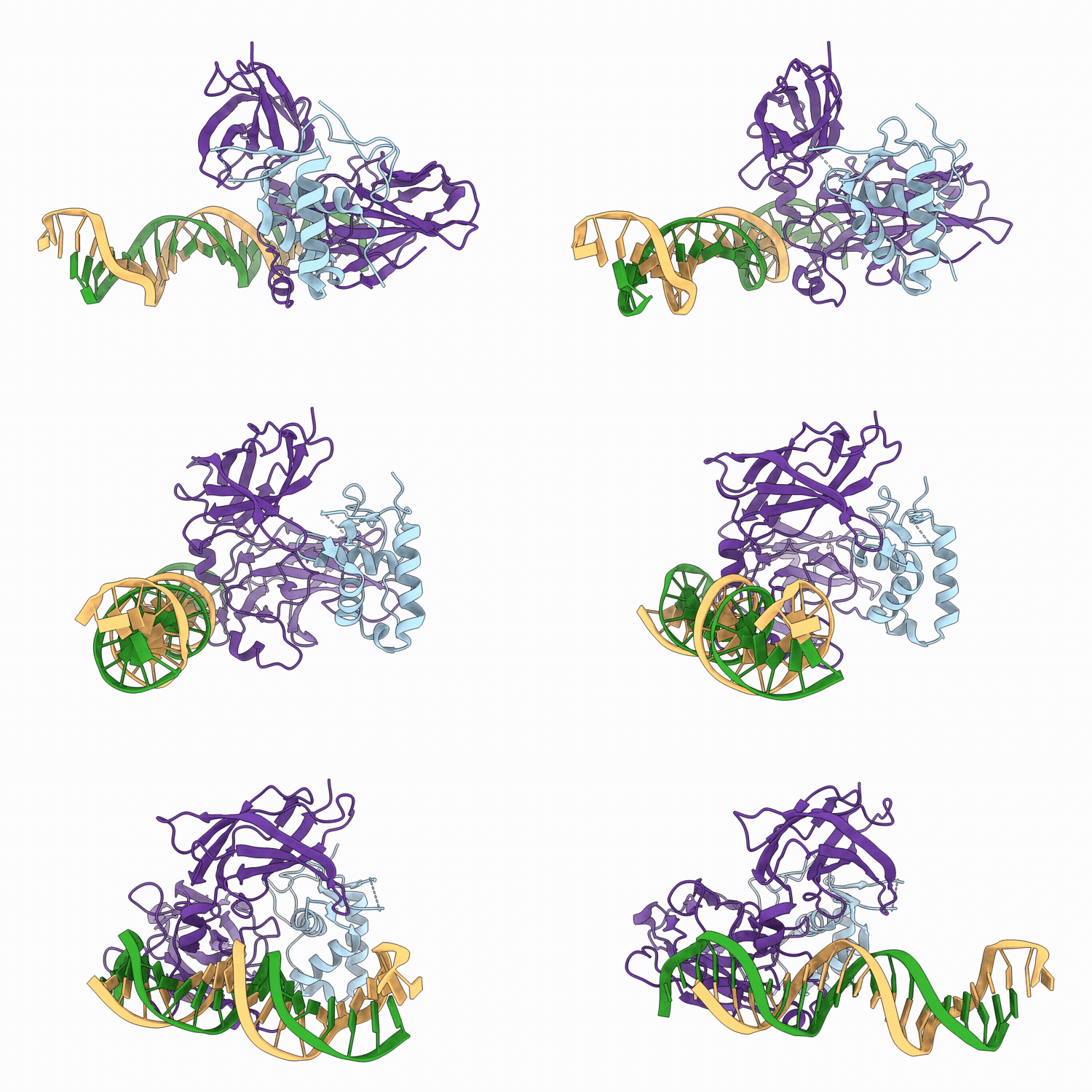
Crystal structure of FOXC2/NFAT1 complex bound to ARRE2 DNA
Biological Source:
Source Organism(s):
Homo sapiens (Taxon ID: 9606)
Expression System(s):
Method Details:
Experimental Method:
Resolution:
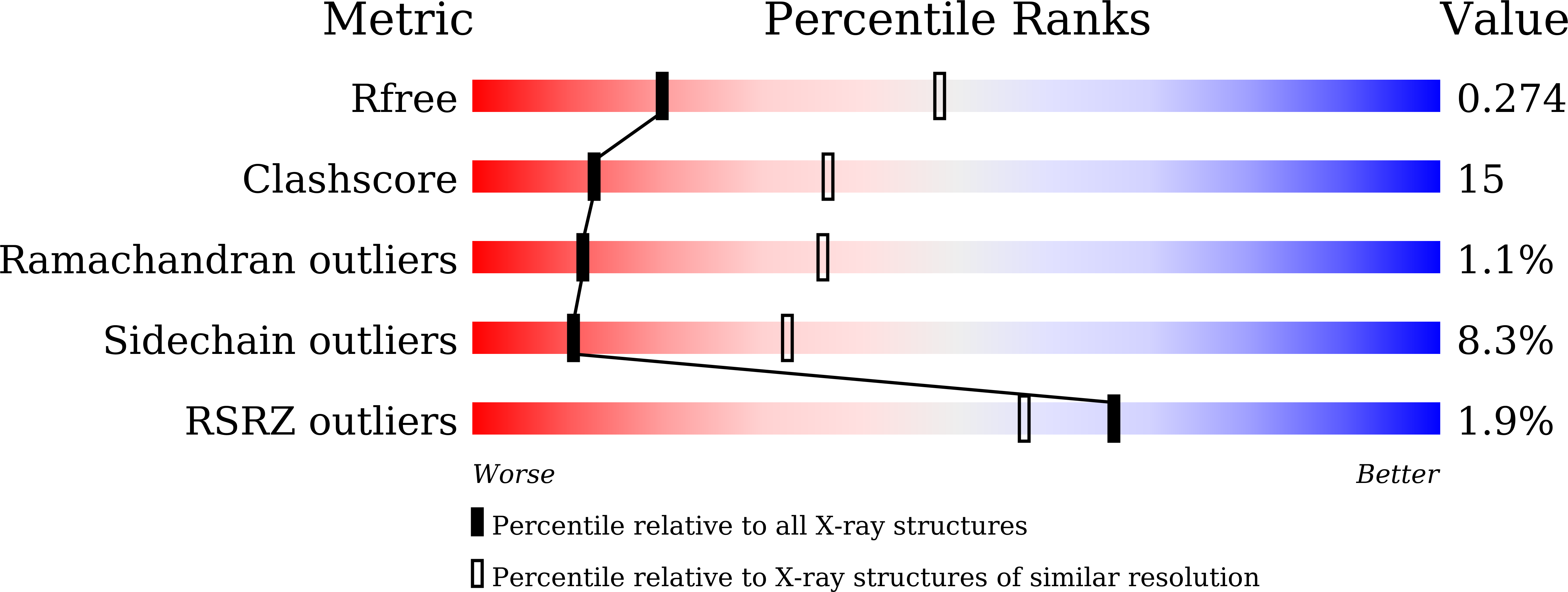
2.80 Å
R-Value Free:
0.28
R-Value Work:
0.23
R-Value Observed:
0.23
Space Group:
P 21 21 21
Macromolecular Entities
Structures with similar UniProt ID
Protein Blast
Polymer Type:polypeptide(L)
Molecule:Forkhead box protein C2
Gene (Uniprot):FOXC2
Chain IDs:A
Chain Length:103
Number of Molecules:1
Biological Source:Homo sapiens
Polymer Type:polydeoxyribonucleotide
Molecule:ARRE2-S
Chain IDs:B (auth: C)
Chain Length:21
Number of Molecules:1
Biological Source:Homo sapiens
Polymer Type:polydeoxyribonucleotide
Molecule:ARRE2-AS
Chain IDs:C (auth: D)
Chain Length:21
Number of Molecules:1
Biological Source:Homo sapiens
Structures with similar UniProt ID
Protein Blast
Polymer Type:polypeptide(L)
Molecule:Nuclear factor of activated T
Gene (Uniprot):NFATC2
Chain IDs:D (auth: N)
Chain Length:287
Number of Molecules:1
Biological Source:Homo sapiens
Primary Citation
FOXC2 represses NFAT1-dependent transcription through a DNA-facilitated protein-protein interaction.
Nucleic Acids Res. 54 ? ? (2026)
PMID: 42023653 DOI: 10.1093/nar/gkag367

Abstact

Transcription factor nuclear factor of activated T cells (NFAT) plays a central role in immune gene regulation through cooperative interactions with diverse transcriptional partners. While FOXP family members have been identified as co-regulators of NFAT1, the involvement of other FOX family proteins has remained mechanistically obscure. Here, we solved three crystal structures of NFAT1-RHR/FOXC2-DBD/ARRE DNA ternary complexes and uncovered an unexpected mode of transcriptional repression mediated by FOXC2 through direct, DNA-facilitated binding to the V-shaped groove of NFAT1's Rel-homology region (RHR). Biochemical assays revealed that DNA enhanced FOXC2-NFAT1 interaction by more than five-fold, supporting a model in which DNA acts as a structural co-factor that promotes complex formation. Mutational disruption of the FOXC2-NFAT1 interface impaired complex assembly and abrogated transcriptional repression. Functional assays further confirmed that FOXC2 suppressed NFAT1-driven transcription of multiple cytokines and chemokines, including IL2, TNF, CXCL5, and CCL2. Notably, this repressive mechanism was found to extend to other FOX proteins (FOXI1, FOXO1, and FOXK1), suggesting a broader paradigm of FOX-NFAT1 interaction. Our study defined a previously unrecognized FOX-mediated transcriptional repression mechanism and provides a structural framework for NFAT inhibition by FOX proteins, offering novel insights into the transcriptional regulation of immune-related genes.

Legend

Protein

Chemical

Disease

Primary Citation of related structures
Feedback Form
Name
Email
Institute
Feedback