

9VRE image
Deposition Date 2025-07-06
Release Date 2026-04-01
Last Version Date 2026-04-15
Entry Detail
PDB ID:
9VRE
Title:
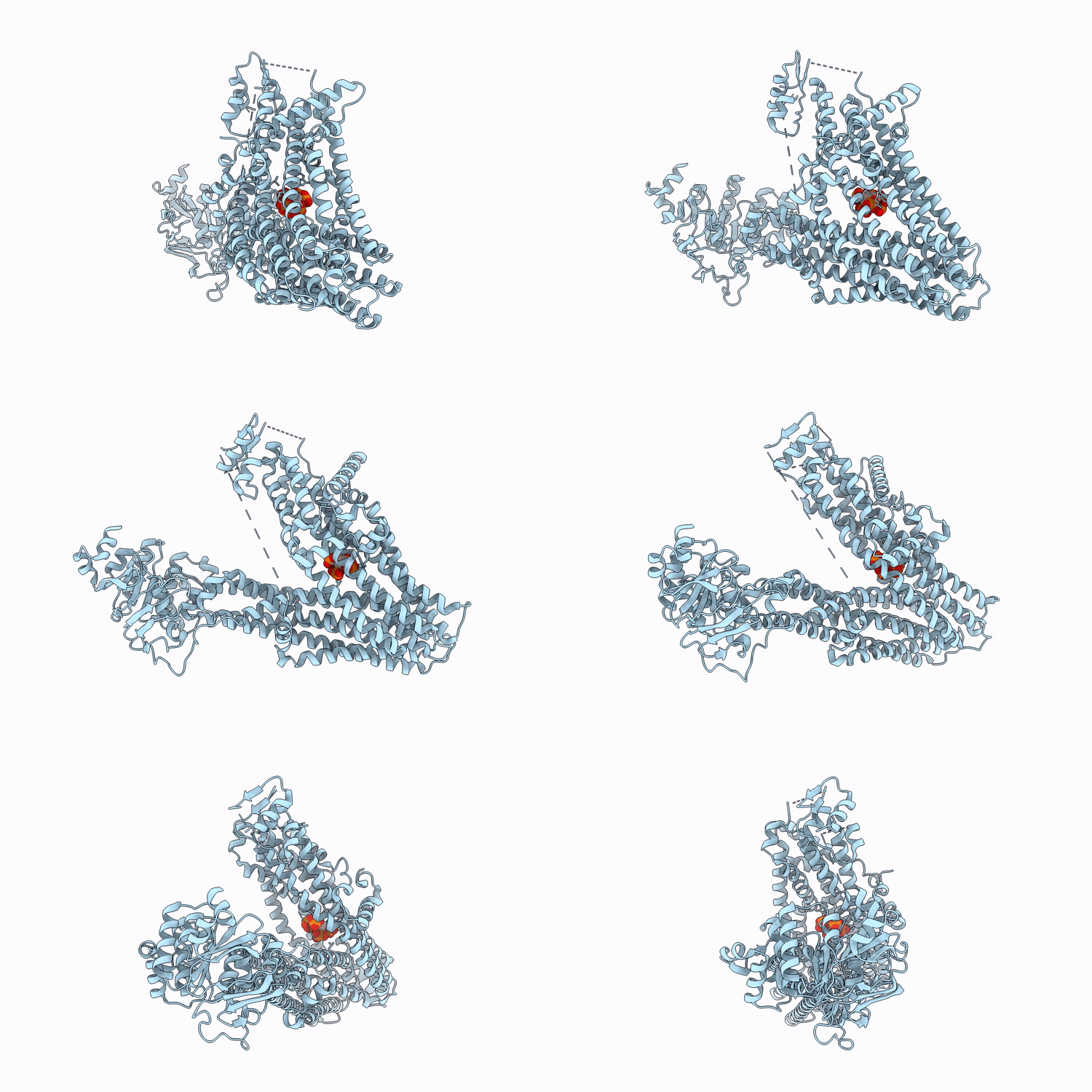
Cryo-EM structure of rice multidrug resistance protein 5 (MRP5) with InsP6 in state B
Biological Source:
Source Organism(s):
Expression System(s):
Method Details:
Experimental Method:
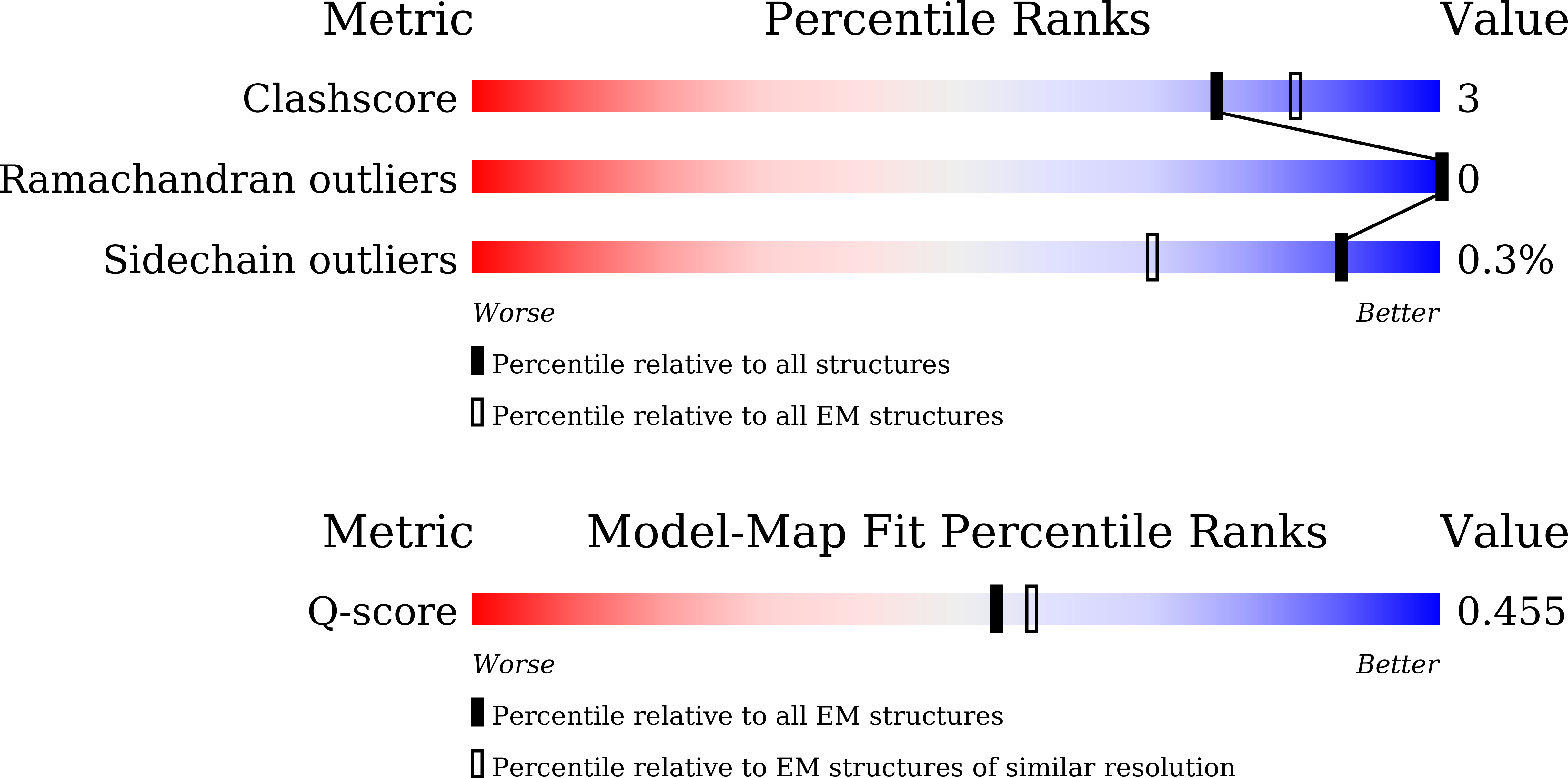
Resolution:
3.50 Å
Aggregation State:
PARTICLE
Reconstruction Method:
SINGLE PARTICLE
Macromolecular Entities
Structures with similar UniProt ID
Protein Blast
Polymer Type:polypeptide(L)
Molecule:ABC transporter C family memb
Gene (Uniprot):ABCC13
Chain IDs:A
Chain Length:1505
Number of Molecules:1
Biological Source:Oryza sativa Japonica Group
Ligand Molecules
Primary Citation
Cryo-EM structures of Oryza sativa MRP5 reveal a phytate accumulation mechanism in plant vacuoles.
Plant Cell 38 ? ? (2026)
PMID: 41875395 DOI: 10.1093/plcell/koag088

Abstact

Phytate (phytic acid, or InsP6), the primary phosphorus storage compound in plants, plays essential roles in nutrient homeostasis and cellular signaling. However, its strong metal-chelating properties make cytosolic accumulation cytotoxic, necessitating its sequestration into vacuoles for safe storage. Here, we present the cryo-EM structures of the rice vacuolar phytate transporter, OsMRP5, captured in distinct functional states. These structures reveal the molecular basis of OsMRP5 function as an ATP-binding cassette (ABC) transporter. OsMRP5 employs a specialized substrate-recognition mechanism, uniquely adapted to bind the fully hydrophilic InsP6 through extensive electrostatic and hydrogen-bonding interactions within two distinct, highly polar binding sites in its central cavity. A distinctive electropositive tunnel, positioned above the central cavity, forms a continuous pathway connecting the InsP6-binding pocket to the vacuolar export site. This tunnel likely generates an electrostatic attraction that facilitates the movement of the highly anionic InsP6 through the transporter. By mapping mutations from low-phytic acid (lpa) crop variants onto the OsMRP5 structures, we pinpoint their conserved locations critical for transporter function and validate their impact experimentally. These results reveal how OsMRP5 recognizes and transports the highly charged InsP6 molecules into vacuoles, providing a molecular framework for targeted manipulation of this agriculturally important transporter.

Legend

Protein

Chemical

Disease

Primary Citation of related structures
Feedback Form
Name
Email
Institute
Feedback