

9UVF image
Deposition Date 2025-05-10
Release Date 2026-05-06
Last Version Date 2026-05-06
Entry Detail
PDB ID:
9UVF
Title:
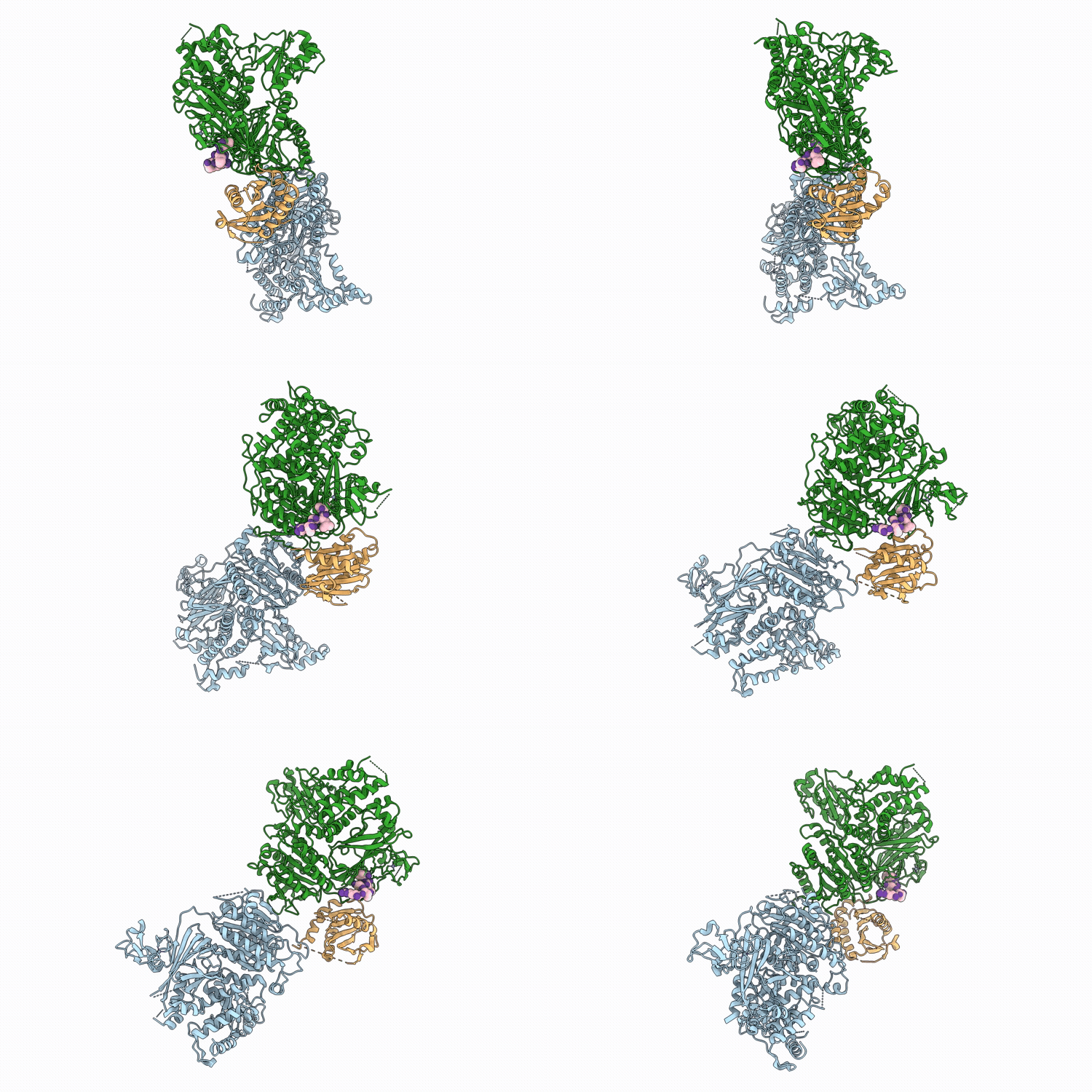
Crystal structure of Sec23a/24a/22b bound to mouse STING LI motif
Biological Source:
Source Organism(s):
Homo sapiens (Taxon ID: 9606)
Mus musculus (Taxon ID: 10090)
Method Details:
Experimental Method:
Resolution:
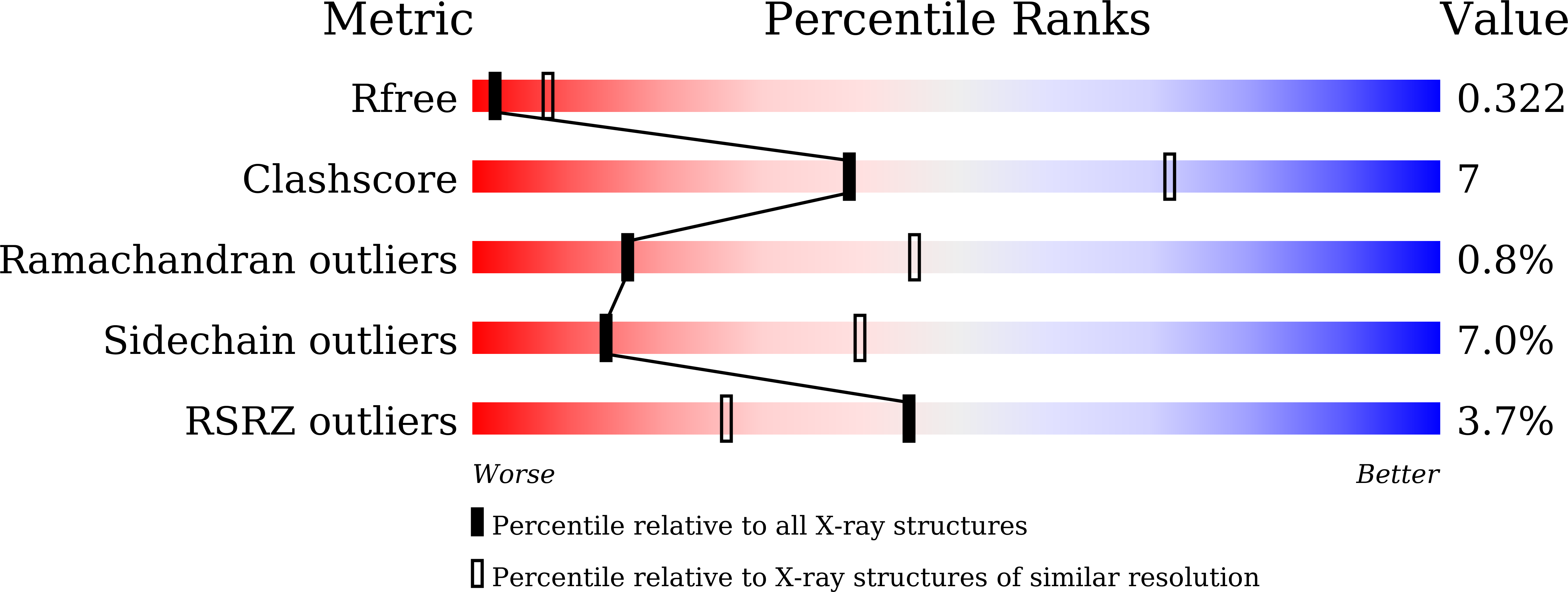
3.15 Å
R-Value Free:
0.32
R-Value Work:
0.26
R-Value Observed:
0.26
Space Group:
C 1 2 1
Macromolecular Entities
Structures with similar UniProt ID
Protein Blast
Polymer Type:polypeptide(L)
Molecule:Protein transport protein Sec
Gene (Uniprot):SEC23A
Chain IDs:A
Chain Length:765
Number of Molecules:1
Biological Source:Homo sapiens
Structures with similar UniProt ID
Protein Blast
Polymer Type:polypeptide(L)
Molecule:Protein transport protein Sec
Gene (Uniprot):SEC24A
Chain IDs:B
Chain Length:748
Number of Molecules:1
Biological Source:Homo sapiens
Structures with similar UniProt ID
Protein Blast
Polymer Type:polypeptide(L)
Molecule:Vesicle-trafficking protein S
Gene (Uniprot):SEC22B
Chain IDs:C
Chain Length:157
Number of Molecules:1
Biological Source:Homo sapiens
Structures with similar UniProt ID
Protein Blast
Polymer Type:polypeptide(L)
Molecule:ARG-THR-ASP-LEU-ILE
Chain IDs:D (auth: E)
Chain Length:5
Number of Molecules:1
Biological Source:Mus musculus
Ligand Molecules
Primary Citation
STING COPII ER Export Trafficking and Signaling Primed by Phosphorylation Switches.
Adv Sci 12 e03660 e03660 (2025)
PMID: 40598830 DOI: 10.1002/advs.202503660

Abstact

Despite advances in understanding the STING signaling pathway, mechanisms governing cyclic GMP-AMP (cGAMP)-induced STING trafficking out of the endoplasmic reticulum (ER) remain unclear. This study reveals that STING localization is regulated by the balance between coat protein II (COPII)- and coat protein I (COPI)-mediated trafficking, maintaining ER residency in the inactive state or promoting transport to the cis-Golgi via enhanced COPII-mediated export upon activation. Two novel TANK-binding kinase 1 (TBK1)-regulated phosphorylated COPII sorting signals on STING-a conserved pSGME motif and a primate-specific pFS motif-are biochemically and structurally identified. These cGAMP-induced signals drive activated STING toward the ER-Golgi intermediate compartment (ERGIC) and the cis-Golgi complex. Using a cell-free COPII vesicle reconstitution system, TBK1 activation is shown to occur on COPII vesicles, while IRF3 phosphorylation is confined to the ERGIC or the cis-Golgi complex post-uncoating, due to the competitive binding of COPII Sec24 and IRF3 to phosphorylated STING. A class of compounds is also identified that attenuates IRF3 phosphorylation by inhibiting phosphorylated STING packaging into COPII vesicles. These findings elucidate STING trafficking mechanisms and offer therapeutic potential for diseases linked to dysregulated STING activation.

Legend

Protein

Chemical

Disease

Primary Citation of related structures
Feedback Form
Name
Email
Institute
Feedback