

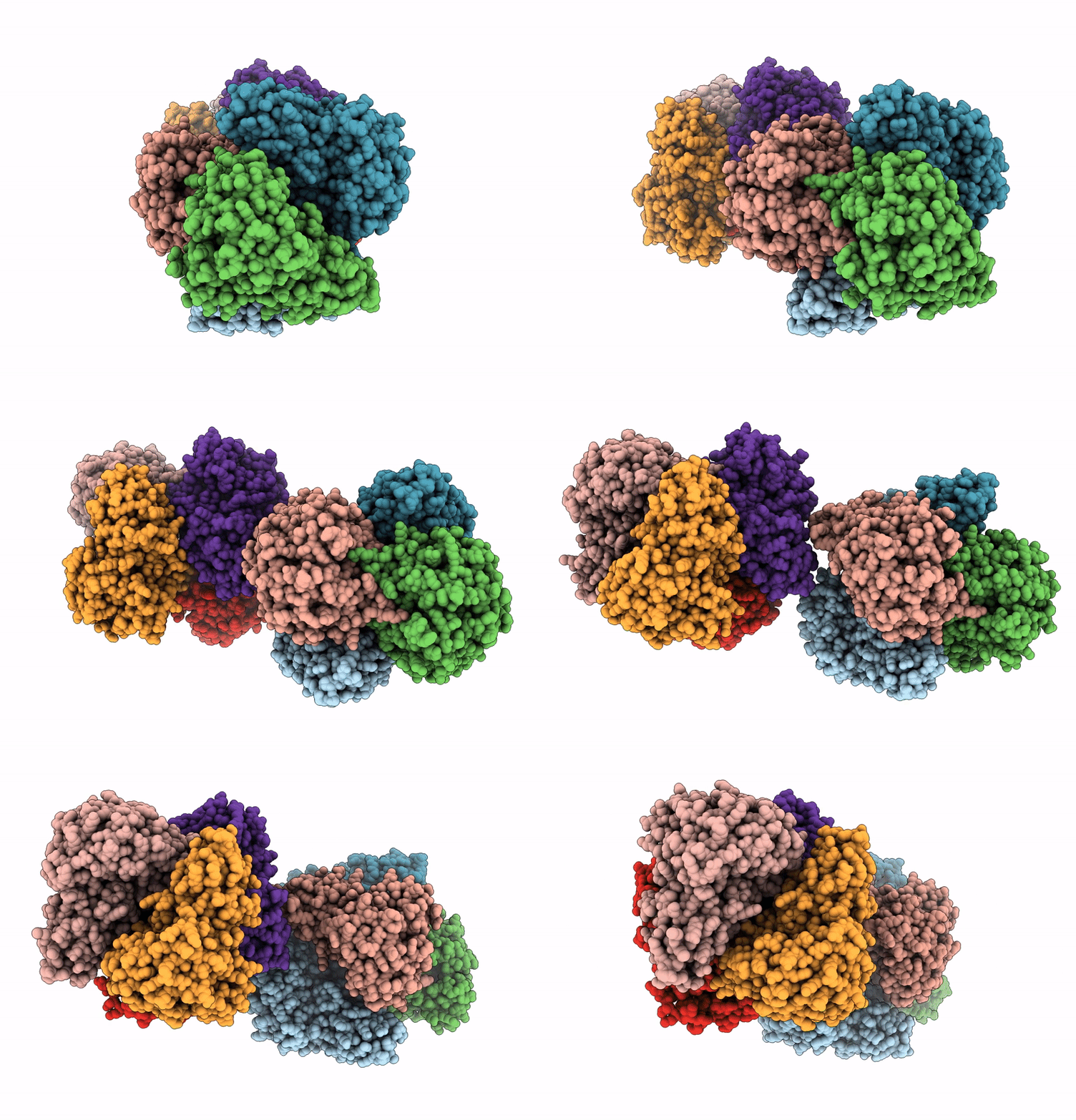
9UP6 image
Deposition Date 2025-04-27
Release Date 2026-03-04
Last Version Date 2026-03-04
Entry Detail
PDB ID:
9UP6
Keywords:
Title:
Klebsiella pneumoniae NagA
Biological Source:
Source Organism(s):
Expression System(s):
Method Details:
Experimental Method:
Resolution:
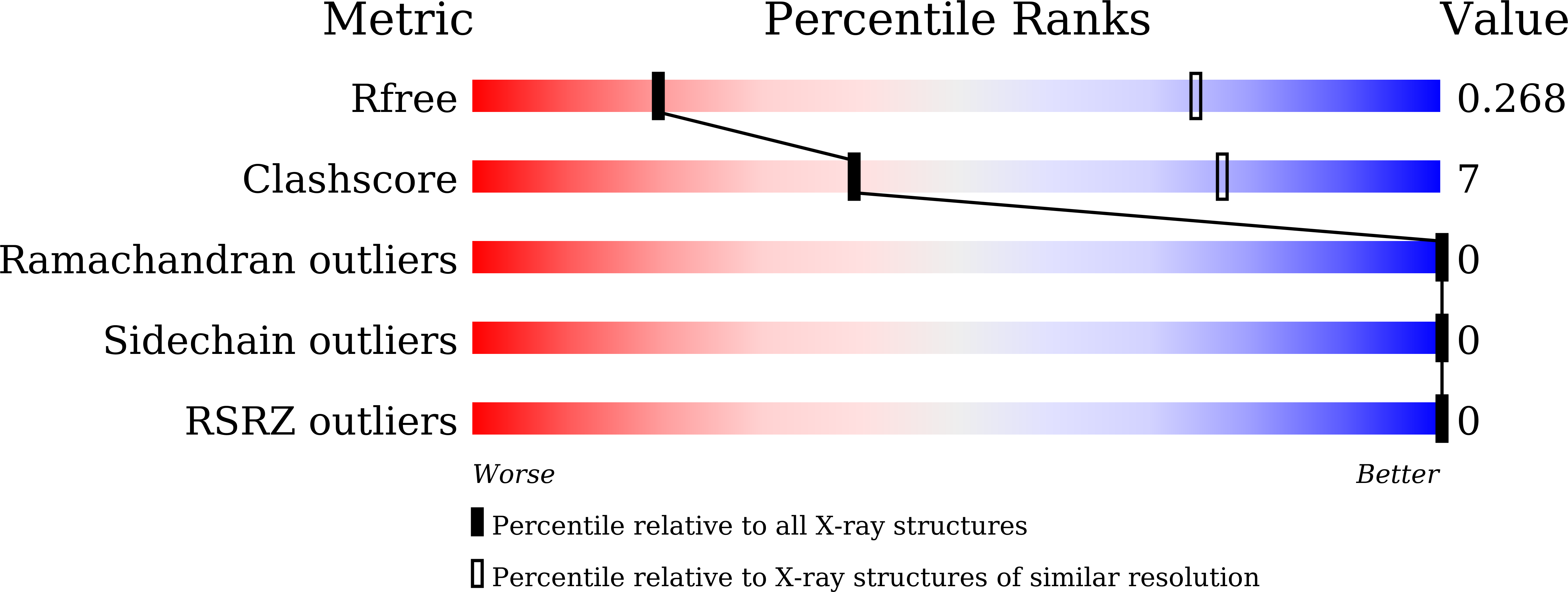
3.67 Å
R-Value Free:
0.26
R-Value Work:
0.22
R-Value Observed:
0.22
Space Group:
P 1
Macromolecular Entities
Structures with similar UniProt ID
Protein Blast
Polymer Type:polypeptide(L)
Molecule:N-acetylglucosamine-6-phospha
Gene (Uniprot):nagA
Chain IDs:A, B, C, D, E, F, G, H
Chain Length:383
Number of Molecules:8
Biological Source:Klebsiella pneumoniae
Ligand Molecules
Primary Citation
Structural Basis for Tetramerization of Klebsiella pneumoniae N -Acetylglucosamine-6-Phosphate Deacetylase.
J Microbiol Biotechnol. 35 e2505019 e2505019 (2025)
PMID: 40877019 DOI: 10.4014/jmb.2505.05019

Abstact

N-acetylglucosamine-6-phosphate deacetylase (NagA) is a conserved enzyme involved in bacterial amino sugar metabolism, catalyzing the conversion of GlcNAc-6-phosphate to GlcN-6-phosphate and acetate. While NagA typically function as dimers, its quaternary diversity across species remains underexplored. Here, we present the crystal structure of Klebsiella pneumoniae (kpNagA), which forms a homotetrameric assembly both in crystal and in solution, as confirmed by SEC-MALS. Each monomer adopts a canonical (beta/alpha)(8) TIM barrel fold with a beta-sandwich subdomain, and its active site, located around beta10-beta11 and alpha3-alpha4, coordinates a divalent zinc ion. Comparative analyses revealed conserved dimer interfaces but divergent tetrameric arrangements. Notably, Pasteurella multocida NagA also forms a stable tetramer, albeit via a distinct interface. These findings suggest species-specific tetramerization and broaden our understanding of NagA structural diversity and potential antibiotic targets.

Legend

Protein

Chemical

Disease

Primary Citation of related structures
Feedback Form
Name
Email
Institute
Feedback