

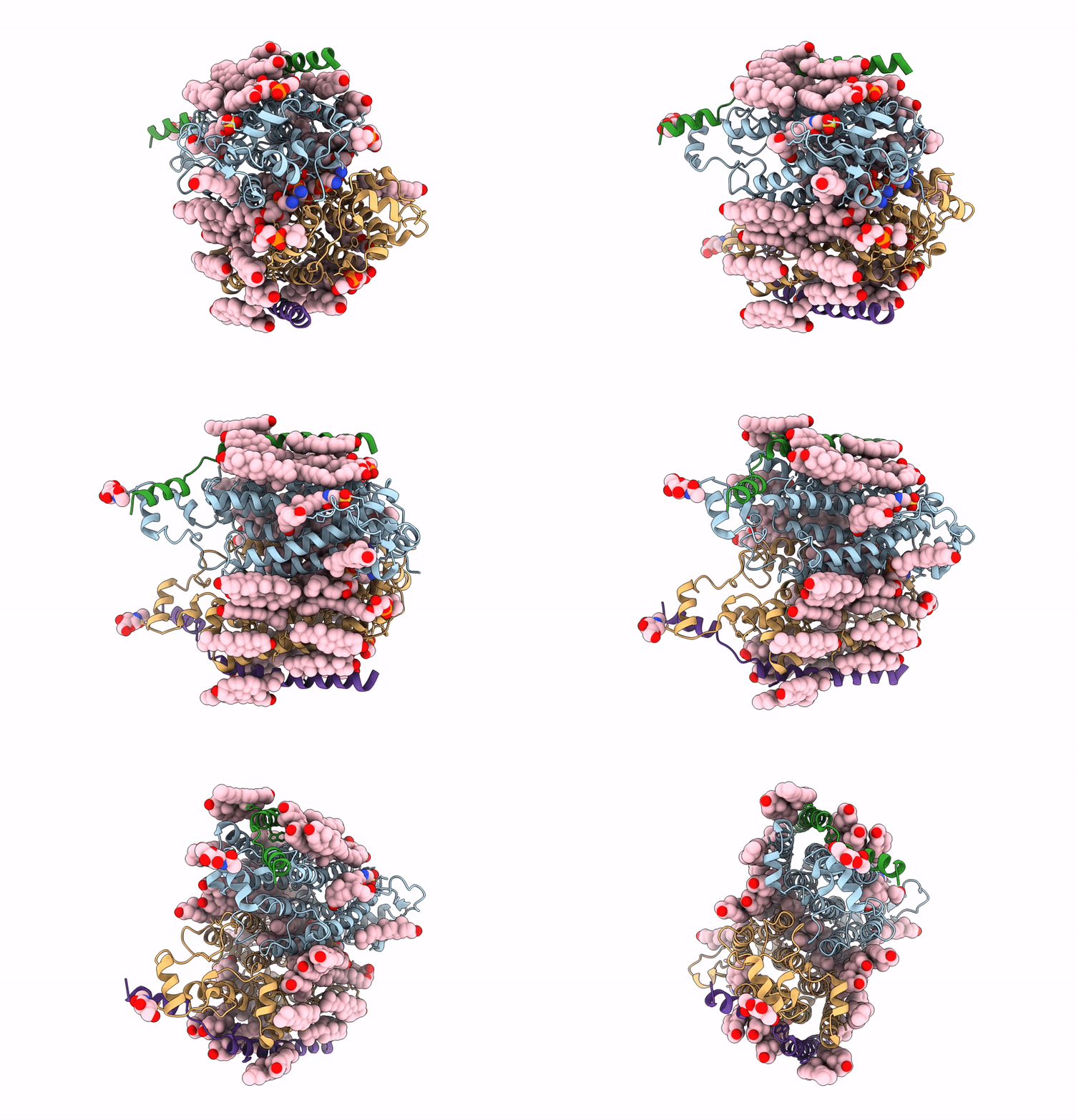
9UNV image
Deposition Date 2025-04-24
Release Date 2025-12-10
Last Version Date 2026-03-18
Entry Detail
PDB ID:
9UNV
Title:
Cryo-EM structure of human organic solute transporter Ost-alpha/beta bound with TLCA
Biological Source:
Source Organism(s):
Homo sapiens (Taxon ID: 9606)
Expression System(s):
Method Details:
Experimental Method:
Resolution:
3.12 Å
Aggregation State:
PARTICLE
Reconstruction Method:
SINGLE PARTICLE

Macromolecular Entities
Structures with similar UniProt ID
Protein Blast
Polymer Type:polypeptide(L)
Molecule:Organic solute transporter su
Gene (Uniprot):SLC51A
Chain IDs:A, C
Chain Length:351
Number of Molecules:2
Biological Source:Homo sapiens
Structures with similar UniProt ID
Protein Blast
Polymer Type:polypeptide(L)
Molecule:Organic solute transporter su
Gene (Uniprot):SLC51B
Chain IDs:B, D
Chain Length:141
Number of Molecules:2
Biological Source:Homo sapiens
Primary Citation
Structures of Ost alpha / beta reveal a unique fold and bile acid transport mechanism.
Nature 651 260 267 (2026)
PMID: 41606328 DOI: 10.1038/s41586-025-10029-7

Abstact

Bile acid and steroid hormone homeostasis are critical for human health, with disruptions linked to metabolic and endocrine disorders1,2. The organic solute transporter Ostα/β, essential for bile acid efflux in enterohepatic circulation3, has long defied mechanistic elucidation. Here we present cryogenic electron microscopy structures of human Ostα/β in apo and substrate-bound states at 2.6-3.1 Å resolution, revealing a distinctive membrane protein architecture that defines a new transporter class. Ostα/β forms a symmetric tetramer of heterodimers, with each Ostα subunit showing a new seven-transmembrane fold, augmented by a single transmembrane helix of Ostβ. This architecture is stabilized by extensive lipid modifications, including a palmitoylated cysteine-rich motif that forms a lateral substrate-binding groove. The structures uncover a unique transport pathway featuring two substrate-binding sites connected by an amphipathic helix-gated conduit. This design, conserved in the evolutionarily related TMEM184 family, suggests an ancient mechanism for substrate translocation. Electrophysiological studies demonstrate voltage-sensitive, bidirectional transport driven by electrochemical gradients, elucidating the efflux role of Ostα/β in vivo. Lipid interactions, notably palmitoylation-dependent trafficking, emerge as critical for stability and function. These findings clarify the molecular mechanism of Ostα/β, provide a structural basis for disease-associated mutations4,5 and establish a paradigm for lipid-modified membrane transport.

Legend

Protein

Chemical

Disease

Primary Citation of related structures
Feedback Form
Name
Email
Institute
Feedback