

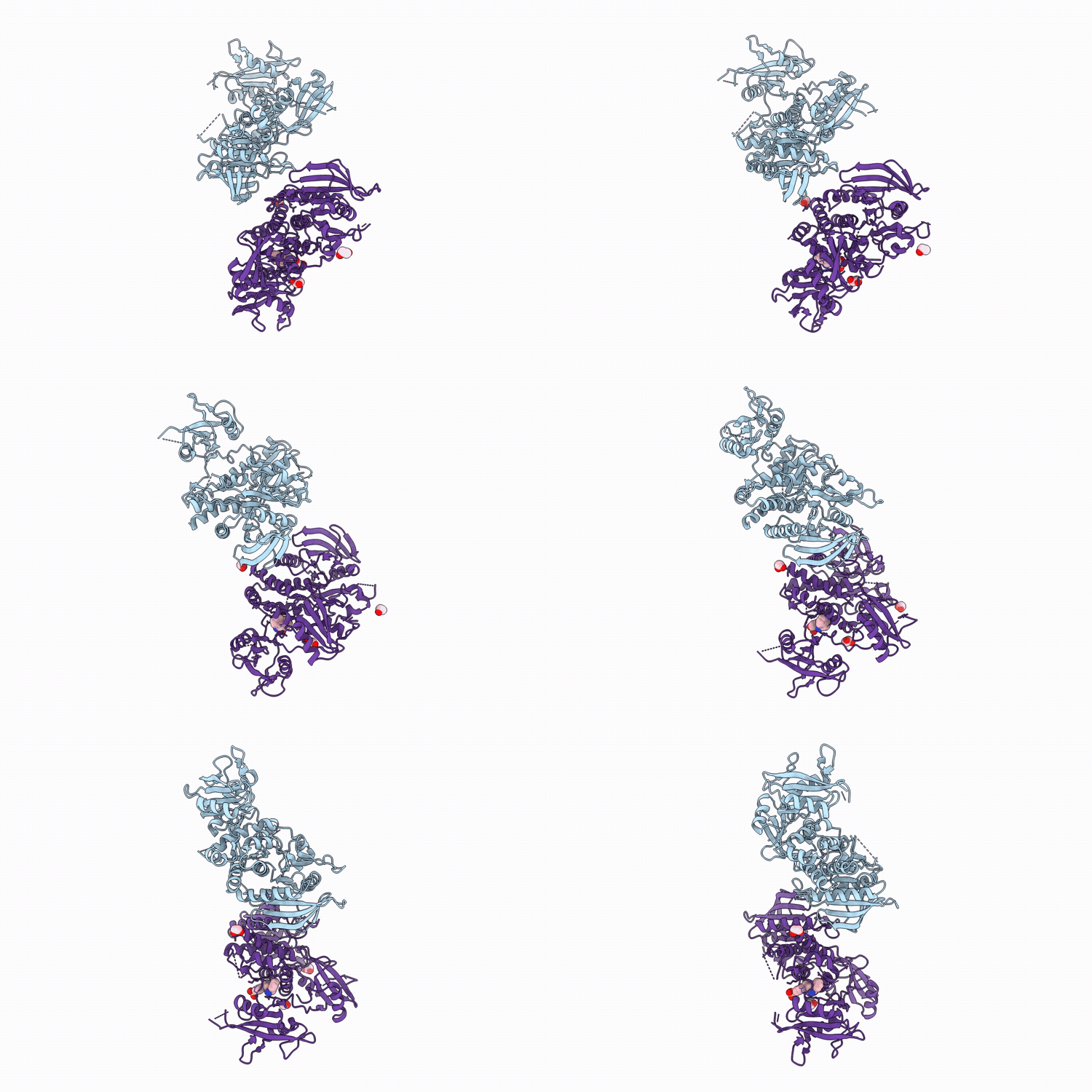
9TKT image
Deposition Date 2025-12-10
Release Date 2026-05-06
Last Version Date 2026-05-06
Entry Detail
PDB ID:
9TKT
Title:
Mapping the SHP2 allosteric pocket with target-biased covalent fragments
Biological Source:
Source Organism(s):
Homo sapiens (Taxon ID: 9606)
Expression System(s):
Method Details:
Experimental Method:
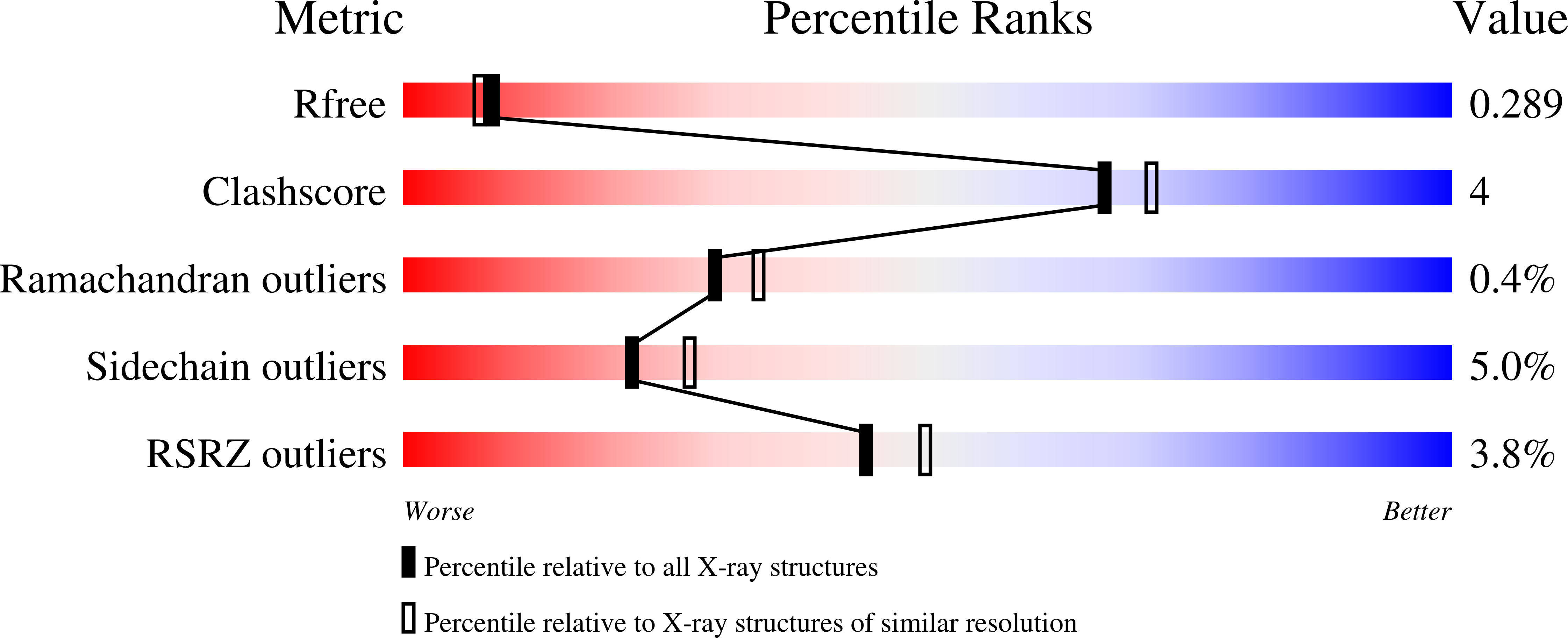
Resolution:
2.35 Å
R-Value Free:
0.28
R-Value Work:
0.24
Space Group:
P 1 21 1
Macromolecular Entities
Structures with similar UniProt ID
Protein Blast
Polymer Type:polypeptide(L)
Molecule:Tyrosine-protein phosphatase
Gene (Uniprot):PTPN11
Chain IDs:A, B
Chain Length:524
Number of Molecules:2
Biological Source:Homo sapiens
Primary Citation
Mapping the SHP2 Allosteric Pocket With Target-Biased Covalent Fragments.
Chembiochem 27 e70310 e70310 (2026)
PMID: 42033018 DOI: 10.1002/cbic.70310

Abstact

Targeted covalent inhibitors (TCIs) form covalent bonds with a specific amino acid in their target proteins, offering high selectivity and sustained pharmacologic effects. However, identifying optimal electrophilic warheads and nucleophilic amino acids remains a major hurdle for TCI development. While covalent fragment libraries are efficient in the identification of reactive residues, their inherently weak and transient interactions often fail to address functionally relevant binding sites. Here, we combine the exploratory approach of covalent fragment screening with established inhibitor pharmacophores for covalent mapping of the tunnel allosteric site of the oncogenic phosphatase SHP2. Aryl sulfonyl fluoride (SF) fragments featuring pharmacophore elements to enhance noncovalent interactions (target-biased fragments) covalently targeted lysine 492 (K492) in the tunnel binding site, while a conventional SF fragment library lacking these features was not reactive toward K492. Covalent engagement of K492 improved enzyme inhibition and provides a starting point for SHP2 TCI development. More broadly, this study underscores how noncovalent interactions direct covalent fragment binding and highlights target-biased fragments as a complementary strategy to conventional covalent fragment libraries to identify suitable warheads and reactive amino acids in functionally relevant binding sites with minimal a priori knowledge of ligand pharmacophores.

Legend

Protein

Chemical

Disease

Primary Citation of related structures
Feedback Form
Name
Email
Institute
Feedback