

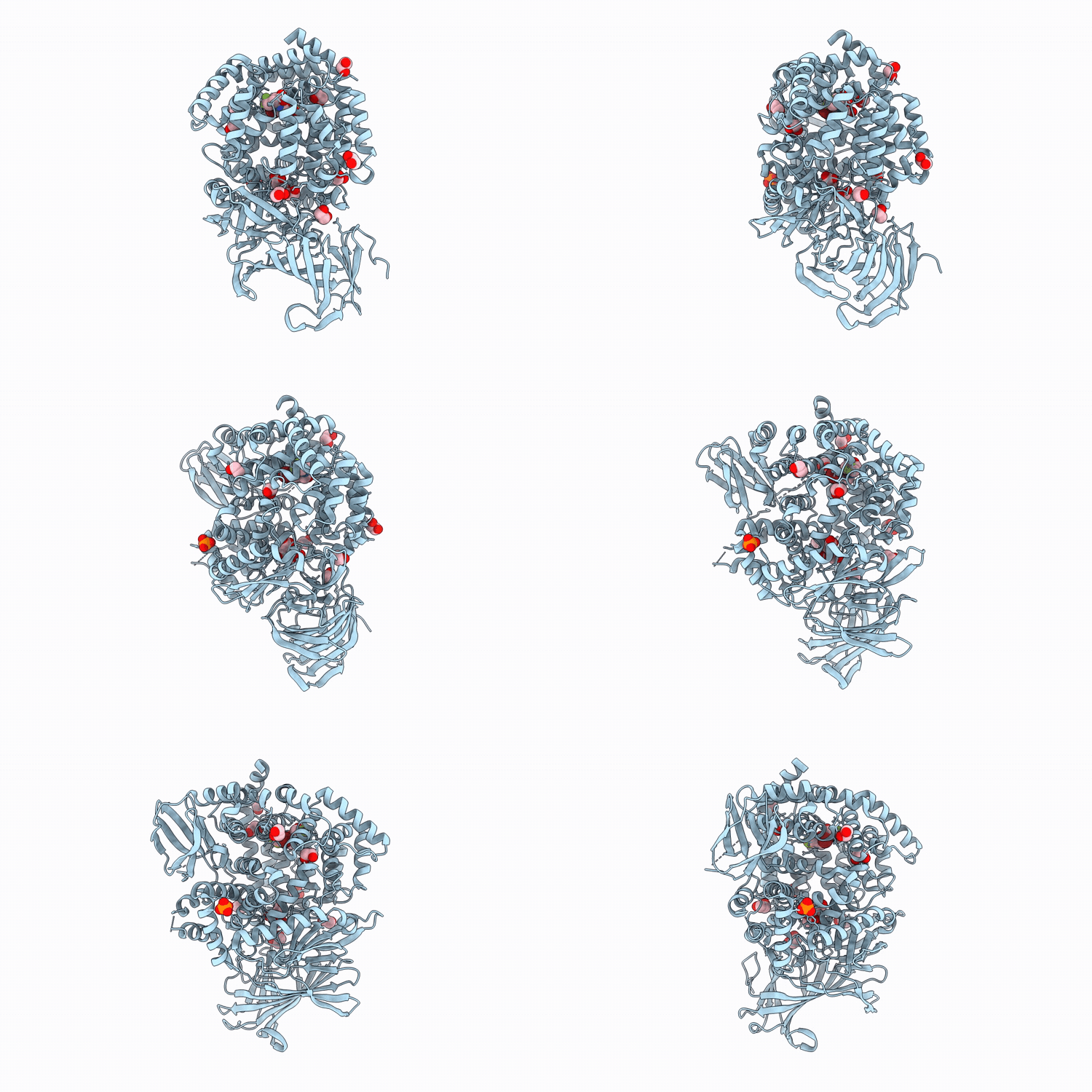
9TDA image
Deposition Date 2025-11-22
Release Date 2026-05-06
Last Version Date 2026-05-06
Entry Detail
PDB ID:
9TDA
Title:
ERAP1 in complex with 1-[2-(5-bromo-7-fluoro-2-oxo-2,3-dihydro-1,3-benzothiazol-3-yl)acetamido]-4,4-difluorocyclohexane-1-carboxylic acid
Biological Source:
Source Organism(s):
Homo sapiens (Taxon ID: 9606)
Expression System(s):
Method Details:
Experimental Method:
Resolution:
1.55 Å
R-Value Free:
0.20
R-Value Work:
0.16
R-Value Observed:
0.16
Space Group:
P 21 21 2

Macromolecular Entities
Structures with similar UniProt ID
Protein Blast
Polymer Type:polypeptide(L)
Molecule:Endoplasmic reticulum aminope
Gene (Uniprot):ERAP1
Chain IDs:A
Chain Length:922
Number of Molecules:1
Biological Source:Homo sapiens
Primary Citation

Abstact

Generative design and machine learning are increasingly prevalent in medicinal chemistry. To pilot the comprehensive use of automated molecular design on a project, the BRADSHAW platform was used to optimize a series of inhibitors of Endoplasmic Reticulum Aminopeptidase 1 (ERAP1), an emerging target in cancer immunotherapy and autoimmune diseases. Through four consecutive iterations applying in silico molecular generation, property prediction and filtering, we conducted a multiparameter optimization of potency, physicochemical properties and pharmacokinetics. Continuous refinement of Machine Learning (ML) models led to improved scoring accuracy and compound quality, culminating in identification of in vitro and in vivo tool molecules. We also discuss our reflections on the pilot and integration of automated design into medicinal chemistry projects, including observations of the human factors resulting from increased use of computational design, and recommendations for future projects.

Legend

Protein

Chemical

Disease

Primary Citation of related structures
Feedback Form
Name
Email
Institute
Feedback