

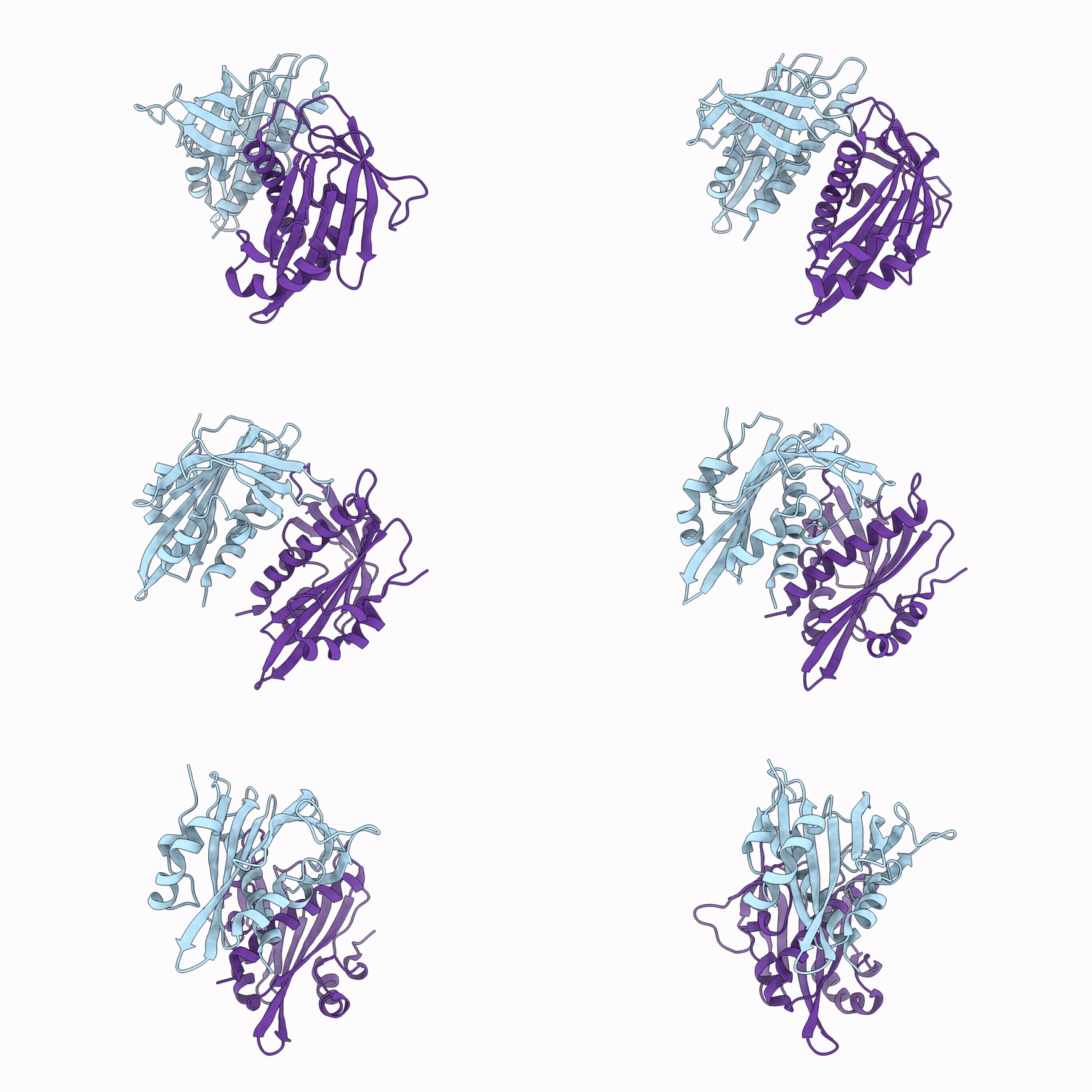
9TBA image
Deposition Date 2025-11-19
Release Date 2026-05-06
Last Version Date 2026-05-06
Entry Detail
PDB ID:
9TBA
Keywords:
Title:
Crystal structure of the CsPYL1 L195C dimer
Biological Source:
Source Organism(s):
Citrus sinensis (Taxon ID: 2711)
Expression System(s):
Method Details:
Experimental Method:
Resolution:
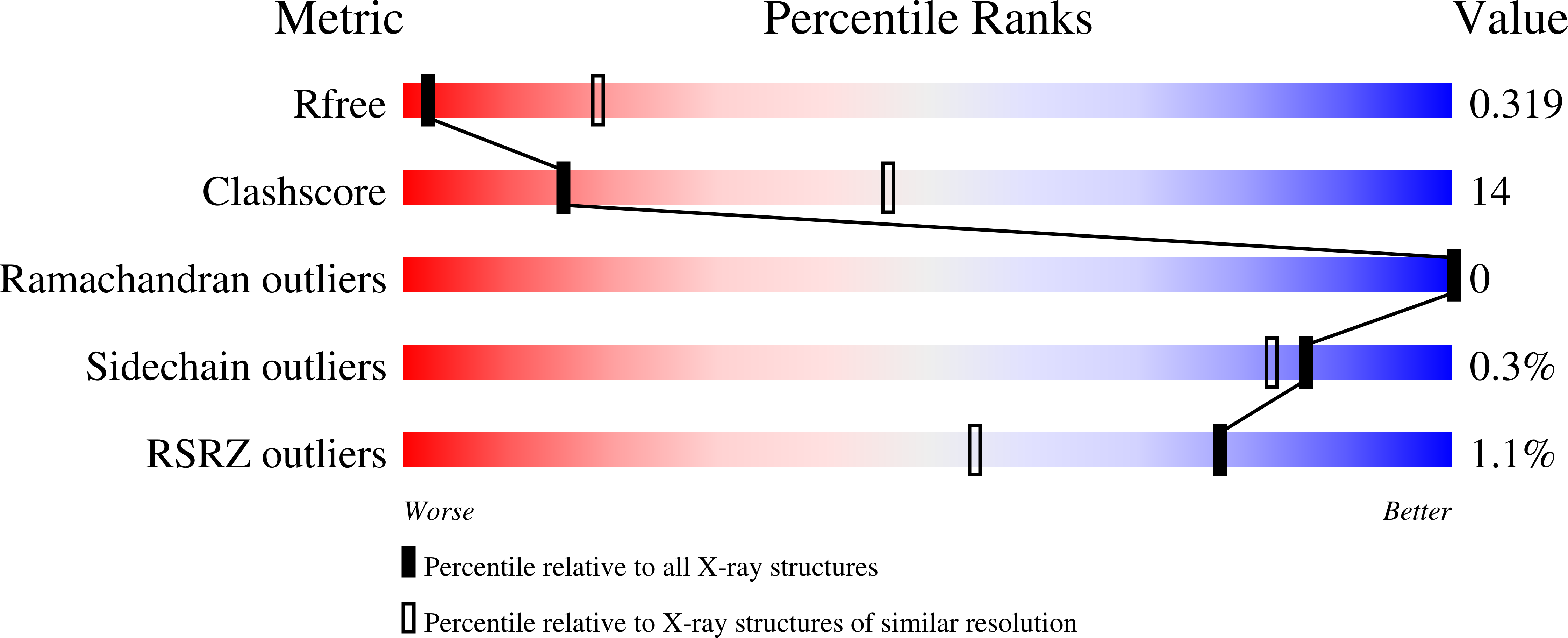
3.47 Å
R-Value Free:
0.31
R-Value Work:
0.26
R-Value Observed:
0.27
Space Group:
P 21 21 21
Macromolecular Entities
Structures with similar UniProt ID
Protein Blast
Polymer Type:polypeptide(L)
Molecule:Abscisic acid receptor PYL1
Gene (Uniprot):CISIN_1g046151mg
Mutagens:L195C
Chain IDs:A, B
Chain Length:209
Number of Molecules:2
Biological Source:Citrus sinensis
Ligand Molecules
Primary Citation
Evolutionary-based remodeling of ABA receptors reveals the structural basis of hormone perception and regulation.
Proc.Natl.Acad.Sci.USA 123 e2534140123 e2534140123 (2026)
PMID: 41984838 DOI: 10.1073/pnas.2534140123

Abstact

Drought limits crop productivity, and effective mitigation requires a mechanistic understanding of how abscisic acid (ABA) perception translates hormone levels into physiological responses. In seed plants, ABA is sensed by PYR/PYL/RCAR (PYR/PYL) receptors, which inhibit 2C protein phosphatases (PP2Cs), thereby releasing Snf1-related protein kinases and driving stomatal closure and stress-responsive transcription. Yet how receptor architecture evolved to tune ABA dependence and dynamic range remains unclear. Here, we combine structural biology, biochemistry, evolutionary analysis, and in planta assays across algal, bryophyte, and angiosperm receptors to uncover a minimal molecular code that governs ABA sensitivity and oligomeric state. We identify a five-residue signature: Three leucines in the ligand pocket stabilize the gate in a closed conformation, conferring ligand-independent PP2C inhibition (ancestral trait), while two interface residues toggle dimerization (Leu/Lys) versus monomerization (Cys/Ser), thereby setting ABA affinity. Structure-guided swaps reciprocally convert behaviors: Introducing the three leucines plus interface substitutions renders the ABA-dependent dimeric Citrus sinensis CsPYL1 into a monomer-like with ABA-independent activity, whereas the converse changes in monomeric Marchantia polymorpha MpPYL1 enforce dimerization and lower ABA affinity. In planta, reporter assays and mutant analyses reveal complementary operating ranges: Monomeric, high-affinity receptors decode low ABA under mild stress, while dimeric, reduced-affinity receptors sustain signaling at high ABA during acute drought, expanding the system's overall dynamic range and robustness. These results resolve the apparent paradox of low-affinity dimers as an evolutionary innovation rather than a loss of sensitivity, link receptor architecture to ABA-mediated response, and provide actionable design principles for engineering ABA signaling to enhance crop drought resilience.

Legend

Protein

Chemical

Disease

Primary Citation of related structures
Feedback Form
Name
Email
Institute
Feedback