

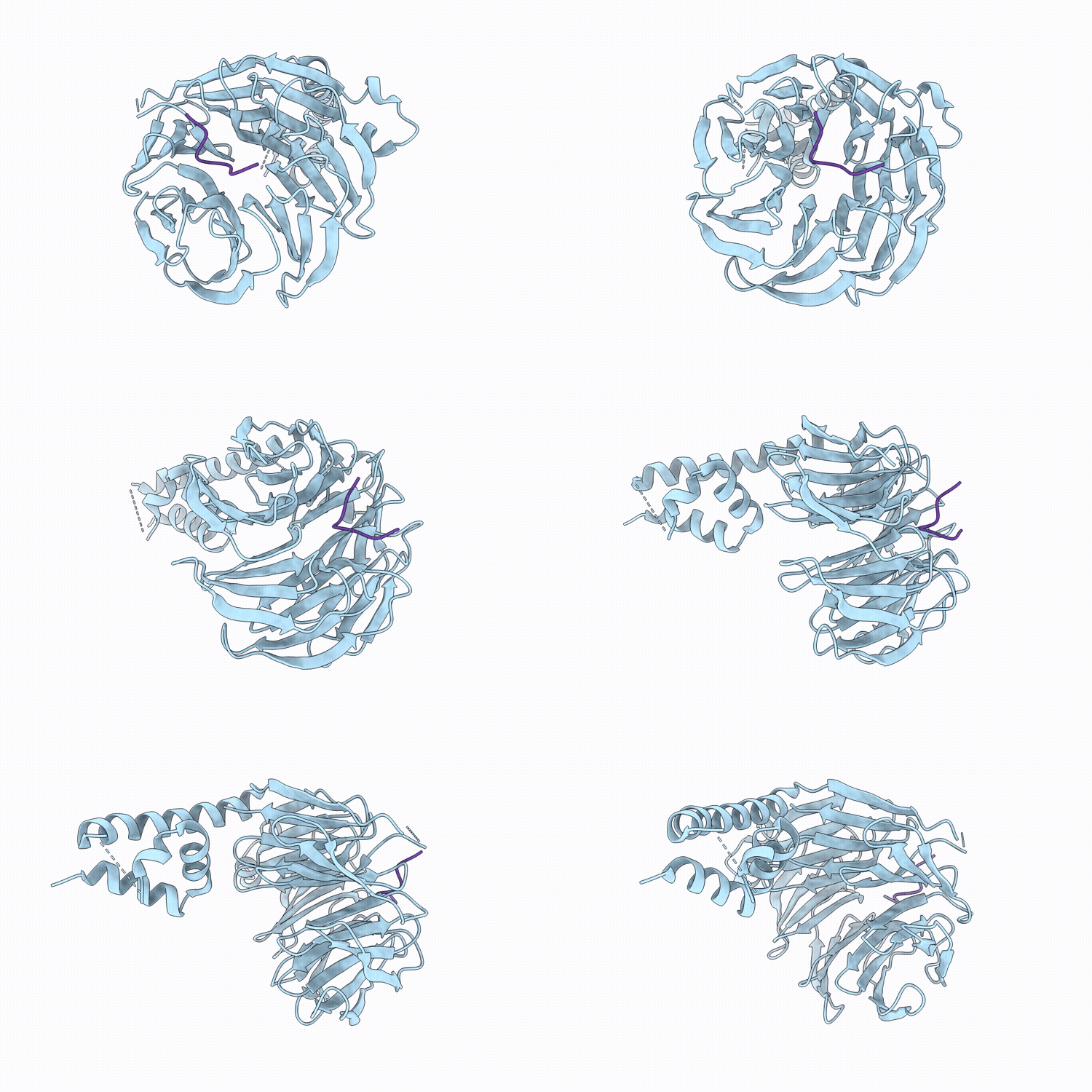
9T95 image
Deposition Date 2025-11-13
Release Date 2026-04-08
Last Version Date 2026-04-29
Entry Detail
PDB ID:
9T95
Keywords:
Title:
Crystal structure of beta-TrCP bound by diphosphorylated NRF2 degron peptide.
Biological Source:
Source Organism(s):
Homo sapiens (Taxon ID: 9606)
Expression System(s):
Method Details:
Experimental Method:
Resolution:
2.15 Å
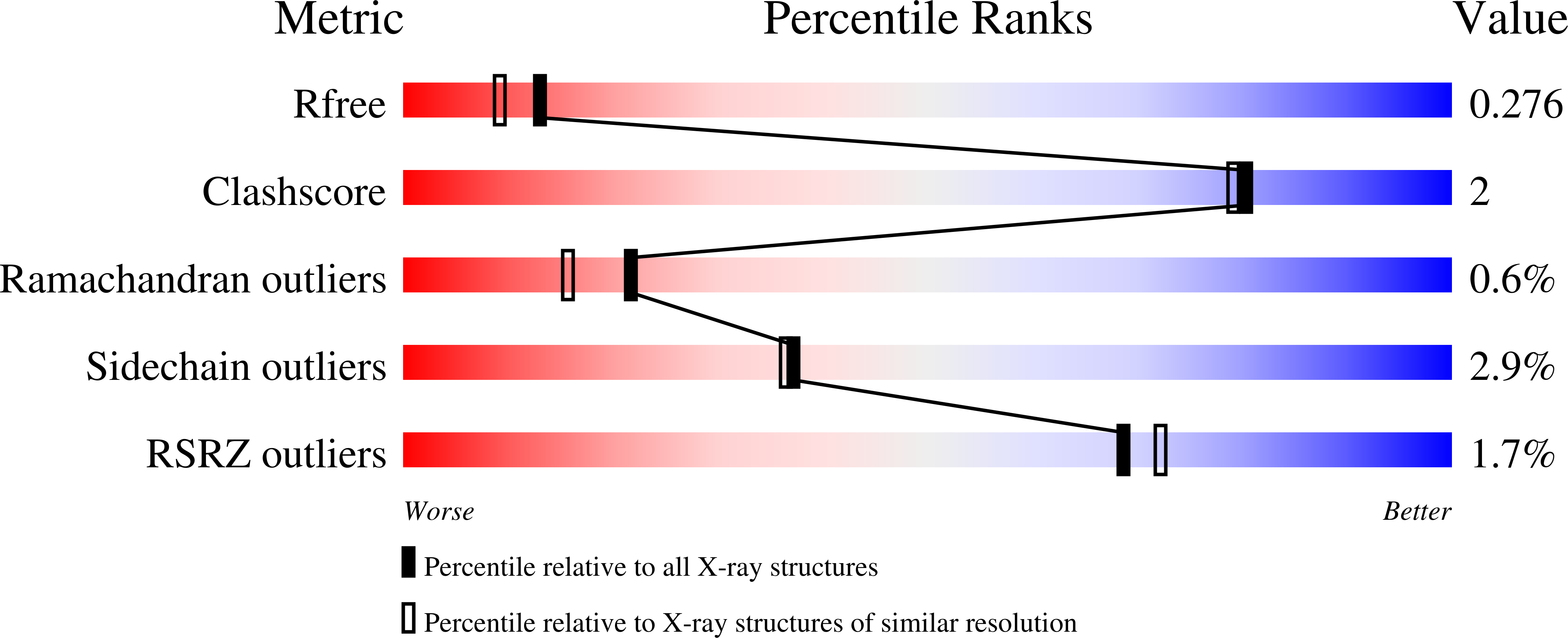
R-Value Free:
0.27
R-Value Work:
0.19
R-Value Observed:
0.19
Space Group:
P 21 21 21
Macromolecular Entities
Structures with similar UniProt ID
Protein Blast
Polymer Type:polypeptide(L)
Molecule:F-box/WD repeat-containing pr
Gene (Uniprot):BTRC
Mutagens:L188E, L192E
Chain IDs:A
Chain Length:365
Number of Molecules:1
Biological Source:Homo sapiens
Structures with similar UniProt ID
Protein Blast
Polymer Type:polypeptide(L)
Molecule:Nuclear factor erythroid 2-re
Gene (Uniprot):NFE2L2
Chain IDs:B
Chain Length:12
Number of Molecules:1
Biological Source:Homo sapiens
Modified Residue
Compound ID Chain ID Parent Comp ID Details 2D Image
SEP B SER modified residue
Primary Citation

Abstact

Inhibiting the oncogenic driver NRF2 in non-small cell lung cancer (NSCLC) represents a promising yet challenging clinical opportunity. Small molecules that enhance the NRF2:beta-TrCP interaction ("molecular glues") could hold therapeutic potential by promoting the ubiquitination and proteasomal degradation of NRF2. NRX-252114 is a molecular glue previously reported to promote the interaction between beta-catenin and beta-TrCP. We now find that NRX-252114 can also enhance the association between beta-TrCP and NRF2 phosphodegron peptides. To leverage this novel interaction for the development of NRF2:beta-TrCP molecular glues, we synthesized and evaluated a library of chemical analogues, guided by homology modeling and subsequently by X-ray crystallography. Surprisingly, structural elucidation of the NRF2:beta-TrCP complex revealed occlusion of the presumed molecular glue binding pocket. This mechanistic insight explains the limited affinity enhancement for analogues of NRX-252114, and provides a structural rationale for the lack of NRF2 degradation in cells. Our findings broaden the scope of beta-TrCP-targeted molecular glues, demonstrate that NRF2 is "glueable" at the peptide level, and provide mechanistic guidance for future efforts to target the pharmacologically elusive NRF2 pathway in cancer.

Legend

Protein

Chemical

Disease

Primary Citation of related structures
Feedback Form
Name
Email
Institute
Feedback