

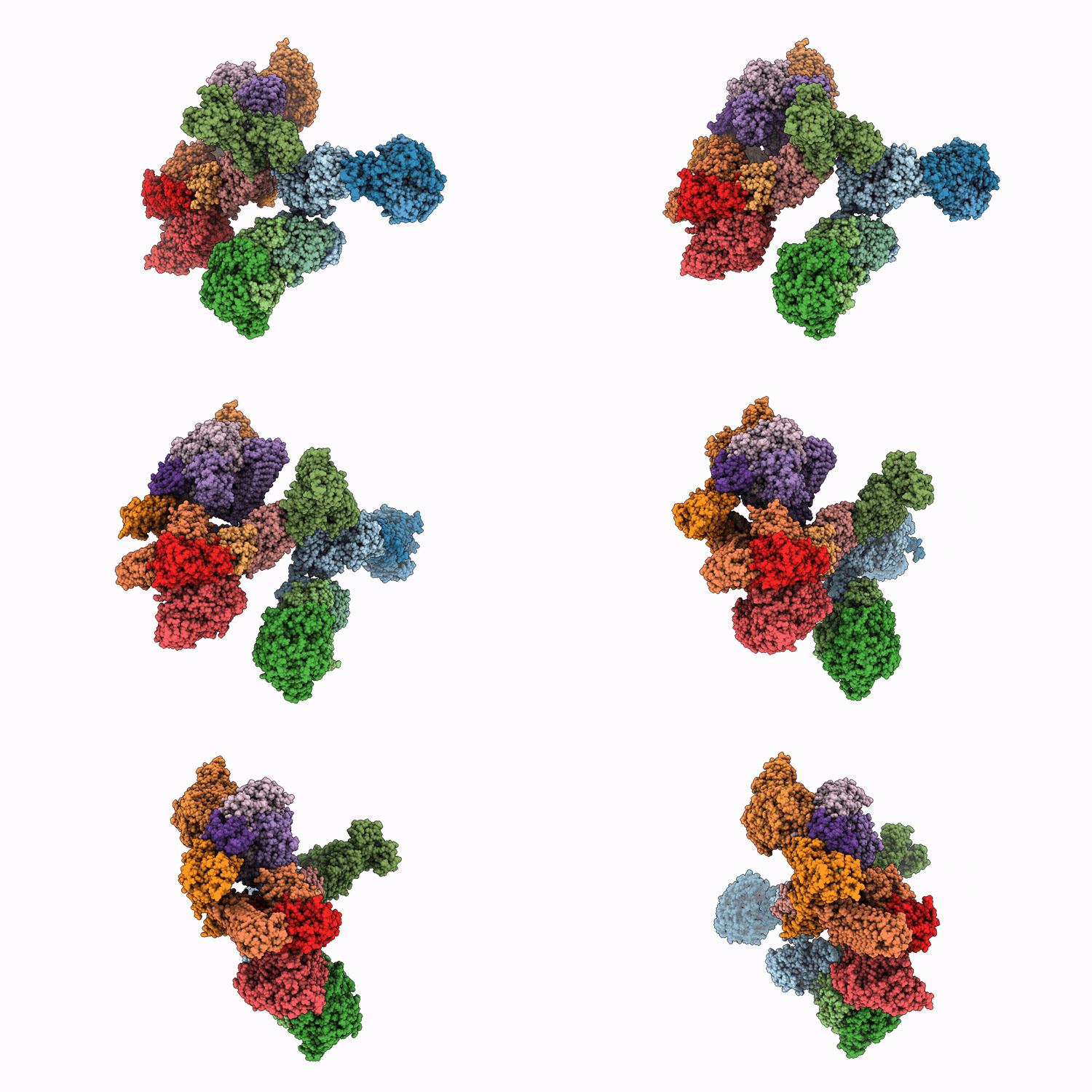
9SW6 image
Deposition Date 2025-10-04
Release Date 2026-04-29
Last Version Date 2026-09-30
Entry Detail
PDB ID:
9SW6
Keywords:
Title:
Structure of the Mvh-Hdr-Fmd complex of Methanothermobacter marburgensis (composite structure)
Biological Source:
Source Organism(s):
Method Details:
Experimental Method:
Resolution:
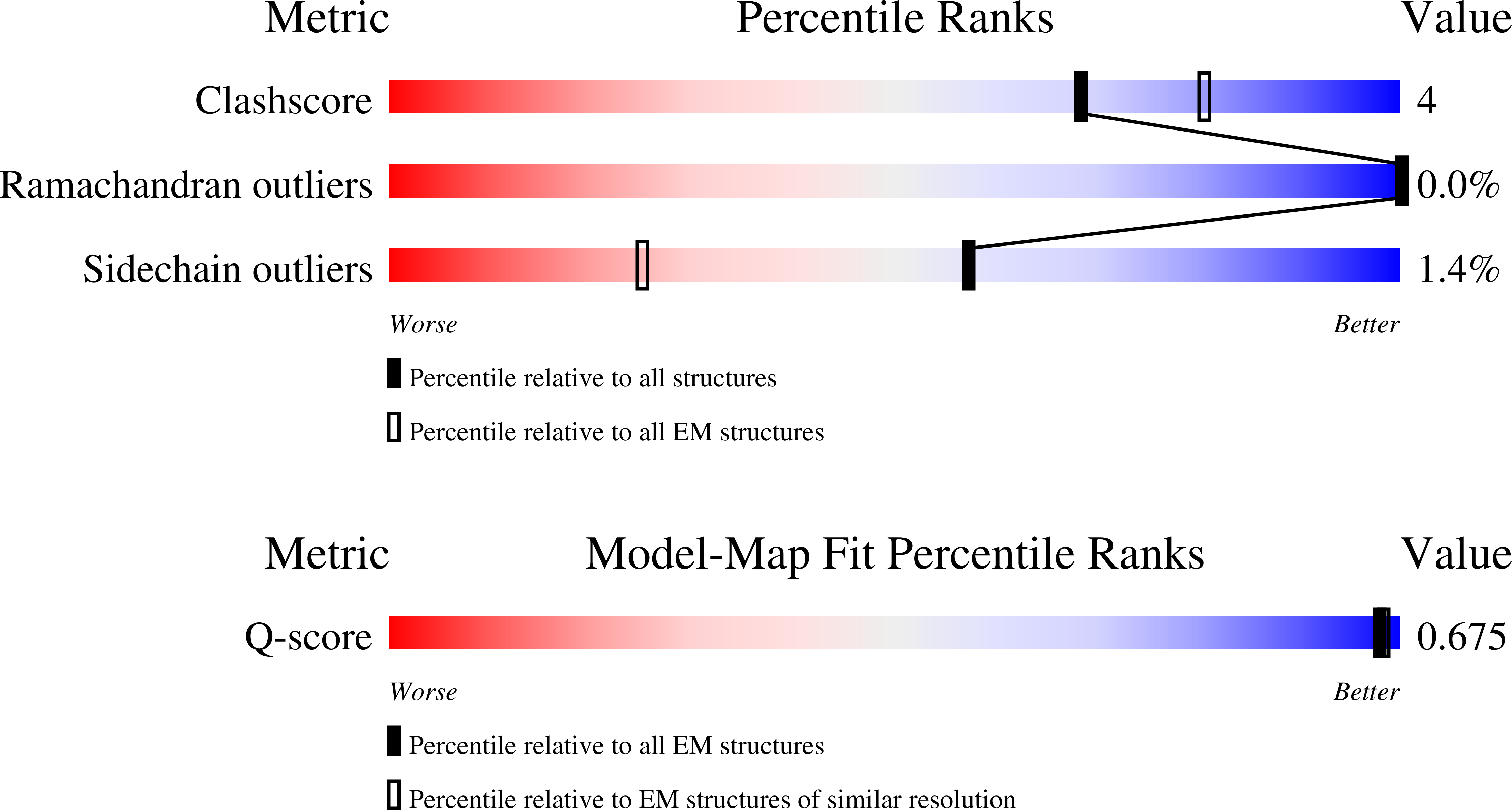
2.70 Å
Aggregation State:
PARTICLE
Reconstruction Method:
SINGLE PARTICLE
Macromolecular Entities
Polymer Type:polypeptide(L)
Molecule:H(2):CoB-CoM heterodisulfide,
Gene (Uniprot):hdrA
Chain IDs:A
Chain Length:659
Number of Molecules:1
Biological Source:Methanothermobacter marburgensis
Polymer Type:polypeptide(L)
Molecule:H(2):CoB-CoM heterodisulfide,
Gene (Uniprot):hdrB
Chain IDs:B
Chain Length:302
Number of Molecules:1
Biological Source:Methanothermobacter marburgensis
Polymer Type:polypeptide(L)
Molecule:H(2):CoB-CoM heterodisulfide,
Gene (Uniprot):hdrC
Chain IDs:C
Chain Length:185
Number of Molecules:1
Biological Source:Methanothermobacter marburgensis
Polymer Type:polypeptide(L)
Molecule:F420-non-reducing hydrogenase
Gene (Uniprot):mvhD
Chain IDs:D
Chain Length:141
Number of Molecules:1
Biological Source:Methanothermobacter marburgensis
Polymer Type:polypeptide(L)
Molecule:F420-non-reducing hydrogenase
Gene (Uniprot):mvhG
Chain IDs:E
Chain Length:308
Number of Molecules:1
Biological Source:Methanothermobacter marburgensis
Polymer Type:polypeptide(L)
Molecule:F420-non-reducing hydrogenase
Gene (Uniprot):mvhA
Chain IDs:Q (auth: F)
Chain Length:472
Number of Molecules:1
Biological Source:Methanothermobacter marburgensis
Polymer Type:polypeptide(L)
Molecule:Polyferredoxin protein MvhB
Gene (Uniprot):mvhB
Chain IDs:P (auth: G)
Chain Length:412
Number of Molecules:1
Biological Source:Methanothermobacter marburgensis
Polymer Type:polypeptide(L)
Molecule:Tungsten formylmethanofuran d
Gene (Uniprot):fwdF
Chain IDs:F (auth: H), N (auth: h)
Chain Length:349
Number of Molecules:2
Biological Source:Methanothermobacter marburgensis
Polymer Type:polypeptide(L)
Molecule:Tungsten formylmethanofuran d
Gene (Uniprot):fwdA
Chain IDs:G (auth: I), J (auth: i)
Chain Length:569
Number of Molecules:2
Biological Source:Methanothermobacter marburgensis
Polymer Type:polypeptide(L)
Molecule:formylmethanofuran dehydrogen
Gene (Uniprot):fmdB
Chain IDs:H (auth: J), L (auth: j)
Chain Length:436
Number of Molecules:2
Biological Source:Methanothermobacter marburgensis
Polymer Type:polypeptide(L)
Molecule:Molybdenum-containing formylm
Gene (Uniprot):fmdC
Chain IDs:M (auth: K), O (auth: k)
Chain Length:400
Number of Molecules:2
Biological Source:Methanothermobacter marburgensis
Polymer Type:polypeptide(L)
Molecule:Tungsten formylmethanofuran d
Gene (Uniprot):fwdG
Chain IDs:I (auth: L), K (auth: l)
Chain Length:82
Number of Molecules:2
Biological Source:Methanothermobacter marburgensis
Modified Residue
Compound ID Chain ID Parent Comp ID Details 2D Image
KCX G, J LYS modified residue
Primary Citation
Diversity of electron-bifurcating CO 2 -fixing supercomplexes in methanogens.
Sci Adv 12 eaed3711 eaed3711 (2026)
PMID: 42748252 DOI: 10.1126/sciadv.aed3711

Abstact

In the hydrogenotrophic methanogenic pathway, formylmethanofuran dehydrogenase (Fmd) reduces and fixes CO(2), driven by low-potential electrons provided by electron-bifurcating heterodisulfide reductase (Hdr) complexed with electron-donating proteins such as Mvh hydrogenase. Here, we report the structure of a C2-symmetric (Mvh-Hdr)(2)-Fmd(4) supercomplex from a Class I methanogen, Methanothermobacter marburgensis, which is architecturally different from the previously reported ring-shaped D3-symmetric supercomplex of a methanogen belonging to phylogenetically distinct Class II methanogens. In this C2-symmetric form, the redox active sites of Hdr and Fmd are connected by two MvhB polyferredoxins, whose branching electron paths appear to be available for electron transfer to/from other partners. The ancestral form was likely C2 symmetric, whereas D3-symmetric supercomplexes were acquired by horizontal gene transfer, a transition probably helpful for growth in substrate-poor environments.

Legend

Protein

Chemical

Disease

Primary Citation of related structures
Feedback Form
Name
Email
Institute
Feedback