

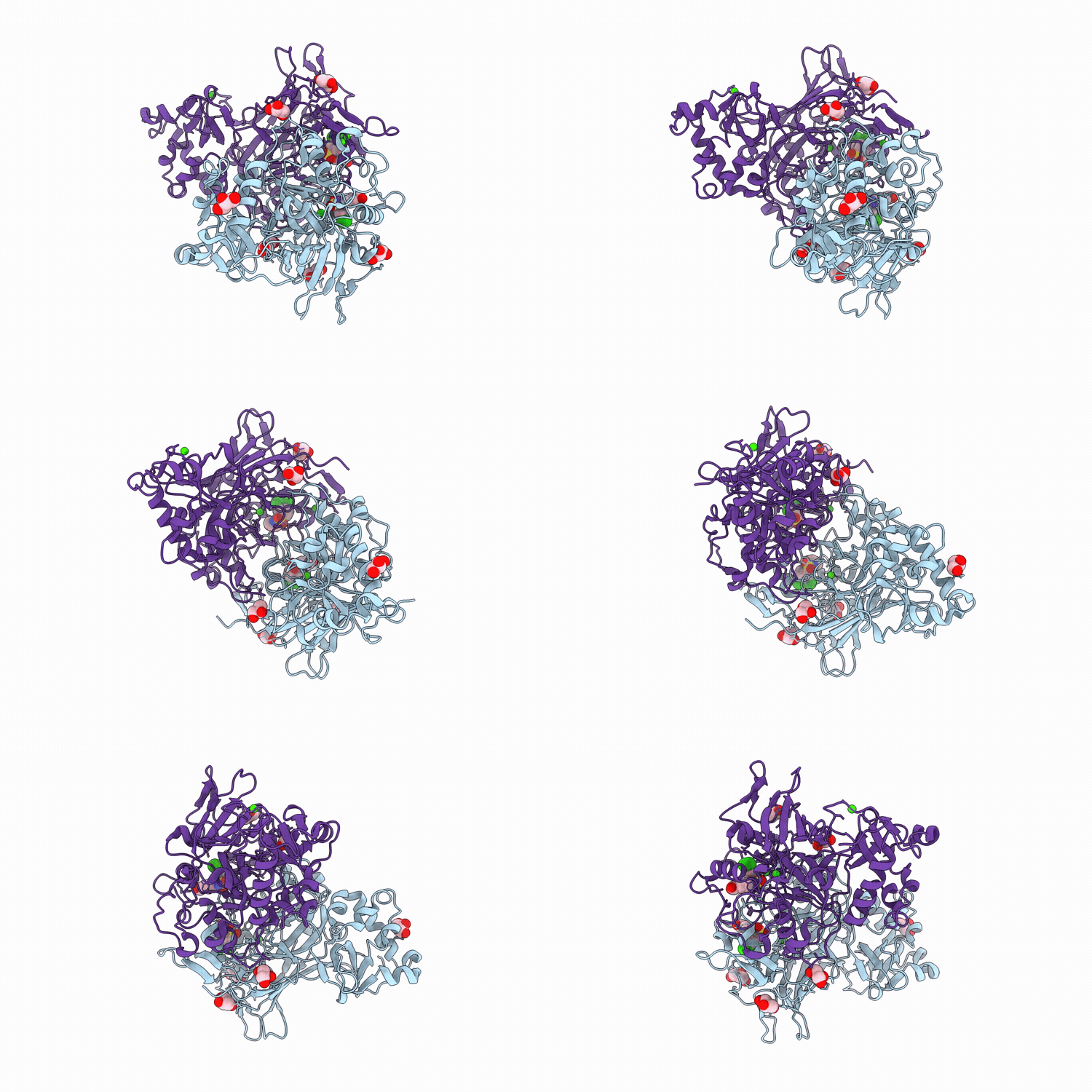
9SQS image
Deposition Date 2025-09-23
Release Date 2026-05-20
Last Version Date 2026-05-20
Entry Detail
PDB ID:
9SQS
Keywords:
Title:
Human fumarylacetoacetate hydrolase (FAH) in complex with S2.2
Biological Source:
Source Organism(s):
Homo sapiens (Taxon ID: 9606)
Expression System(s):
Method Details:
Experimental Method:
Resolution:
2.10 Å
R-Value Free:
0.24
R-Value Work:
0.21
R-Value Observed:
0.21
Space Group:
P 1 21 1

Macromolecular Entities
Structures with similar UniProt ID
Protein Blast
Polymer Type:polypeptide(L)
Molecule:Fumarylacetoacetase
Chain IDs:A, B
Chain Length:423
Number of Molecules:2
Biological Source:Homo sapiens
Primary Citation
Rational Design of Small-Molecule Stabilizers of Human Fumarylacetoacetate Hydrolase for the Treatment of Tyrosinemia Type I.
J.Med.Chem. ? ? ? (2026)
PMID: 42117404 DOI: 10.1021/acs.jmedchem.5c03489

Abstact

Hereditary tyrosinemia type 1 (HT1) stems from the loss of fumarylacetoacetate hydrolase (FAH) activity, causing severe liver-kidney disease. Nitisinone does not restore FAH function and carries metabolic and dietary burdens. Here, we used an integrated workflow guided by X-ray structures of human FAH to obtain small-molecule pharmacological chaperones that bind with low-muM affinity and stabilize FAH. Hits were validated by NMR and isothermal titration calorimetry. Protein stabilization was assessed by DOSY-NMR and circular dichroism; functional effects were tested in FAH activity assays, a CRISPR-engineered cellular model, and testing in an animal model of HT1. Compounds shifted the G337S pathological variant toward the active dimer and slowed unfolding/aggregation, resulting in dose-dependent enhancement of FAH activity and partial rescue of FAH homeostasis in cells and the liver tissue of a mouse model of HT1. These molecules support a therapeutic approach that could complement nitisinone in HT1.

Legend

Protein

Chemical

Disease

Primary Citation of related structures
Feedback Form
Name
Email
Institute
Feedback