

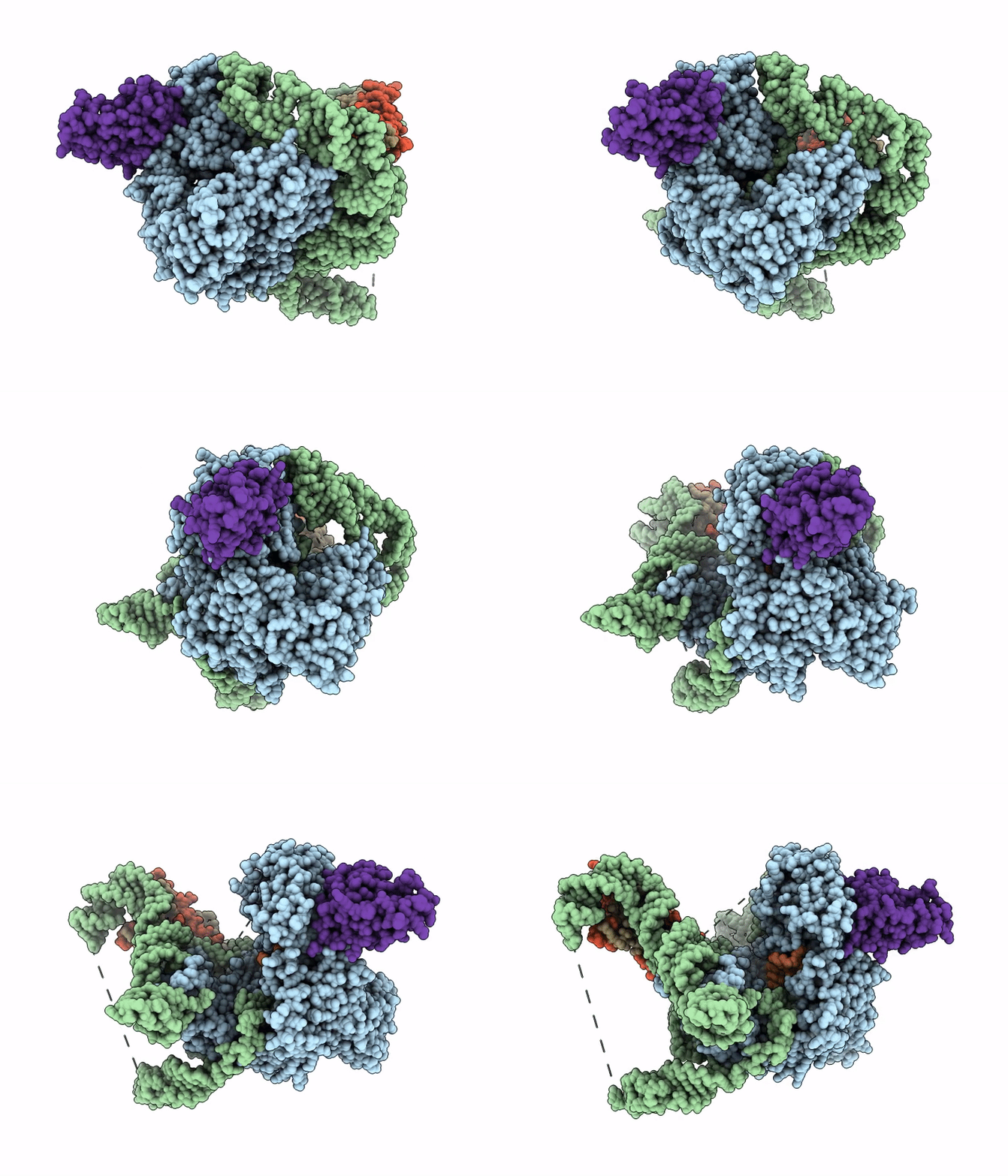
9SHY image
Deposition Date 2025-08-28
Release Date 2026-01-28
Last Version Date 2026-03-04
Entry Detail
PDB ID:
9SHY
Title:
Cryo-EM structure of the catalytic core of human telomerase at the initiation state of the repeat addition cycle
Biological Source:
Source Organism(s):
Homo sapiens (Taxon ID: 9606)
Expression System(s):
Method Details:
Experimental Method:
Resolution:
3.53 Å
Aggregation State:
PARTICLE
Reconstruction Method:
SINGLE PARTICLE
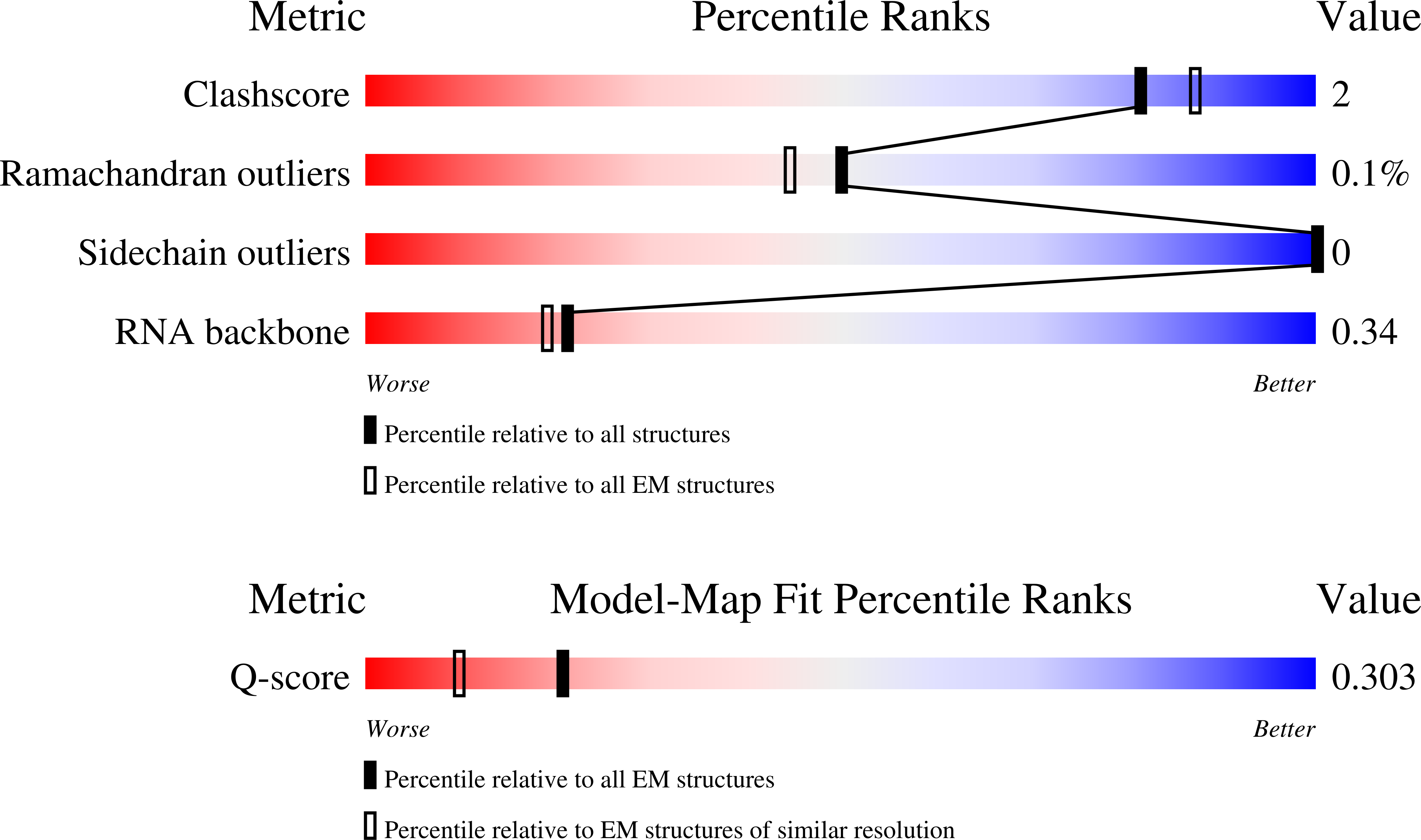
Macromolecular Entities
Structures with similar UniProt ID
Protein Blast
Polymer Type:polypeptide(L)
Molecule:Telomerase reverse transcript
Gene (Uniprot):TERT
Chain IDs:A
Chain Length:1132
Number of Molecules:1
Biological Source:Homo sapiens
Polymer Type:polyribonucleotide
Molecule:hTR, human telomerase RNA
Chain IDs:F (auth: B)
Chain Length:451
Number of Molecules:1
Biological Source:Homo sapiens
Structures with similar UniProt ID
Protein Blast
Polymer Type:polypeptide(L)
Molecule:Histone H2A
Chain IDs:B (auth: L)
Chain Length:130
Number of Molecules:1
Biological Source:Homo sapiens
Structures with similar UniProt ID
Protein Blast
Polymer Type:polypeptide(L)
Molecule:Histone H2B
Chain IDs:C (auth: M)
Chain Length:166
Number of Molecules:1
Biological Source:Homo sapiens
Polymer Type:polydeoxyribonucleotide
Molecule:DNA (5'-D(P*TP*TP*AP*GP*GP*GP
Chain IDs:D (auth: N)
Chain Length:34
Number of Molecules:1
Biological Source:Homo sapiens
Structures with similar UniProt ID
Protein Blast
Polymer Type:polypeptide(L)
Molecule:Adrenocortical dysplasia prot
Gene (Uniprot):ACD
Chain IDs:E (auth: O)
Chain Length:458
Number of Molecules:1
Biological Source:Homo sapiens
Ligand Molecules
Primary Citation
Structures of nucleotide-bound human telomerase at several steps of its telomeric DNA repeat addition cycle.
Nat Commun 17 1847 1847 (2026)
PMID: 41565648 DOI: 10.1038/s41467-026-68560-8

Abstact

In most eukaryotes, the reverse transcriptase telomerase counteracts telomere shortening by processively adding telomeric DNA repeat sequences to chromosome ends. Telomerase activity depends on the telomerase reverse transcriptase (TERT) and the telomerase RNA (hTR in humans). Processive telomere elongation is critical for genome stability, and defects in this mechanism are linked to cellular dysfunction and human disease. However, the structural basis for telomerase repeat addition processivity in humans has remained elusive. Here, we present cryo-electron microscopy structures of human telomerase bound to telomeric DNA and an incoming nucleotide, captured at three distinct stages of its repeat addition cycle: initiation, elongation, and pre-termination. Across these states, the TERT active site maintains a conserved architecture that stabilises a short DNA-RNA duplex of constant length of four base-pairs. Beyond the active site, we identify dynamic structural features in both TERT and hTR that facilitate substrate engagement and RNA template repositioning, thereby supporting the synthesis of successive telomeric repeats. Together, these structures provide key insights into how human telomerase achieves its unique processivity to maintain telomere length and genome integrity.

Legend

Protein

Chemical

Disease

Primary Citation of related structures
Feedback Form
Name
Email
Institute
Feedback