

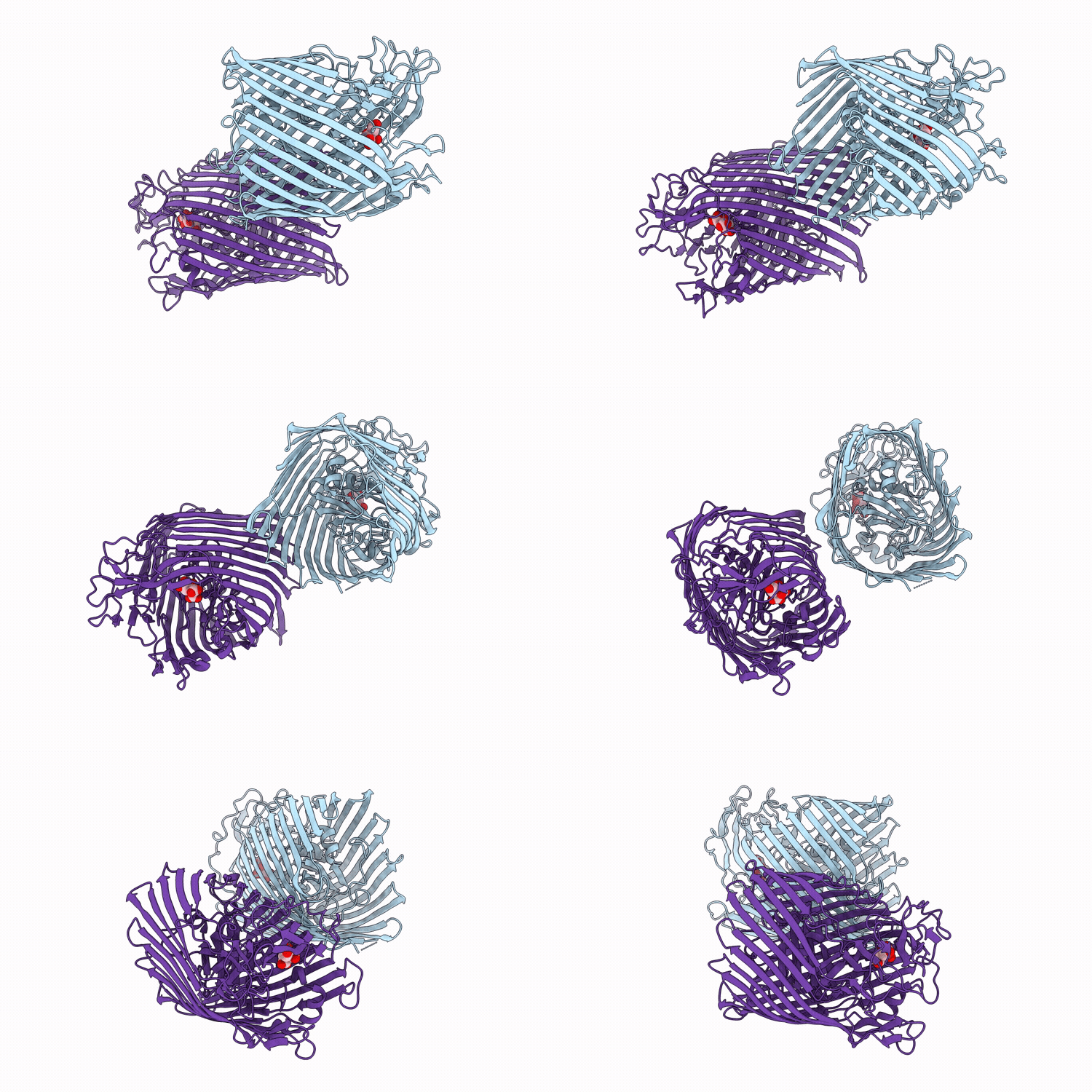
9RVX image
Deposition Date 2025-07-09
Release Date 2026-05-20
Last Version Date 2026-05-20
Entry Detail
PDB ID:
9RVX
Title:
Structure of CrtA with citrate
Biological Source:
Source Organism(s):
Expression System(s):
Method Details:
Experimental Method:
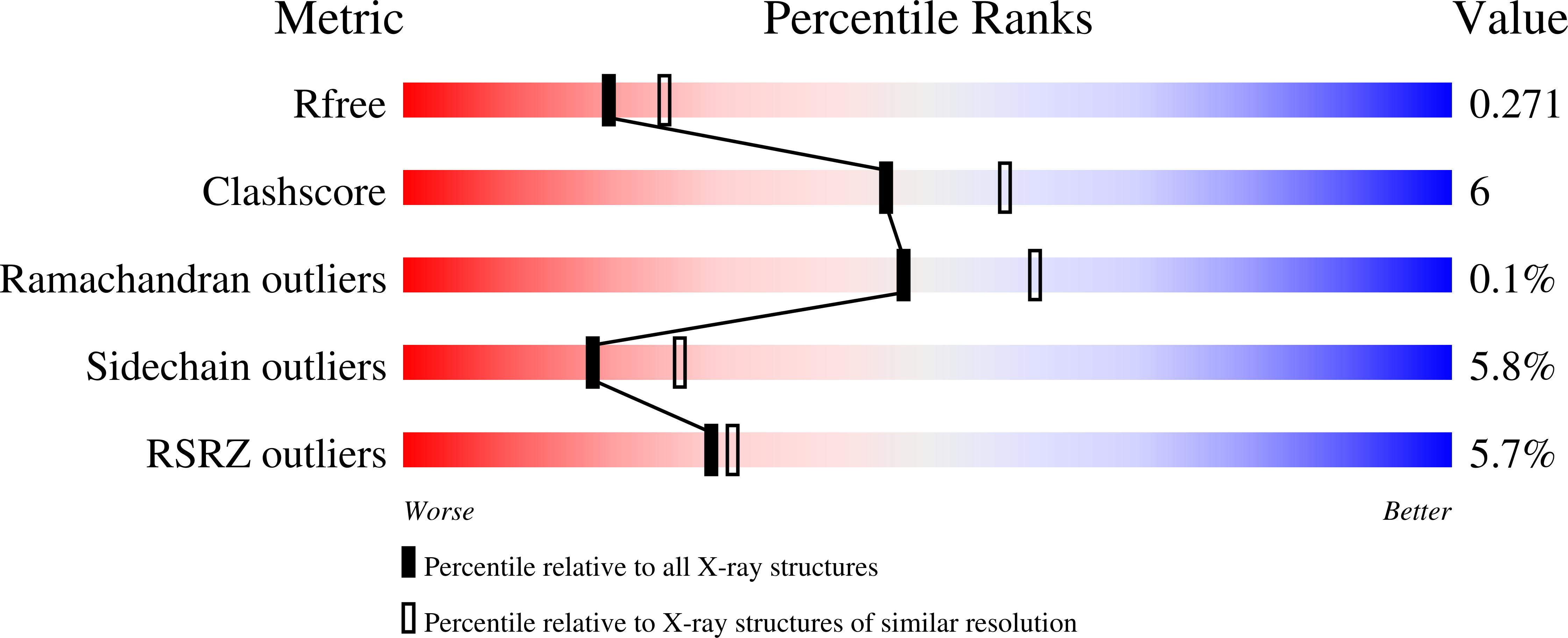
Resolution:
2.30 Å
R-Value Free:
0.27
R-Value Work:
0.23
R-Value Observed:
0.23
Space Group:
P 1
Macromolecular Entities
Structures with similar UniProt ID
Protein Blast
Polymer Type:polypeptide(L)
Molecule:TonB-dependent receptor
Chain IDs:A, B
Chain Length:732
Number of Molecules:2
Biological Source:Bordetella pertussis
Ligand Molecules
Primary Citation
A new family of TonB-dependent copper transporters linked to respiratory oxidase function.
J.Biol.Chem. 302 111180 111180 (2026)
PMID: 41570985 DOI: 10.1016/j.jbc.2026.111180

Abstact

Copper is an essential metal notably found in respiration complexes for its redox properties. It is also toxic hence its cellular trafficking is tightly controlled. Bacteria have developed a number of defense systems against copper excess, but its acquisition pathways remain poorly characterized. Ubiquitous in Gram-negative bacteria, TonB-dependent transporters (TBDTs) are outer membrane beta-barrel proteins that mediate the proton motive force-dependent import of various nutrients to the periplasm. Here, we characterized a TBDT that imports copper in the whooping cough agent Bordetella pertussis, CrtA(Bp) (formerly BfrG), which is a prototype of a new subfamily of TBDTs. Our data indicate that CrtA(Bp) is dedicated to the import of copper for heme-copper respiratory oxidoreductases. We revealed that CrtA(Bp) imports chelated rather than free copper, solved the crystal structure of CrtA(Bp) and identified a conserved ligand binding site. By combining bacterial growth experiments, biophysical approaches and AlphaFold3 modeling we sketched out the features of copper-ligand complexes for CrtA(Bp). In contrast with ferrisiderophore-specific TBDTs, no high-affinity chalkophore ligand of CrtA(Bp) could be identified, implying two nonmutually exclusive models. In the host, CrtA(Bp) might use a xenometallophore produced by another species present in the same niche to acquire copper. In vitro however, CrtA appears not to have high-affinity ligands but to import copper chelated by small molecules notably harboring carboxylate groups, which might represent a paradigm of 'scavenger' TBDTs with low ligand selectivity. We identified an essential, invariant histidine residue that might serve as a selectivity filter for copper-chelate complexes.

Legend

Protein

Chemical

Disease

Primary Citation of related structures
Feedback Form
Name
Email
Institute
Feedback