

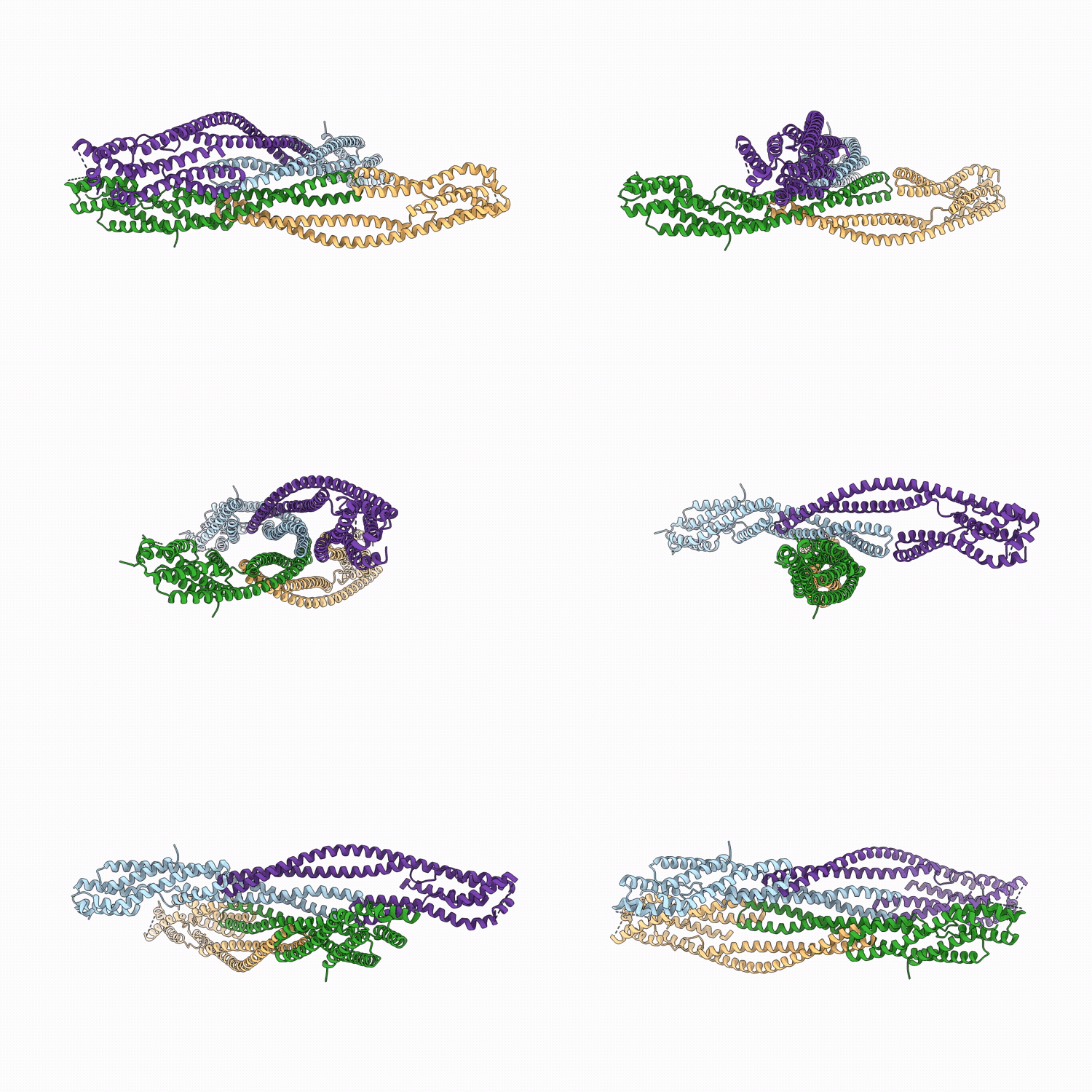
9RUX image
Deposition Date 2025-07-05
Release Date 2026-05-06
Last Version Date 2026-05-06
Entry Detail
PDB ID:
9RUX
Title:
Cryo-EM structure of DISC1 core
Biological Source:
Source Organism(s):
Mus musculus (Taxon ID: 10090)
Expression System(s):
Method Details:
Experimental Method:
Resolution:
3.90 Å
Aggregation State:
PARTICLE
Reconstruction Method:
SINGLE PARTICLE
Macromolecular Entities
Structures with similar UniProt ID
Protein Blast
Polymer Type:polypeptide(L)
Molecule:Disrupted in schizophrenia 1
Gene (Uniprot):Disc1
Chain IDs:A, B, C, D
Chain Length:478
Number of Molecules:4
Biological Source:Mus musculus
Ligand Molecules
Primary Citation
The schizophrenia associated protein DISC1 forms a multivalent tetrameric hub via conserved UVR dimers.
Nat Commun ? ? ? (2026)
PMID: 41997921 DOI: 10.1038/s41467-026-71838-6

Abstact

DISC1 is a pleiotropic protein with essential roles in neuronal proliferation and migration, intracellular signalling and cargo transport. It associates with a diverse array of partner molecules in these contexts. Mutations at the DISC1 locus are strongly associated with a spectrum of mental illnesses such as schizophrenia and depression. Despite its clinical relevance, the molecular architecture and function of DISC1 have remained largely elusive. We present a cryo-EM structure of the entire conserved core region of DISC1. The structure reveals an intricate homotetrameric assembly that harbours conserved bacteria-derived UVR domains. Four of these domains, one from each monomer, mediate extensive contacts forming two asymmetric dimer units. The dimers in turn interface with each other at two distinct coiled coil domains to achieve a two-fold symmetric tetramer. Mutational analysis shows that this tetrameric architecture enables DISC1 to simultaneously bind multiple copies of NDE1 client protein. Importantly, tetramerization and partner binding are structurally independent functions of DISC1. Altogether, our study provides a compelling molecular model of an ancient bacteria protein fold participating in the assembly of a multivalent mammalian scaffold hub that can coordinate multiple partner molecules.

Legend

Protein

Chemical

Disease

Primary Citation of related structures
Feedback Form
Name
Email
Institute
Feedback