

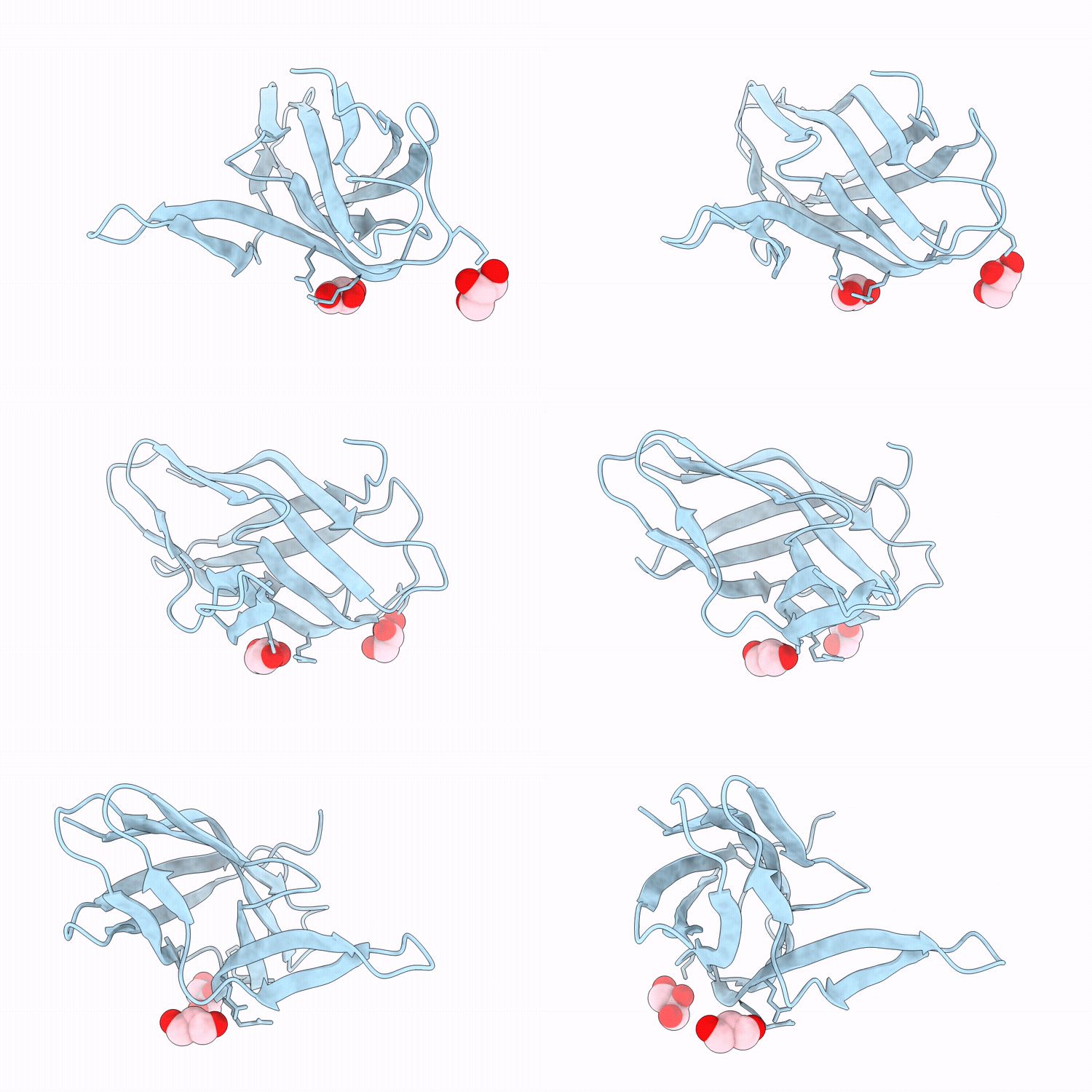
9REZ image
Deposition Date 2025-06-04
Release Date 2026-05-06
Last Version Date 2026-05-06
Entry Detail
PDB ID:
9REZ
Keywords:
Title:
Structure of PcuC from Cereibacter sphaeroides in its apo form
Biological Source:
Source Organism(s):
Expression System(s):
Method Details:
Experimental Method:
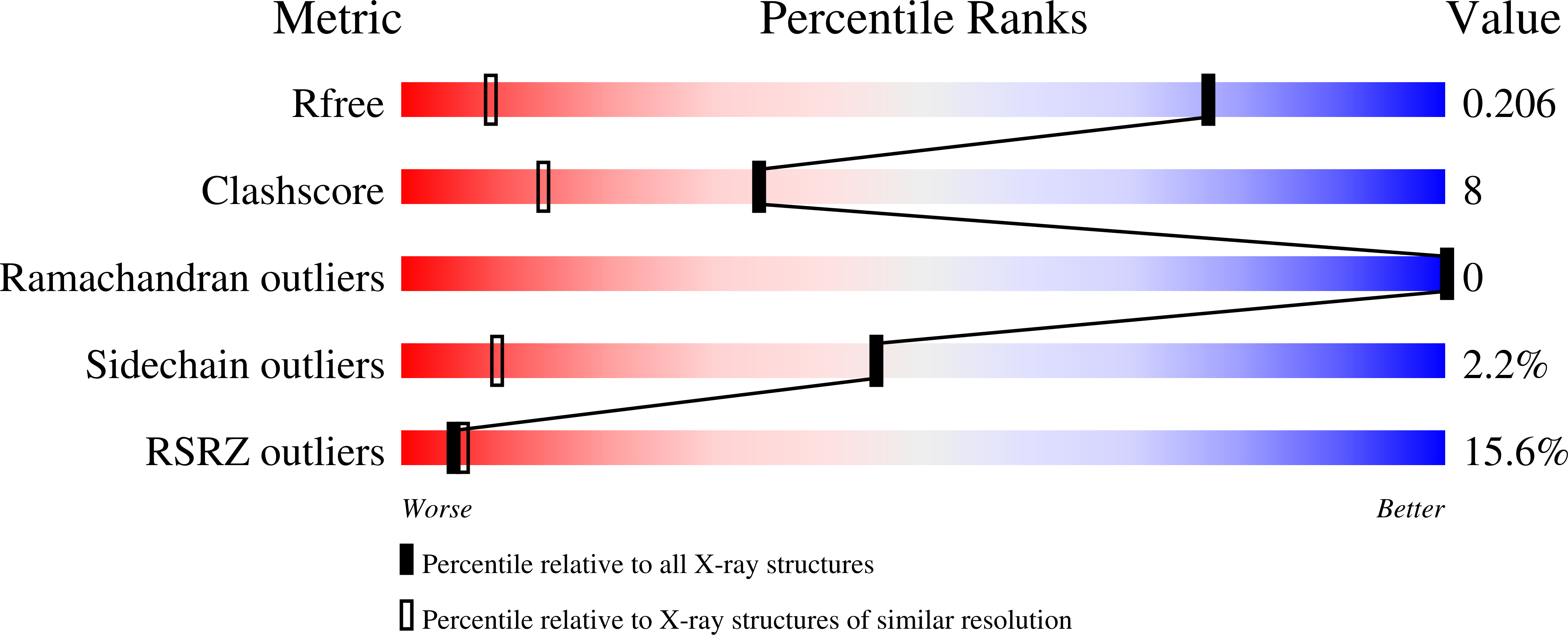
Resolution:
1.05 Å
R-Value Free:
0.20
R-Value Work:
0.18
Space Group:
P 43 21 2
Macromolecular Entities
Structures with similar UniProt ID
Protein Blast
Polymer Type:polypeptide(L)
Molecule:Copper chaperone PCu(A)C
Chain IDs:A
Chain Length:158
Number of Molecules:1
Biological Source:Cereibacter sphaeroides
Ligand Molecules
Primary Citation
Quantitative mapping of methionine sensitivity to oxidation in the copper-bound PcuC chaperone.
Redox Biol 90 104037 104037 (2026)
PMID: 41579735 DOI: 10.1016/j.redox.2026.104037

Abstact

Copper is typically coordinated by histidine, cysteine, or methionine in proteins, and these residues are particularly sensitive to oxidation. However, it remains unclear whether copper-coordinating residues are more prone to oxidation than non-coordinating ones, and how their susceptibility changes between the apo and copper-bound states. The copper chaperone PcuC, important for cytochrome c oxidase assembly in bacteria, contains a canonical binding site composed of two histidines and two methionines (H51x(n)M63 x (22)H86xM88), as well as a disordered C-terminal extension enriched in methionine and histidine. To quantify methionine oxidation sensitivity in both apo- and Cu-bound PcuC, we used a methionine-specific oxaziridine probe combined with mass spectrometry and compared labeling patterns to those generated by (18)O-labeled hydrogen peroxide. We show that methionine residues display distinct oxidation sensitivities in the apoprotein, and that the oxaziridine reacts similarly to H(2)(18)O(2). Importantly, this probe enables quantification of methionine oxidation independently of hydroxyl radicals generated by copper-driven Fenton chemistry, which lacks residue specificity. In the copper-bound form, Cu binding strongly alters methionine reactivity, with a marked increase in oxidation of the coordinating Met63 and Met88. Structural analysis revealed that two copper ions occupy the canonical site, while the C-terminal extension does not contribute to coordination. Comparison of structural features and oxidation values showed that methionine sensitivity correlates with solvent exposure in the folded domain, but with local positive charge in the disordered region. These findings demonstrate that copper coordination modulates methionine oxidation, and that oxaziridine-based probes provide powerful tools for mapping oxidation sensitivity in (metallo)proteins.

Legend

Protein

Chemical

Disease

Primary Citation of related structures
Feedback Form
Name
Email
Institute
Feedback