

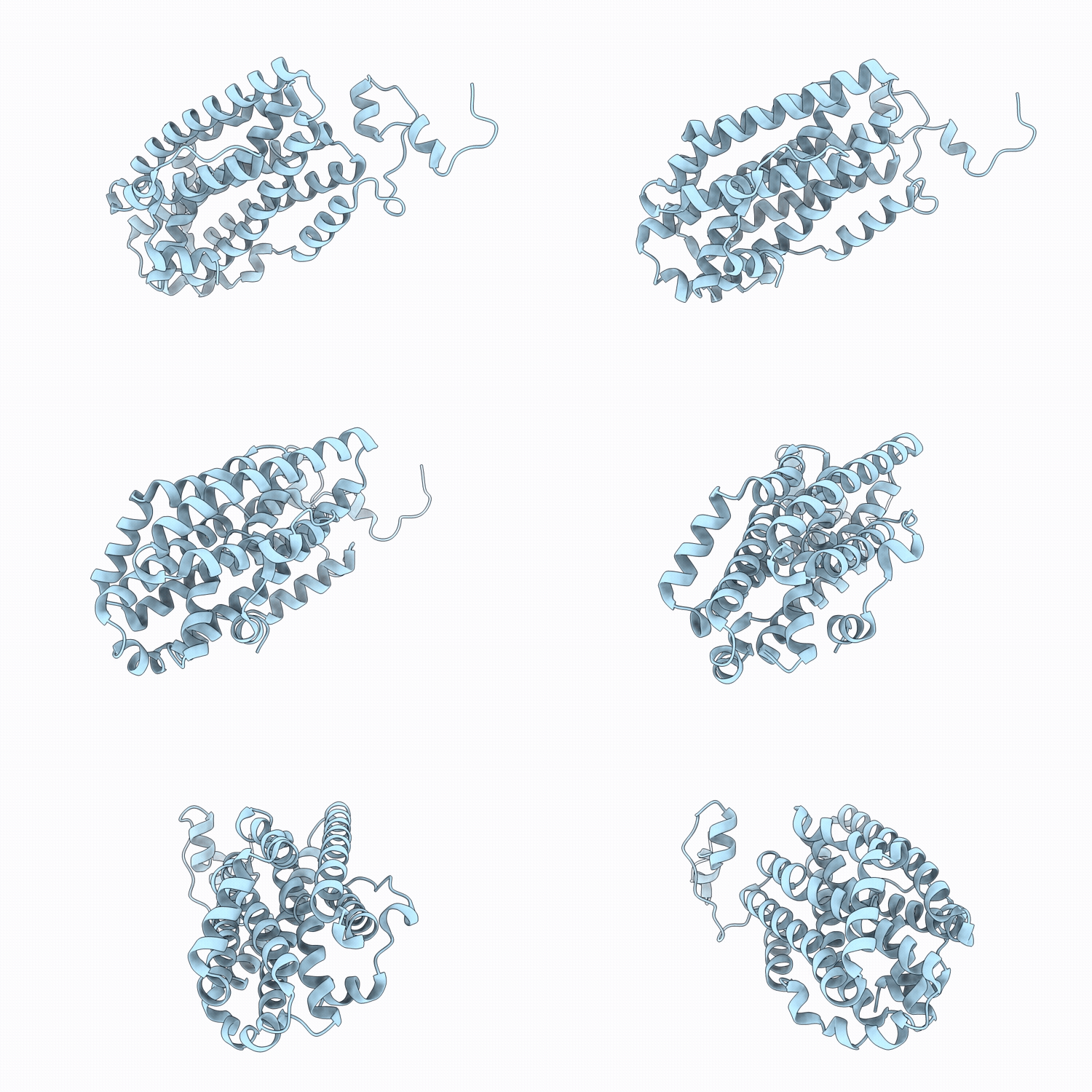
9R5L image
Deposition Date 2025-05-09
Release Date 2026-05-20
Last Version Date 2026-05-20
Entry Detail
PDB ID:
9R5L
Keywords:
Title:
Crystal structure of class Ie ribonucleotide reductase R2 subunit from Mesoplasma florum with a D212N mutation
Biological Source:
Source Organism(s):
Expression System(s):
Method Details:
Experimental Method:
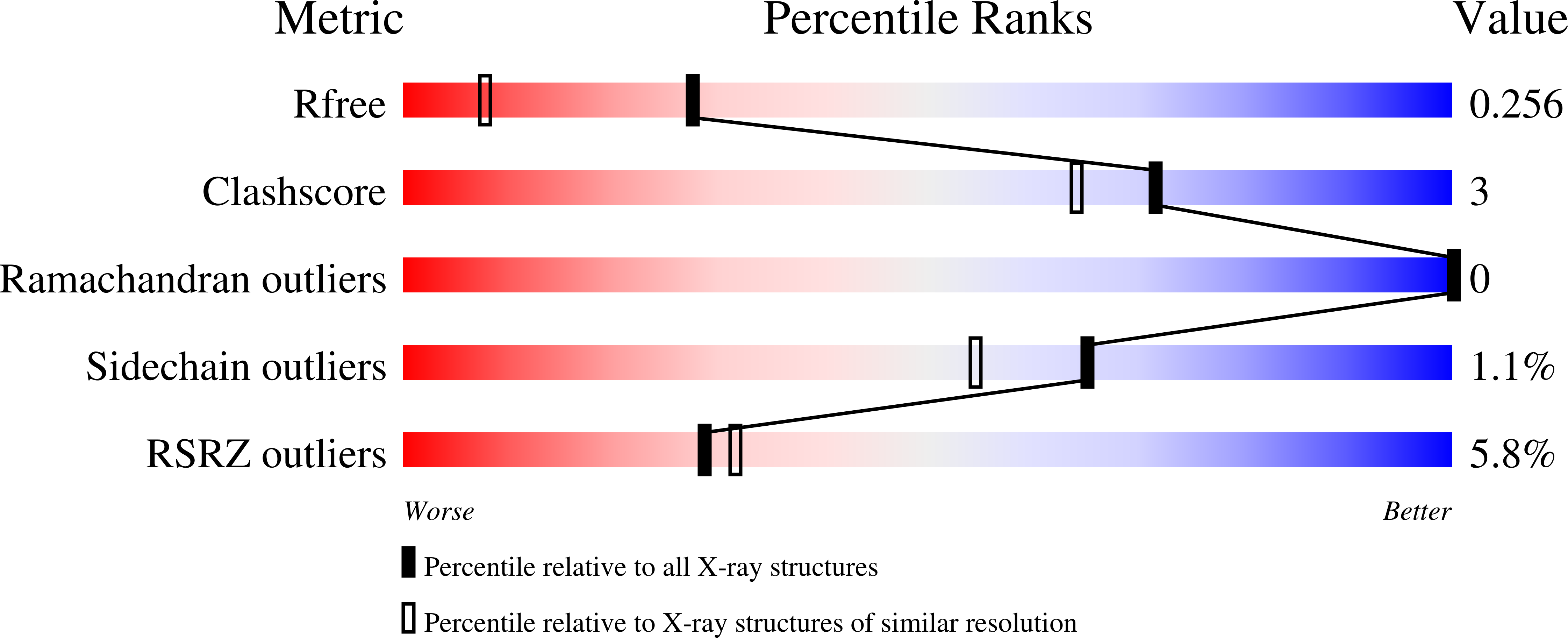
Resolution:
1.70 Å
R-Value Free:
0.25
R-Value Work:
0.21
R-Value Observed:
0.21
Space Group:
C 1 2 1
Macromolecular Entities
Structures with similar UniProt ID
Protein Blast
Polymer Type:polypeptide(L)
Molecule:ribonucleoside-diphosphate re
Gene (Uniprot):Mfl530
Mutagens:D212N
Chain IDs:A
Chain Length:345
Number of Molecules:1
Biological Source:Mesoplasma florum L1
Primary Citation
Low-barrier hydrogen bond powers long-range radical transfer in the metal-free ribonucleotide reductase.
Proc.Natl.Acad.Sci.USA 123 e2529856123 e2529856123 (2026)
PMID: 42096306 DOI: 10.1073/pnas.2529856123

Abstact

Ribonucleotide reductases (RNRs) catalyze the conversion of ribonucleotide (RNA) to deoxyribonucleotide (DNA) building blocks initiated by a long-range (>30 A) proton-coupled electron transfer (PCET) by mechanistic principles that remain much debated. By combining multiscale quantum and classical simulations with directed mutagenesis, X-ray crystallography, and vibrational and electron paramagnetic resonance spectroscopy, we elucidate here the molecular principles underlying how metal-free RNRs initiate the long-range PCET process by creating a highly stable 3,4-dihydroxyphenylalanine (DOPA) initiator radical. We show that DOPA* is redox-tuned by a low-barrier hydrogen bond (LBHB), with a delocalized proton that provides the catalytic power for the ribonucleotide reduction. We find that the LBHB couples to an extended hydrogen-bonded network, with distant mutations resulting in the loss of radical formation, and providing key molecular insight into the long-range radical transport mechanism in RNRs. On a general level, our findings support the direct involvement of LBHB in protein chemistry and the importance of quantum effects in enzyme catalysis.

Legend

Protein

Chemical

Disease

Primary Citation of related structures
Feedback Form
Name
Email
Institute
Feedback