

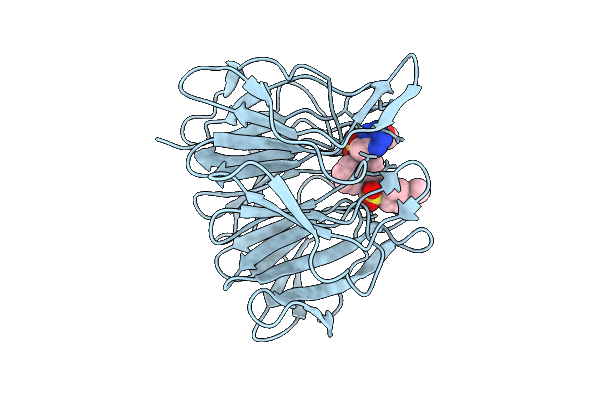
9R1I image
Deposition Date 2025-04-27
Release Date 2026-03-11
Last Version Date 2026-03-11
Entry Detail
PDB ID:
9R1I
Title:
Keap1 - inhibitor complex - 3
Biological Source:
Source Organism(s):
Homo sapiens (Taxon ID: 9606)
Expression System(s):
Method Details:
Experimental Method:
Resolution:
2.53 Å
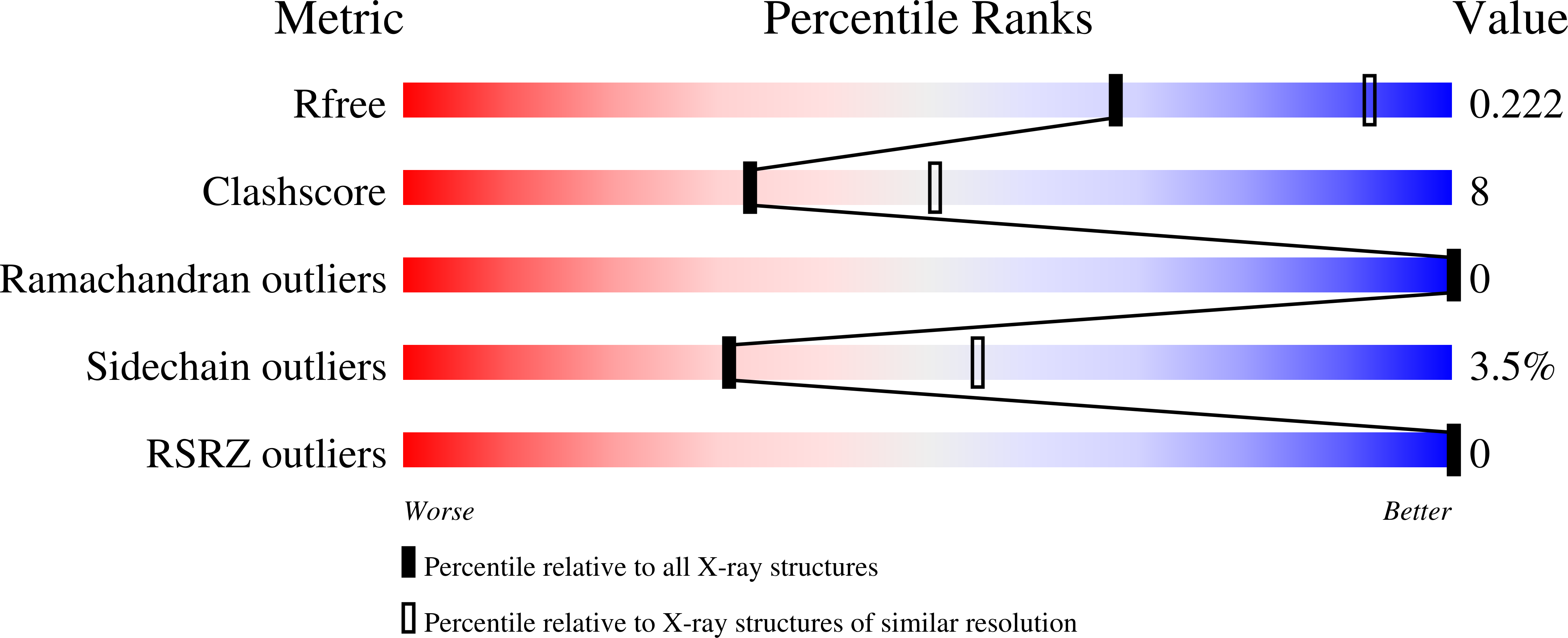
R-Value Free:
0.22
R-Value Work:
0.18
R-Value Observed:
0.18
Space Group:
C 1 2 1
Macromolecular Entities
Structures with similar UniProt ID
Protein Blast
Polymer Type:polypeptide(L)
Molecule:Kelch-like ECH-associated pro
Gene (Uniprot):KEAP1
Chain IDs:A
Chain Length:285
Number of Molecules:1
Biological Source:Homo sapiens
Ligand Molecules
Primary Citation
Tetrazole-containing naphthalene bis-sulfonamide Keap1-Nrf2 interaction inhibitors with unexpected binding modes.
Redox Biol 88 103924 103924 (2025)
PMID: 41242018 DOI: 10.1016/j.redox.2025.103924

Abstact

Naphthalene bis-sulfonamides are amongst the most studied inhibitors of the interaction between Kelch-like ECH-associated protein-1 (Keap1), a ubiquitination facilitator protein and the nuclear factor erythroid 2-related factor 2 (Nrf2), a transcription factor associated with diverse cytoprotective responses. The compounds bind to the C-terminal Kelch domain of Keap1 and occupy the Nrf2 binding pocket, causing Nrf2 to accumulate and increase the expression of a battery of antioxidant response element genes. The binding modes of the compounds have been characterised through a series of X-ray crystallography and binding assay studies. In this work we have evaluated a series of symmetric and asymmetric naphthalene bis-sulfonamides and identified a tight binding acid/tetrazole derivative 25. We have determined its distinct binding mode to Keap1 using X-ray crystallography, biophysical binding assays and its Nrf2 activation using cell-based assays. We have also characterised its conformational interconversions in solution using NMR. In contrast to previous studies, we have shown that the compound can bind to Keap1 in both its 'cis' and 'trans' rotational states that are both occupied and interconvert in solution. Molecular dynamics simulations indicate that the cis-form has the lowest interaction energy, but the trans-form is more stable in solution. The compound binds tightly to Keap1 (low nanomolar K(d)), indicating that the non-standard binding modes may contribute significantly to the high affinity. The study highlights the need for caution when interpreting the structure-activity relationships of closely related compounds in this series and will inform further work on these compounds.

Legend

Protein

Chemical

Disease

Primary Citation of related structures
Feedback Form
Name
Email
Institute
Feedback