

9QO9 image
Deposition Date 2025-03-25
Release Date 2026-03-04
Last Version Date 2026-03-04
Entry Detail
PDB ID:
9QO9
Title:
Inward-occluded structure of human GABA transporter 3 bound to substrate GABA
Biological Source:
Source Organism(s):
Homo sapiens (Taxon ID: 9606)
Expression System(s):
Method Details:
Experimental Method:
Resolution:
3.20 Å
Aggregation State:
PARTICLE
Reconstruction Method:
SINGLE PARTICLE
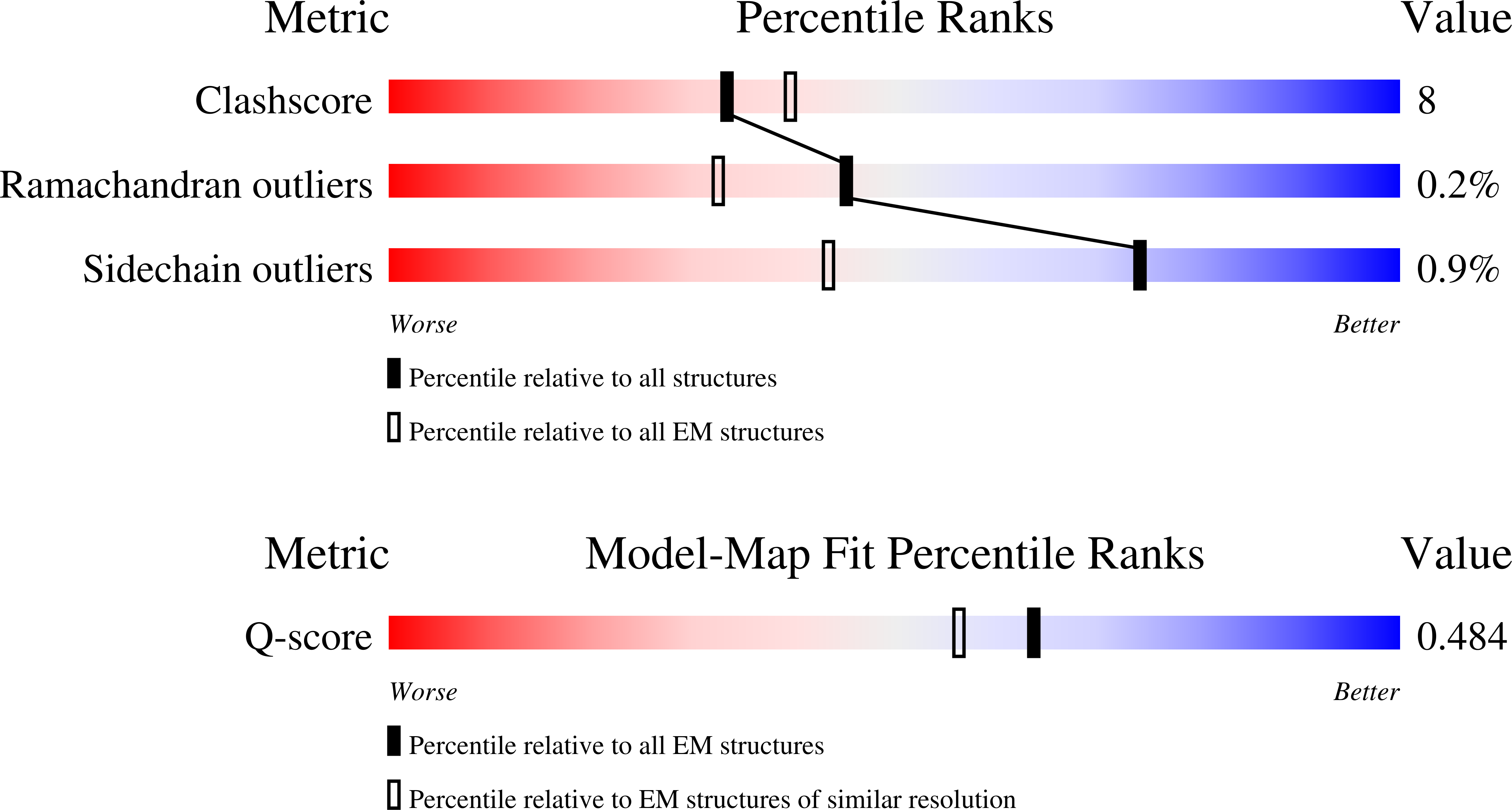
Macromolecular Entities
Structures with similar UniProt ID
Protein Blast
Polymer Type:polypeptide(L)
Molecule:Sodium- and chloride-dependen
Gene (Uniprot):SLC6A11
Chain IDs:A
Chain Length:632
Number of Molecules:1
Biological Source:Homo sapiens
Primary Citation
Structural basis for selective inhibition of human GABA transporter GAT3.
Nat Commun 17 1774 1774 (2026)
PMID: 41611703 DOI: 10.1038/s41467-026-68479-0

Abstact

The astrocytic γ-aminobutyric acid (GABA) transporter, GAT3, is essential for terminating GABAergic signaling in the central nervous system. Selective inhibition of GAT3 offers a potential strategy for elevating extracellular GABA levels for the treatment of neurological disorders including epilepsy. However, few potent and selective GAT3 inhibitors have been developed, and their mechanisms of inhibition remain poorly understood. Here, we present the cryo-electron microscopy structures of full-length, wild-type human GAT3, hGAT3, bound to a selective inhibitor, to substrate GABA, or in substrate-free state. hGAT3 bound to the inhibitor or in the substrate-free state exhibits an inward-open conformation. The inhibitor binds within the intracellular permeation pathway, positioned between transmembrane helices 1, 2, 3, 6, 7, and 8. The GABA-bound hGAT3 is captured in an inward-occluded state, revealing the ion coordination and substrate recognition network, including a cation-π interaction between GABA's γ-amino group and a phenylalanine residue in transmembrane helix 6. Our data reveal the molecular determinants for the inhibitor selectivity, and the mode of substrate binding and transport inhibition, providing blueprints for the rational design of next-generation selective GAT3 inhibitors.

Legend

Protein

Chemical

Disease

Primary Citation of related structures
Feedback Form
Name
Email
Institute
Feedback