

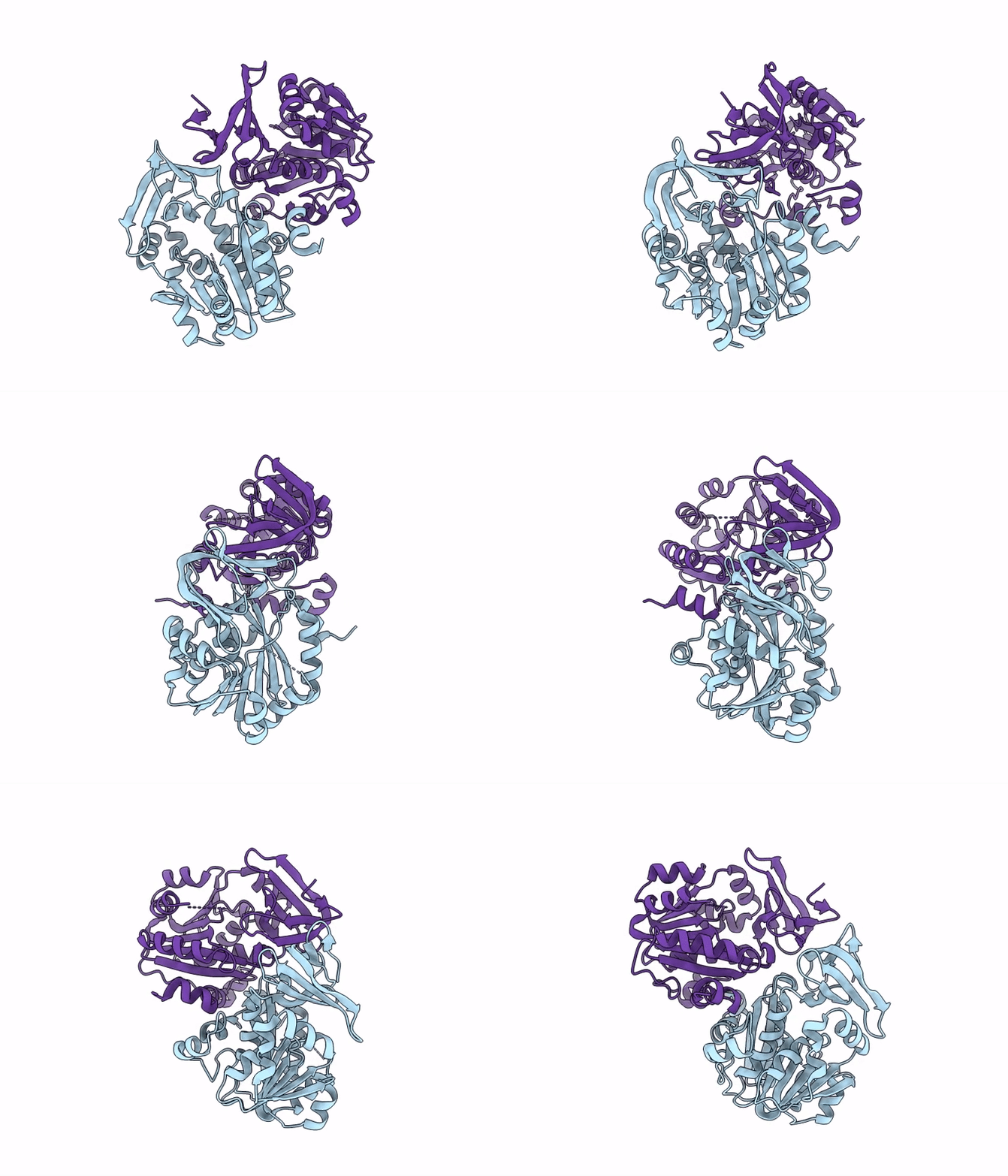
9Q41 image
Deposition Date 2025-08-19
Release Date 2026-01-21
Last Version Date 2026-02-04
Entry Detail
PDB ID:
9Q41
Keywords:
Title:
Crystal Structure of Human Apo Spermidine Synthase
Biological Source:
Source Organism(s):
Homo sapiens (Taxon ID: 9606)
Expression System(s):
Method Details:
Experimental Method:
Resolution:
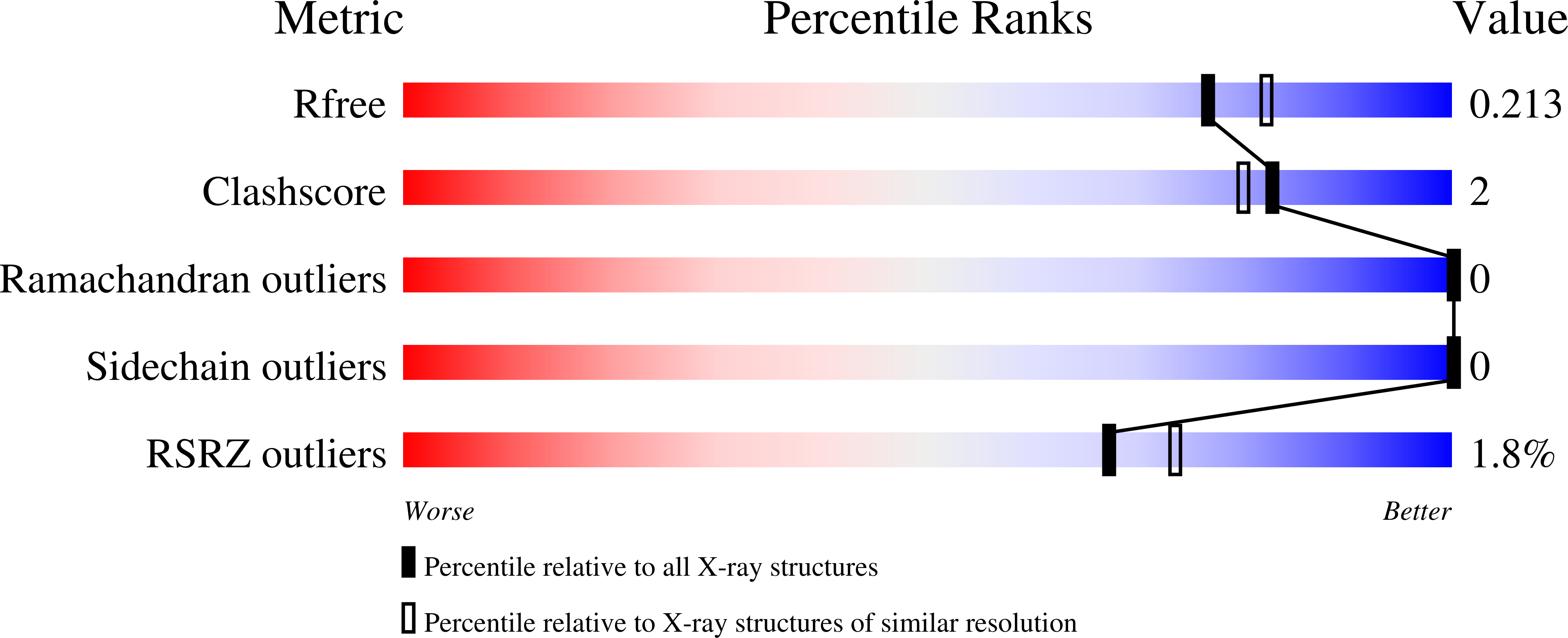
1.95 Å
R-Value Free:
0.21
R-Value Work:
0.16
R-Value Observed:
0.16
Space Group:
C 2 2 21
Macromolecular Entities
Structures with similar UniProt ID
Protein Blast
Polymer Type:polypeptide(L)
Molecule:Spermidine synthase
Gene (Uniprot):SRM
Chain IDs:A, B
Chain Length:315
Number of Molecules:2
Biological Source:Homo sapiens
Primary Citation
Crystal structure of apo human spermidine synthase reveals dynamic rearrangement at the active site.
Struct Dyn. 13 014701 014701 (2026)
PMID: 41551692 DOI: 10.1063/4.0001199

Abstact

Polyamines are polycations involved in both differentiation and proliferation of cells. Highly conserved polyamine biosynthetic enzymes are involved in the synthesis of polyamines. Spermidine synthase (SPDS) is an important enzyme in the polyamine biosynthetic pathway, and it is an aminopropyl-transferase that catalyzes the synthesis of the polyamine, spermidine, from putrescine and decarboxylated S-adenosine methionine. Spermidine has a variety of biological roles, including the formation of eIF5A, regulating autophagy, and stabilizing DNA and RNA. While there are numerous structures of human SPDS in complex with its substrates, products, or inhibitors, and numerous apo structures from various species, there is no structure of the apo form of human SPDS reported to date. In this study, the crystal structure of apo human SPDS was determined at 1.95 Å resolution. Comparison of the inherently flexible gatekeeping loop in the apo human structure with apo homologues revealed species-specific differences in loop conformation, indicating dynamics. Significant conformational change was observed in active site residues that are involved in catalysis when the apo human structure was compared to human ligand-bound complexes. These findings provide structural insights into the conformational dynamics and ligand-binding properties of spermidine synthase.

Legend

Protein

Chemical

Disease

Primary Citation of related structures
Feedback Form
Name
Email
Institute
Feedback