

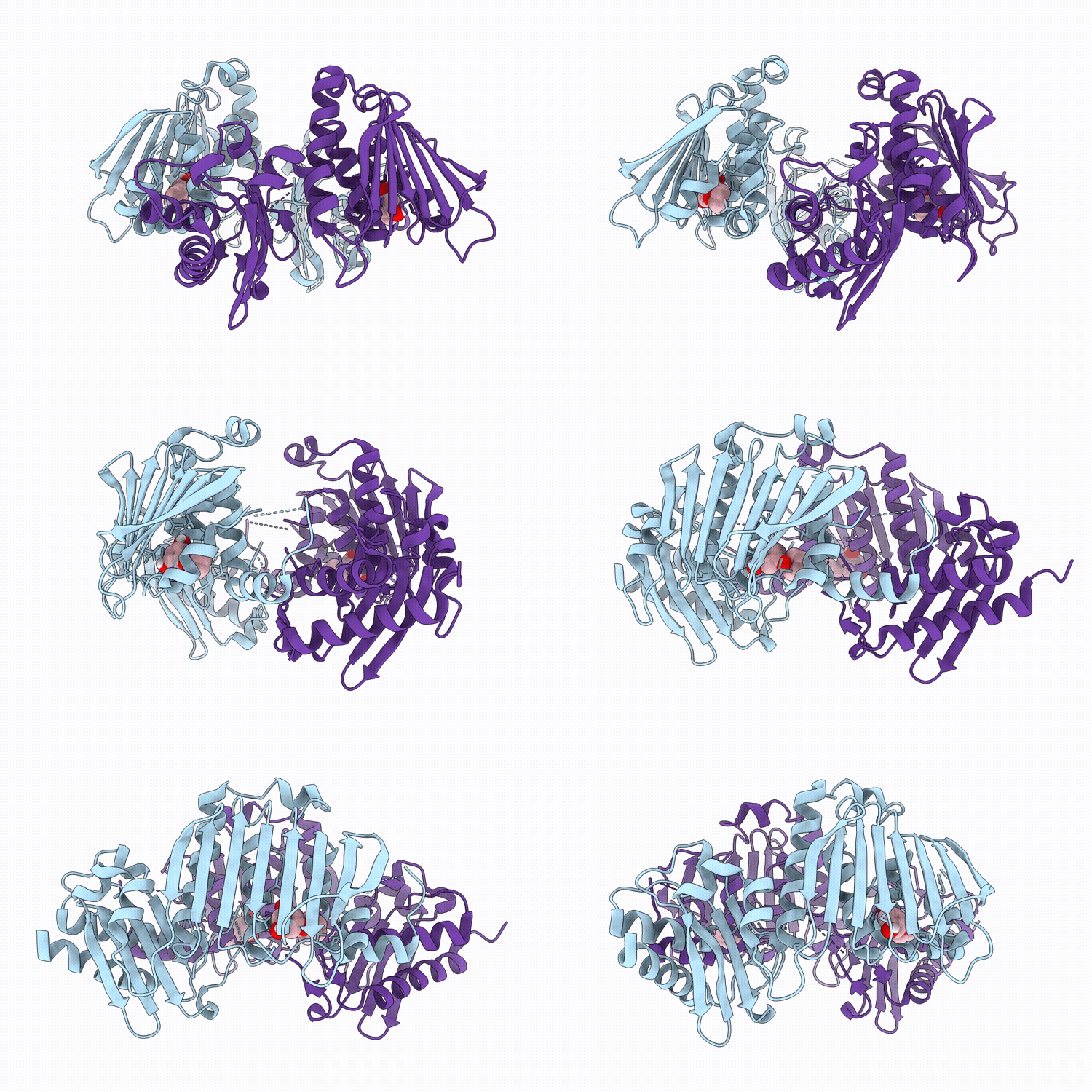
9PRP image
Deposition Date 2025-07-24
Release Date 2026-05-06
Last Version Date 2026-05-06
Entry Detail
PDB ID:
9PRP
Title:
N-terminal domain of E. coli MutL bound to NP660
Biological Source:
Source Organism(s):
Escherichia coli (Taxon ID: 562)
Expression System(s):
Method Details:
Experimental Method:
Resolution:
2.10 Å
R-Value Free:
0.29
R-Value Work:
0.23
R-Value Observed:
0.24
Space Group:
P 1 21 1

Macromolecular Entities
Structures with similar UniProt ID
Protein Blast
Polymer Type:polypeptide(L)
Molecule:DNA mismatch repair protein M
Gene (Uniprot):mutL
Chain IDs:A, B
Chain Length:352
Number of Molecules:2
Biological Source:Escherichia coli
Ligand Molecules
Primary Citation

Abstact

DNA mismatch repair (MMR) detects and corrects post-replicative DNA alterations; it is deregulated in up to 20% of human cancers. MMR-deficient (MMR-d) cancers display increased tumour mutational burden (TMB), microsatellite instability (MSI) and are eligible for checkpoint inhibitor (CPI) immunotherapy which commonly elicits durable responses. We reasoned that pharmacological blockade of MMR could broaden the patient population eligible for immunotherapy. Here we reveal MMR protein PMS2 as a druggable target and describe the discovery and characterisation of first-in-class small molecule MMR pathway modulator NP1867. In vitro treatment of murine cancer cells abrogates MMR function and elicits an MMR-d genotype including increased TMB, MMR-d mutational signatures, and MSI-High (MSI- H) status. Inoculation of syngeneic immunocompetent mice with cancer cells pretreated with NP1867 leads to CPI sensitivity, tumour growth delay, and complete responses. For the first time, we demonstrate pharmacological targeting of MMR to proactively rewire the tumour-host relationship for therapeutic purposes.

Legend

Protein

Chemical

Disease

Primary Citation of related structures
Feedback Form
Name
Email
Institute
Feedback