

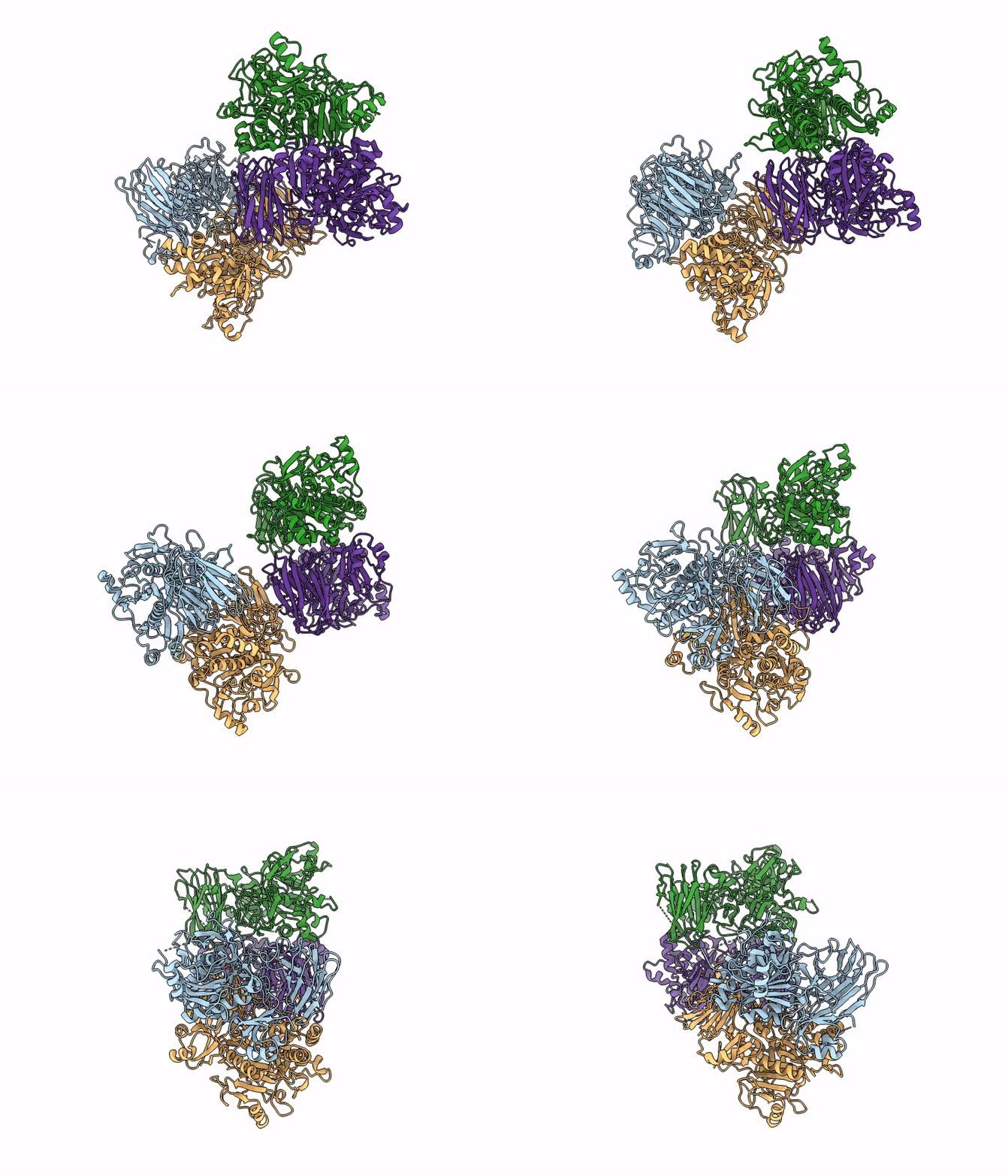
9PR8 image
Deposition Date 2025-07-23
Release Date 2026-01-21
Last Version Date 2026-02-18
Entry Detail
PDB ID:
9PR8
Title:
Crystal Structure of the Clostridiodes difficile CspC-CspA heterodimer.
Biological Source:
Source Organism(s):
Clostridia (Taxon ID: 186801)
Expression System(s):
Method Details:
Experimental Method:
Resolution:
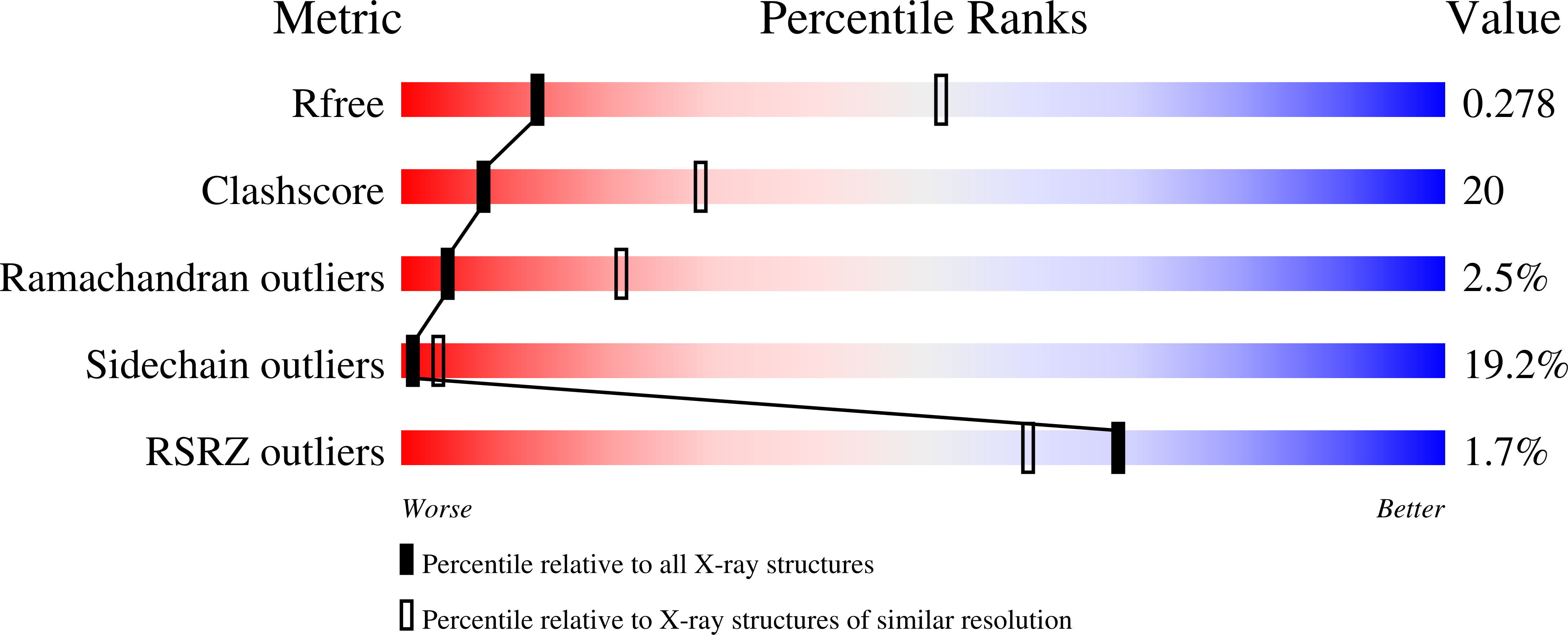
3.35 Å
R-Value Free:
0.27
R-Value Work:
0.24
R-Value Observed:
0.24
Space Group:
P 21 21 21
Macromolecular Entities
Structures with similar UniProt ID
Protein Blast
Polymer Type:polypeptide(L)
Molecule:Germination-specific protease
Gene (Uniprot):cspBA
Chain IDs:A, B
Chain Length:551
Number of Molecules:2
Biological Source:Clostridia
Structures with similar UniProt ID
Protein Blast
Polymer Type:polypeptide(L)
Molecule:Germination-specific protease
Gene (Uniprot):cspC
Chain IDs:C, D
Chain Length:565
Number of Molecules:2
Biological Source:Clostridia
Primary Citation
The CspC:CspA heterodimer transduces germinant and co-germinant signals during Clostridioides difficile spore germination.
PLoS Biol. 24 e3003610 e3003610 (2026)
PMID: 41628221 DOI: 10.1371/journal.pbio.3003610

Abstact

The clinically significant pathogen Clostridioides difficile lacks the transmembrane nutrient germinant receptors conserved in almost all spore-forming bacteria. Instead, C. difficile initiates spore germination using a unique mechanism that requires two signals: a bile acid germinant and a co-germinant, which can be either an amino acid or a divalent cation. While two soluble pseudoproteases, CspC and CspA, were initially identified as the germinant and co-germinant receptors, respectively, in C. difficile, we previously identified residues in an unstructured region of CspC that regulate the sensitivity of C. difficile spores to both signals. However, the mechanism by which CspC transduces these signals remained unclear. Here, we demonstrate that CspC forms a stable complex with CspA and determine the crystal structure of the CspC:CspA heterodimer. The structure reveals extensive interactions along the binding interface, including direct interactions between the unstructured region of CspC and CspA. Using structure-function analyses, we identify CspC:CspA interactions that regulate the sensitivity of C. difficile spores to germinant signals and show that CspA regulates the response of C. difficile to not only co-germinant but also germinant signals. While we show that CspA can form a homodimer and determine its crystal structure, CspA homodimerization appears unimportant for C. difficile spore germination. Collectively, our analyses establish the CspC:CspA heterodimer, rather than its individual constituents, as a critical signaling node for sensing both germinant and co-germinant signals. They also suggest a new mechanistic model for how C. difficile transduces germinant signals, which could guide the development of therapeutics against this important pathogen.

Legend

Protein

Chemical

Disease

Primary Citation of related structures
Feedback Form
Name
Email
Institute
Feedback