

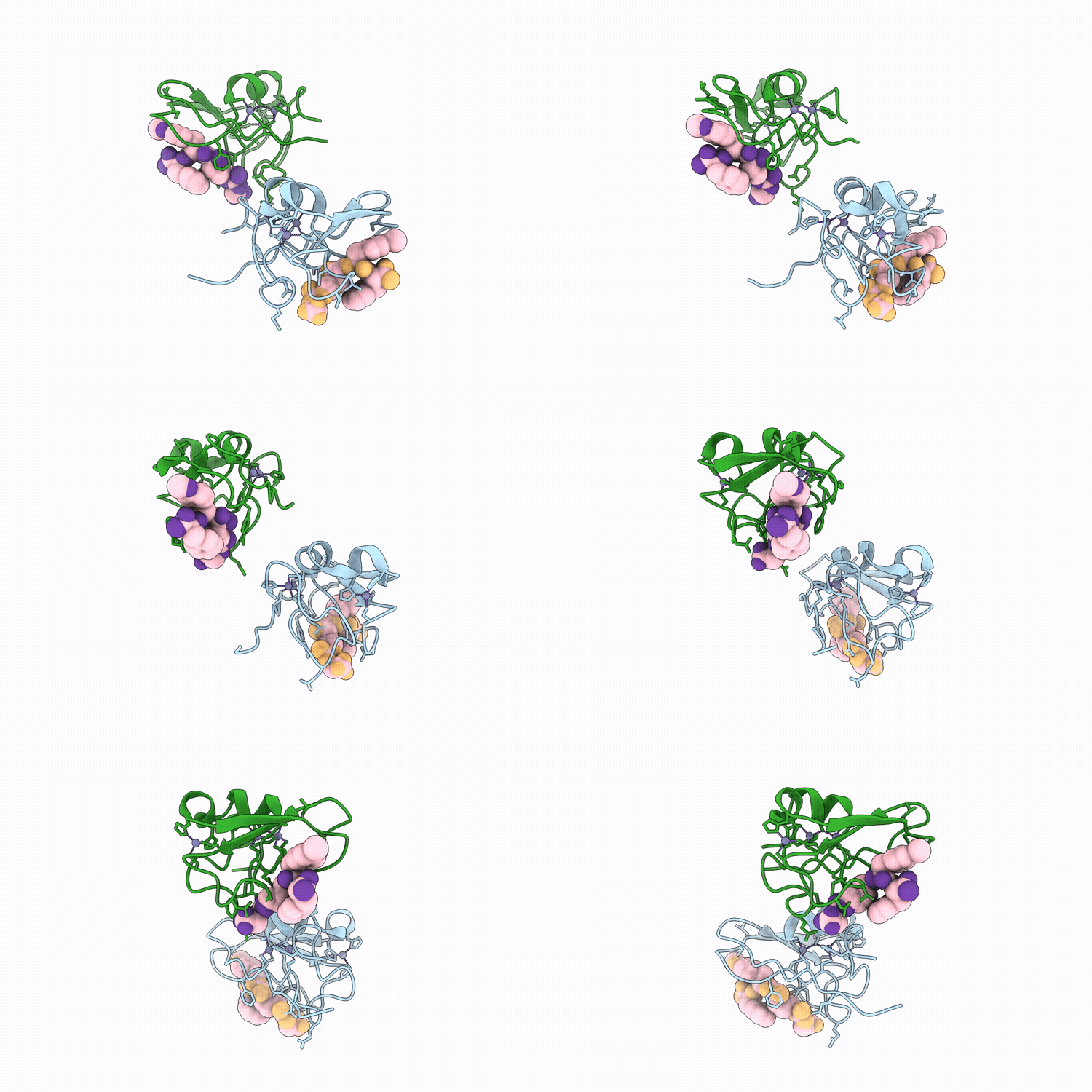
9PG9 image
Deposition Date 2025-07-07
Release Date 2026-05-20
Last Version Date 2026-05-20
Entry Detail
PDB ID:
9PG9
Keywords:
Title:
Structure of UBR2-AF27 complex
Biological Source:
Source Organism(s):
Expression System(s):
Method Details:
Experimental Method:
Resolution:
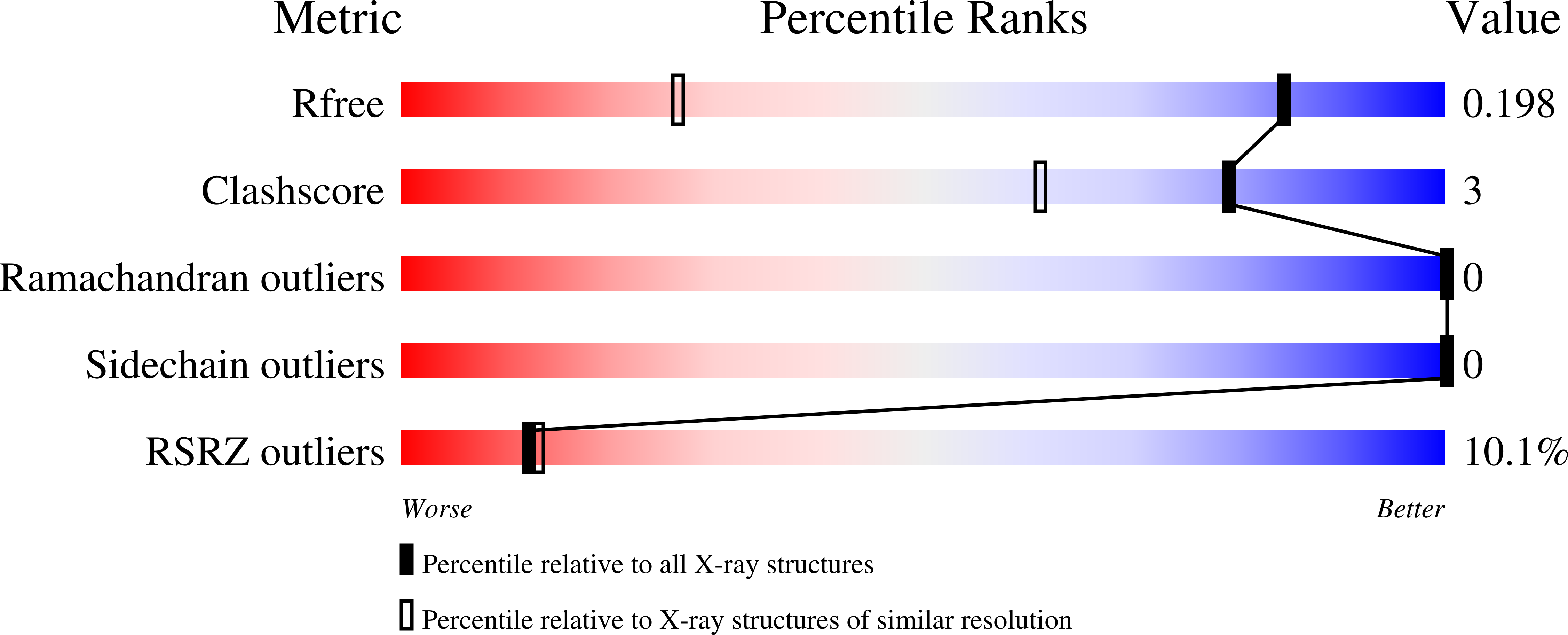
1.22 Å
R-Value Free:
0.19
R-Value Work:
0.17
R-Value Observed:
0.17
Space Group:
P 1 21 1
Macromolecular Entities
Structures with similar UniProt ID
Protein Blast
Polymer Type:polypeptide(L)
Molecule:E3 ubiquitin-protein ligase U
Gene (Uniprot):UBR2
Chain IDs:A, B
Chain Length:74
Number of Molecules:2
Biological Source:Homo sapiens
Protein Blast
Polymer Type:polypeptide(L)
Molecule:AF27 peptide
Chain IDs:C, D
Chain Length:4
Number of Molecules:2
Biological Source:synthetic construct
Ligand Molecules
Peptide-like Molecules
PRD_002579
Primary Citation
Development of High-Affinity Ligands for Human UBR2.
J.Med.Chem. ? ? ? (2026)
PMID: 42102356 DOI: 10.1021/acs.jmedchem.5c02881

Abstact

UBR box-containing ubiquitin E3 ligases recognize the N-termini of their target proteins through the UBR box, and a member of the family, UBR2, has been established as a target to treat cancer- and diabetes-associated cachexia. However, the development of high-affinity small-molecule ligands for UBR2 has not been reported. We developed high-affinity UBR2 ligands through a peptidomimetic approach by incorporating unnatural amino acids to obtain ligands that bind to UBR2 with K(d) approximately 20-40 nM and with 10-fold selectivity over UBR2's closest homologue, UBR1. High-resolution cocrystal structures ( approximately 1.2 A) of UBR2 in complexes with two high-affinity tripeptides revealed molecular mechanisms for their high-affinity binding. Importantly, a high-affinity UBR2 ligand effectively attenuated cancer-induced cachexia in a cellular model. Our findings demonstrate that the UBR boxes are ligandable and thus could spur interest in targeting this class of E3 ligases for developing novel therapeutic approaches for the treatment of cachexia and other illnesses.

Legend

Protein

Chemical

Disease

Primary Citation of related structures
Feedback Form
Name
Email
Institute
Feedback