

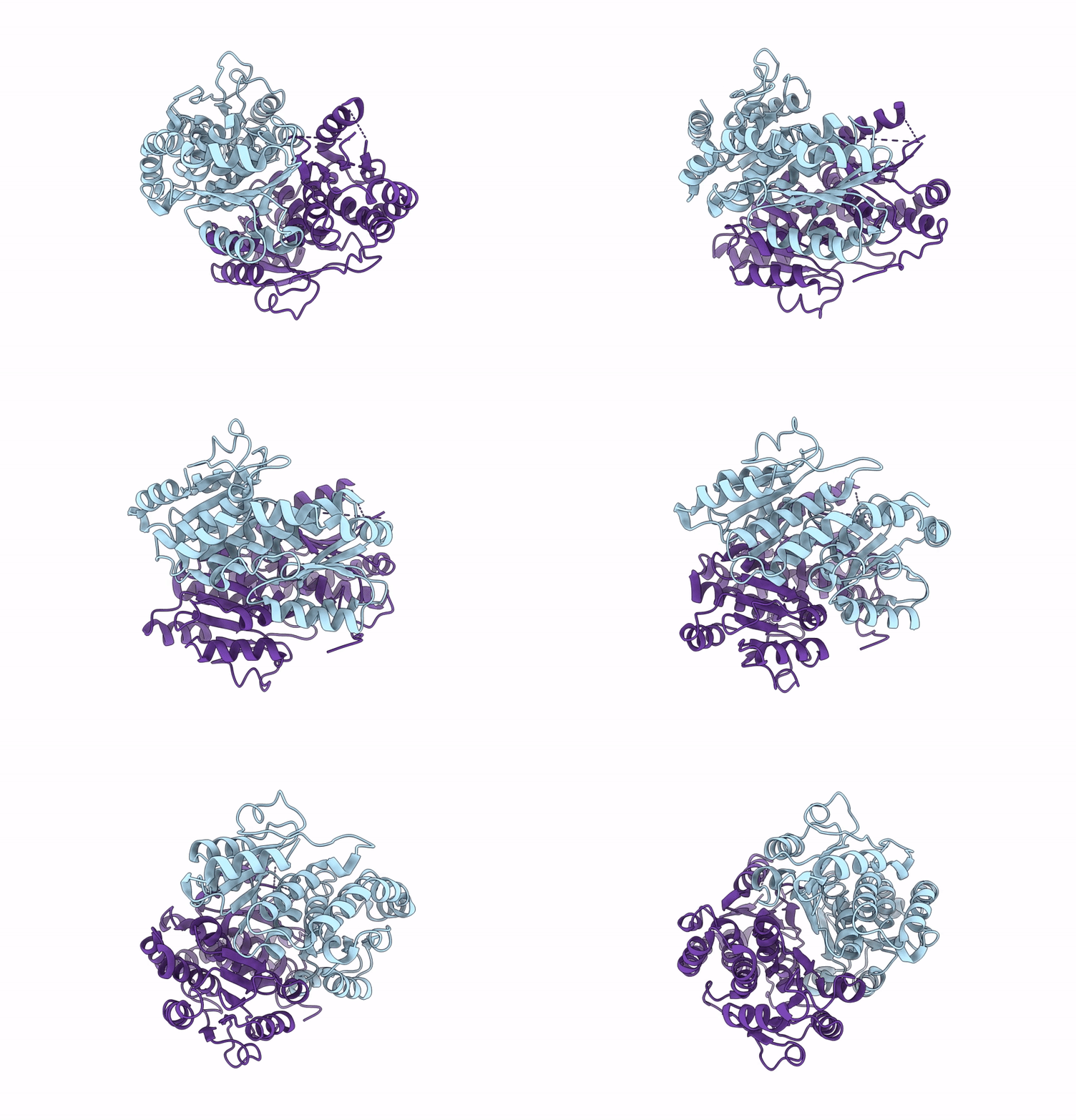
9OTU image
Deposition Date 2025-05-27
Release Date 2025-08-06
Last Version Date 2025-08-06
Entry Detail
PDB ID:
9OTU
Keywords:
Title:
Crystal Structure of Salmonella FraB Deglycase, E214A Mutant, Crystal Form 5
Biological Source:
Expression System(s):
Method Details:
Experimental Method:
Resolution:
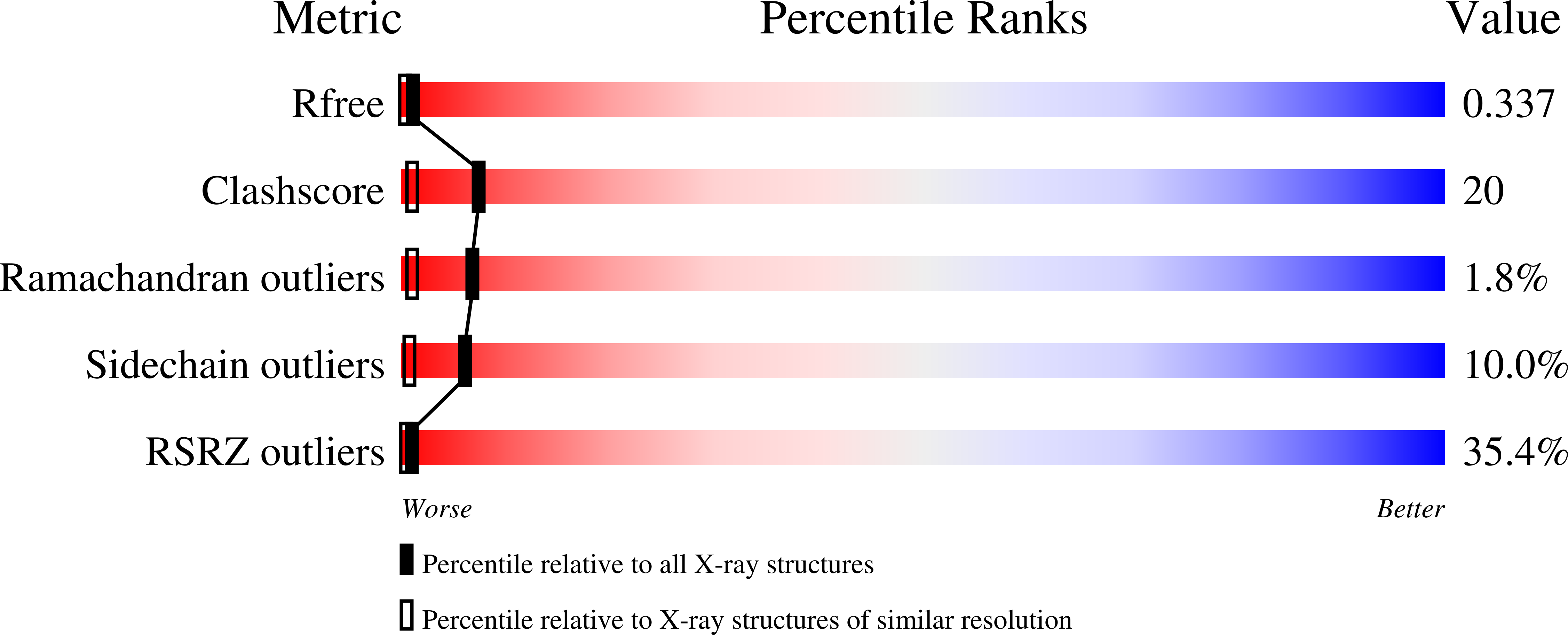
1.87 Å
R-Value Free:
0.33
R-Value Work:
0.26
Space Group:
P 32 2 1
Macromolecular Entities
Structures with similar UniProt ID
Protein Blast
Polymer Type:polypeptide(L)
Molecule:SIS domain protein
Gene (Uniprot):A628_00340
Mutagens:K275A,E276A,E214A
Chain IDs:A, B
Chain Length:345
Number of Molecules:2
Biological Source:Salmonella enterica subsp. enterica serovar Typhimurium
Primary Citation
Crystal structures of Salmonella enterica FraB deglycase reveal a conformational heterodimer with remarkable structural plasticity at the active site.
Protein Sci. 34 e70260 e70260 (2025)
PMID: 40823914 DOI: 10.1002/pro.70260

Abstact

The fra locus of Salmonella enterica encodes five genes for metabolism of fructose-asparagine, an Amadori product formed by condensation of asparagine with glucose. In the last step of this pathway, the FraB deglycase cleaves 6-phospho-fructose-aspartate into glucose-6-phosphate and aspartate. In homology models, FraB forms a homodimer with two equivalent active sites located at the dimer interface. E214 and H230, two invariant residues essential for catalysis, project into each active site cleft from opposing subunits of the dimer. Here, we have determined six crystal structures of FraB, three of a variant containing an N-terminal His6 tag and two mutations needed for crystallization (hereafter referred to as WT'), two with additional mutations to active site residues (E214A and P232A), and one of a variant with C-terminal residues 313-325 deleted. Surprisingly, in the WT' FraB structure, the two catalytic residues, E214 (general base) and H230 (general acid), are positioned ~22 Å apart. In the E214A and C-terminus-truncated FraB variants, however, a conformational change in the E214-residing helix brings E214 and H230* to ~7 Å (* indicates residue from the second protomer that creates the inter-subunit catalytic center). The loop bearing H230 also exhibits significant variation, ranging from being completely disordered to adopting open or closed states, with the nearby P232* residue being either cis or trans. The C-terminal residues 313-325 form a flexible "C-tail" that can be fully disordered, bind in the active site to block access of substrate, or angle across the active site to wrap across the other subunit of the dimer and potentially close over substrate. Collectively, these structures reveal that FraB is a conformational heterodimer with two chemically identical subunits that are constrained to adopt different structures as they come together for catalysis. This plasticity likely involves correlated opening and closure of the two active sites for their respective binding and release of substrates and ligands.

Legend

Protein

Chemical

Disease

Primary Citation of related structures
Feedback Form
Name
Email
Institute
Feedback