

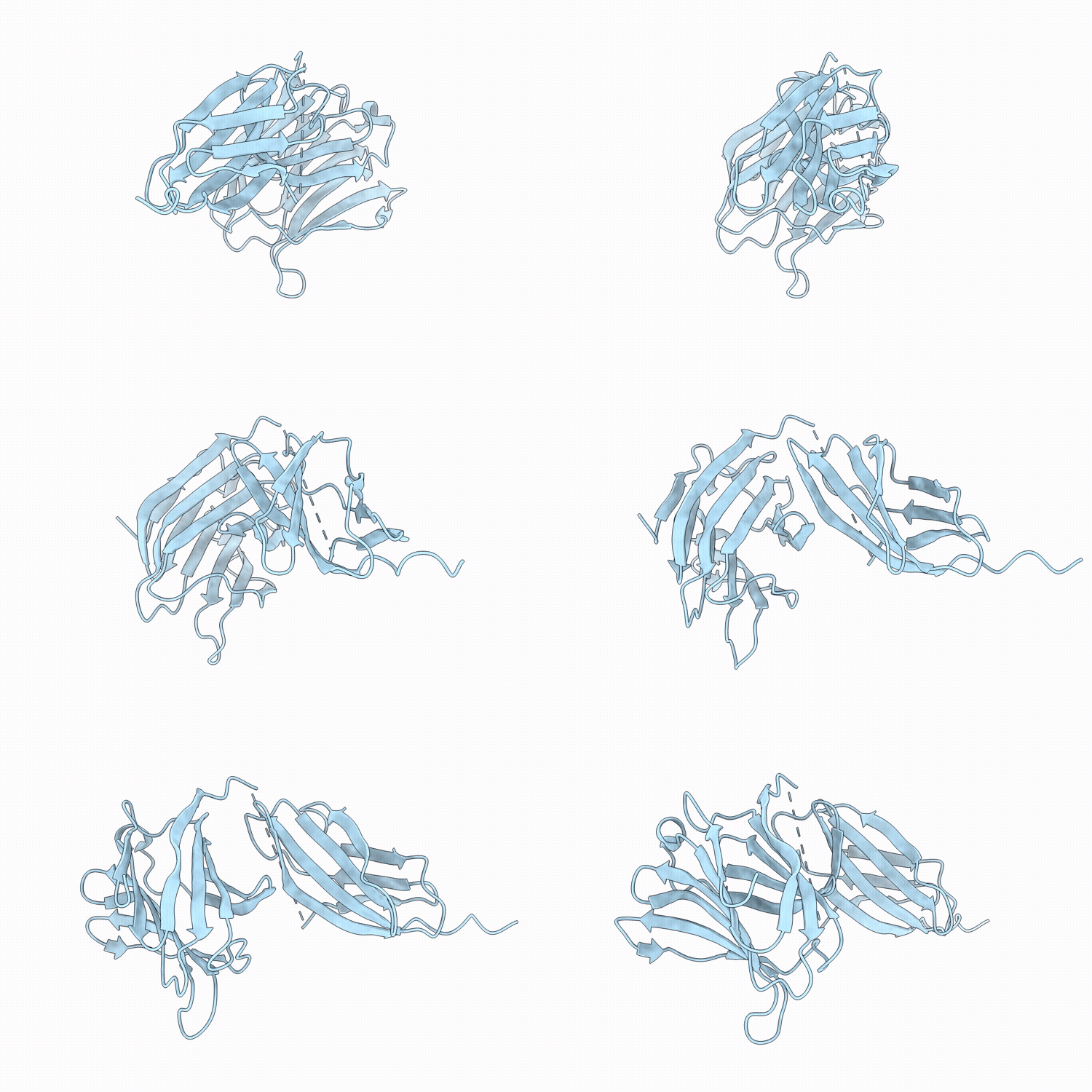
9OT9 image
Deposition Date 2025-05-26
Release Date 2026-05-20
Last Version Date 2026-05-20
Entry Detail
PDB ID:
9OT9
Keywords:
Title:
Crystal structure of the Galectin-3 complex with FN3con-7, an mRNA display-derived binding protein
Biological Source:
Source Organism(s):
Expression System(s):
Method Details:
Experimental Method:
Resolution:
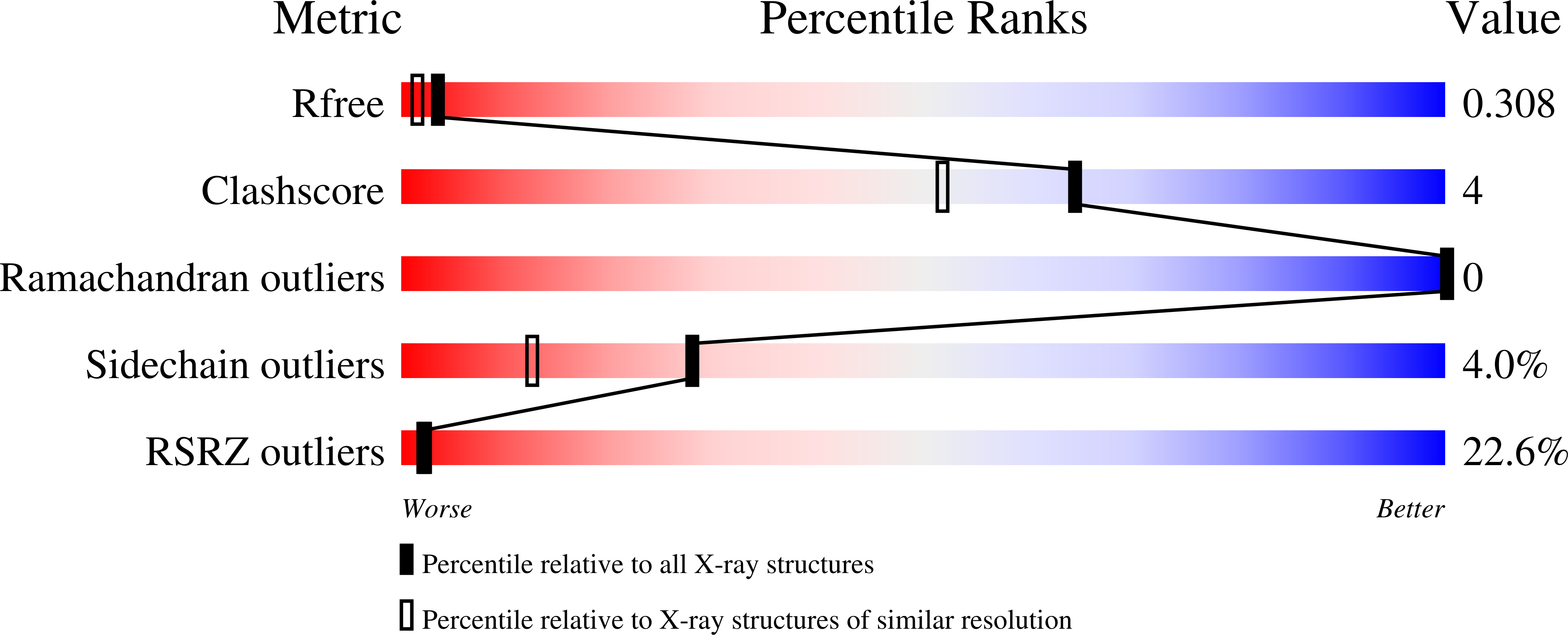
1.92 Å
R-Value Free:
0.31
R-Value Work:
0.26
R-Value Observed:
0.26
Space Group:
P 21 21 21
Macromolecular Entities
Structures with similar UniProt ID
Protein Blast
Polymer Type:polypeptide(L)
Molecule:Galectin-3,FN3con-7
Gene (Uniprot):LGALS3
Chain IDs:A
Chain Length:285
Number of Molecules:1
Biological Source:Homo sapiens, synthetic construct
Primary Citation
Cooperative Binding Domains Enhance Sensitivity and Overcome the Hook Effect in Two-Component Protein Biosensors.
ACS Sens 11 2870 2879 (2026)
PMID: 41801969 DOI: 10.1021/acssensors.6c00488

Abstact

Protein biosensors are important tools in research, bioengineering, and diagnostics. Unlike fully integrated single-component biosensors, two-component biosensors are modular and can be rapidly adapted to new targets by replacing binding elements. However, their utility is limited by a "hook effect," where high analyte concentrations lead to dissociation of the signalling complex and signal loss. We address this challenge by utilizing sequential mRNA display selection campaigns to develop high-affinity, cooperative FN3con (monobody) binding domains to Galectin-3, a protein biomarker of heart failure. Two-component biosensors equipped with such cooperative binders were devoid of the hook effect and demonstrated 5-fold higher sensitivity to Galectin-3 compared to systems based on non-cooperative binding domains. High-resolution crystal structures of cooperative and non-cooperative binding domains revealed how interactions between the two domains establish a cooperative Galectin-3 binding interface. The results and experimental approaches presented in this work enable the construction of high-performance biosensors for diverse applications.

Legend

Protein

Chemical

Disease

Primary Citation of related structures
Feedback Form
Name
Email
Institute
Feedback