

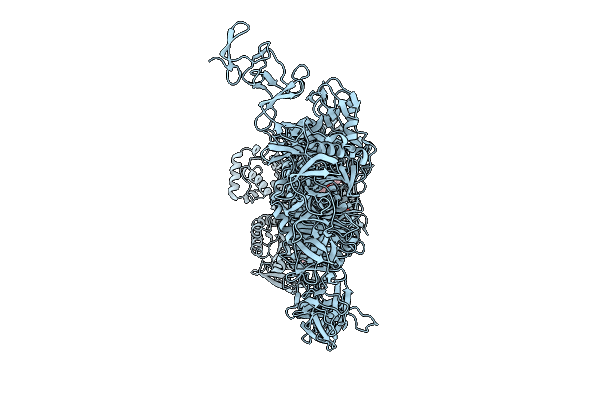
9OHC image
Deposition Date 2025-05-04
Release Date 2026-03-11
Last Version Date 2026-03-11
Entry Detail
PDB ID:
9OHC
Keywords:
Title:
CryoEM structure of Toxin B (TcdB) from clostridioides difficile complexed with taurochenodeoxycholic acid (TCDCA)
Biological Source:
Source Organism(s):
Expression System(s):
Method Details:
Experimental Method:
Resolution:
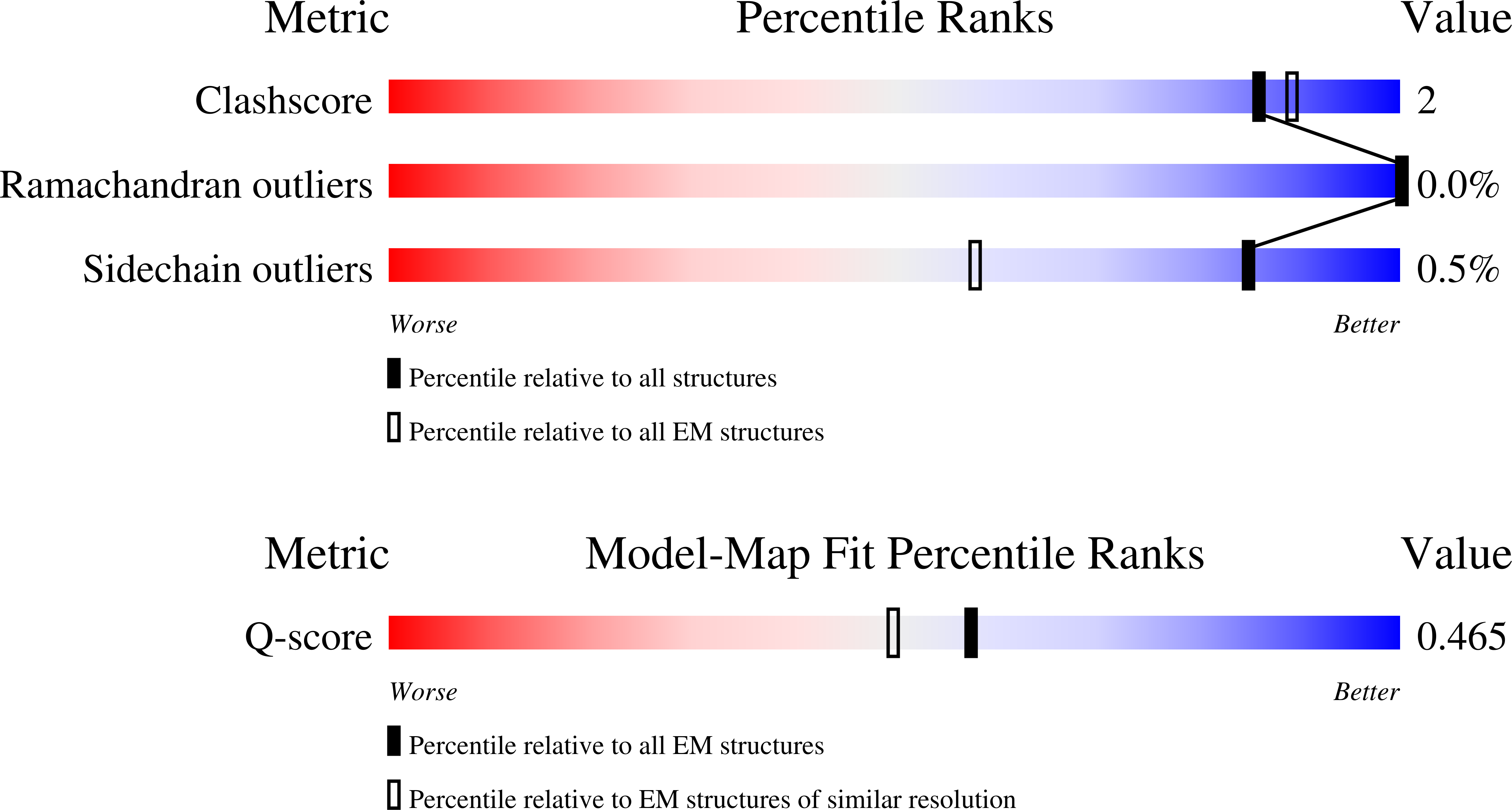
3.28 Å
Aggregation State:
PARTICLE
Reconstruction Method:
SINGLE PARTICLE
Macromolecular Entities
Structures with similar UniProt ID
Protein Blast
Polymer Type:polypeptide(L)
Molecule:Toxin B
Gene (Uniprot):tcdB
Chain IDs:A
Chain Length:2372
Number of Molecules:1
Biological Source:Clostridioides difficile
Ligand Molecules
Primary Citation
Structure-guided design of a synthetic bile acid that inhibits Clostridioides difficile TcdB toxin.
Nat Microbiol 10 3215 3228 (2025)
PMID: 41254394 DOI: 10.1038/s41564-025-02179-1

Abstact

Intestinal bile acids are a family of host and microbiota metabolites that can directly inhibit toxin B (TcdB), the primary virulence factor of Clostridioides difficile that causes infectious diarrhoea and colitis. However, the mechanism underlying the inhibition is unclear. Here we used cryogenic electron microscopy and determined the structure of TcdB bound to inhibitory bile acids cholic acid (methyl ester) and taurochenodeoxycholic acid at 2.9 A and 3.3 A resolution, respectively. These structures revealed that bile acids lock the C-terminal CROP domain of TcdB in a conformation that allosterically masks the two receptor-binding sites and prevents target cell recognition. Guided by the structure, we synthesized gut-restricted bile acid derivatives, designed to evade the bile acid reuptake transporters within the gut. One of the derivatives, sBA-2, was retained within the gut upon oral dosing and protected mice from toxin-induced C. difficile disease pathology. Our study uncovers the structural basis of inhibition of TcdB by bile acids and its analogues, paving the way for the development of orally deliverable therapeutics against C. difficile.

Legend

Protein

Chemical

Disease

Primary Citation of related structures
Feedback Form
Name
Email
Institute
Feedback