

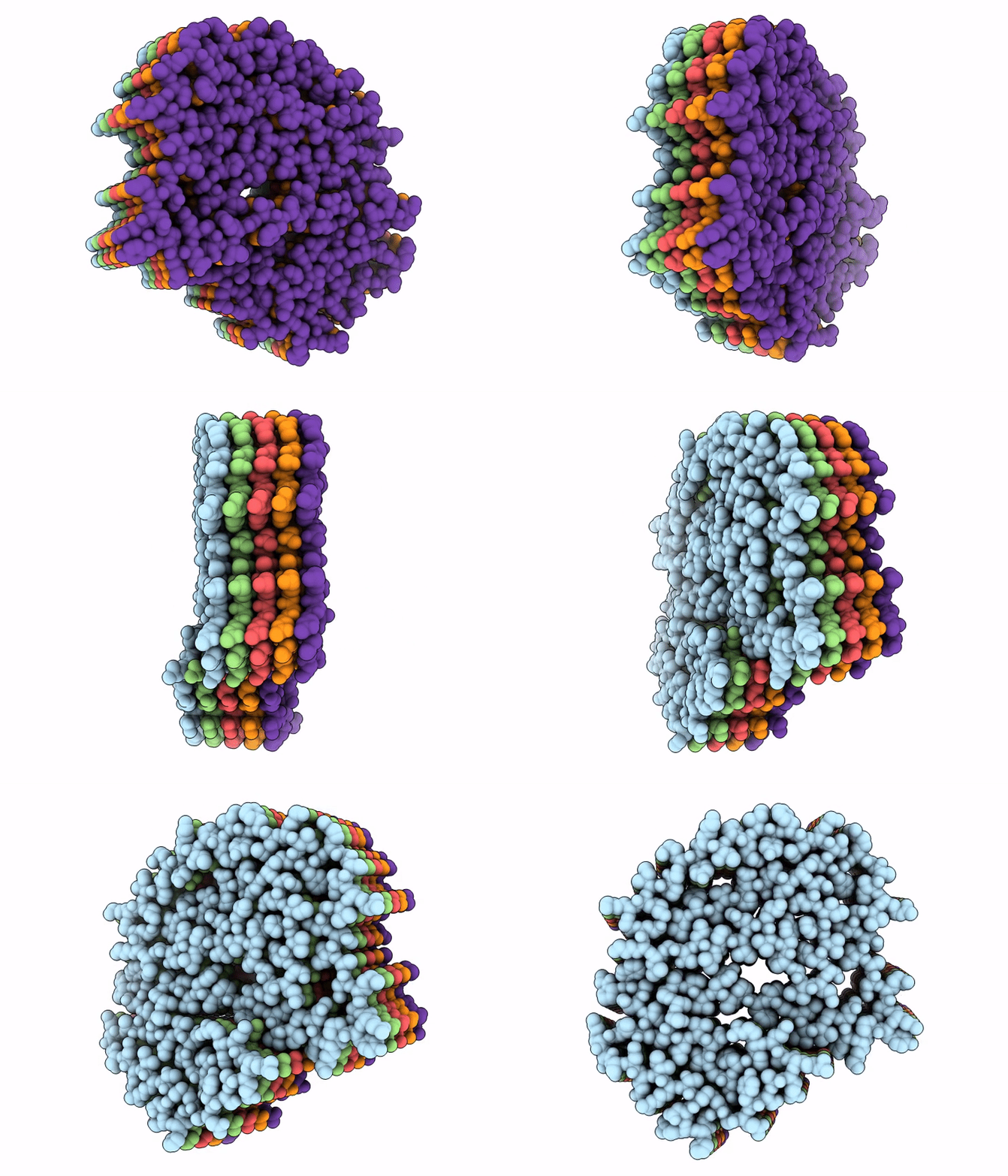
9NON image
Deposition Date 2025-03-10
Release Date 2026-02-11
Last Version Date 2026-04-29
Entry Detail
PDB ID:
9NON
Keywords:
Title:
Cryo-EM structure of amyloid fibril isolated from the kidney of a variant Alect2-I40V amyloidosis patient
Biological Source:
Source Organism(s):
Homo sapiens (Taxon ID: 9606)
Method Details:
Experimental Method:
Resolution:
2.40 Å
Aggregation State:
FILAMENT
Reconstruction Method:
HELICAL
Macromolecular Entities
Structures with similar UniProt ID
Protein Blast
Polymer Type:polypeptide(L)
Molecule:Leukocyte cell-derived chemot
Gene (Uniprot):LECT2
Chain IDs:A (auth: B), B (auth: C), C (auth: A), D, E
Chain Length:133
Number of Molecules:5
Biological Source:Homo sapiens
Ligand Molecules
Primary Citation
Structural polymorphism of ex-vivo ALECT2 amyloid fibrils revealed by cryo-EM.
Nat Commun ? ? ? (2026)
PMID: 41965342 DOI: 10.1038/s41467-026-71223-3

Abstact

ALECT2 amyloidosis is a rare systemic disease characterized by the pathological deposition of leukocyte cell-derived chemotaxin-2 (LECT2) as amyloid fibrils, primarily affecting the kidneys and liver. The molecular mechanisms underlying LECT2 aggregation remain poorly defined, hindering diagnostic and therapeutic development. Here, we present cryo-electron microscopy structures of ex-vivo ALECT2 fibrils extracted from a patient's kidney. We identified three fibril polymorphs: a predominant single-protofilament morphology and two minor double-protofilament morphologies. The dominant single-protofilament morphology comprises the full-length 133-residue LECT2 protein and retains all three native disulfide bonds. Low-resolution reconstructions of double-protofilament morphologies suggest they adopt a similar fold to the single protofilament morphology, but form paired assemblies with different inter-filament interfaces. Mass spectrometry also reveals acetylation within the fibrils. These findings offer critical insights into the structural basis of ALECT2 amyloid formation and identify molecular features that could inform future diagnostic and therapeutic approaches.

Legend

Protein

Chemical

Disease

Primary Citation of related structures
Feedback Form
Name
Email
Institute
Feedback