

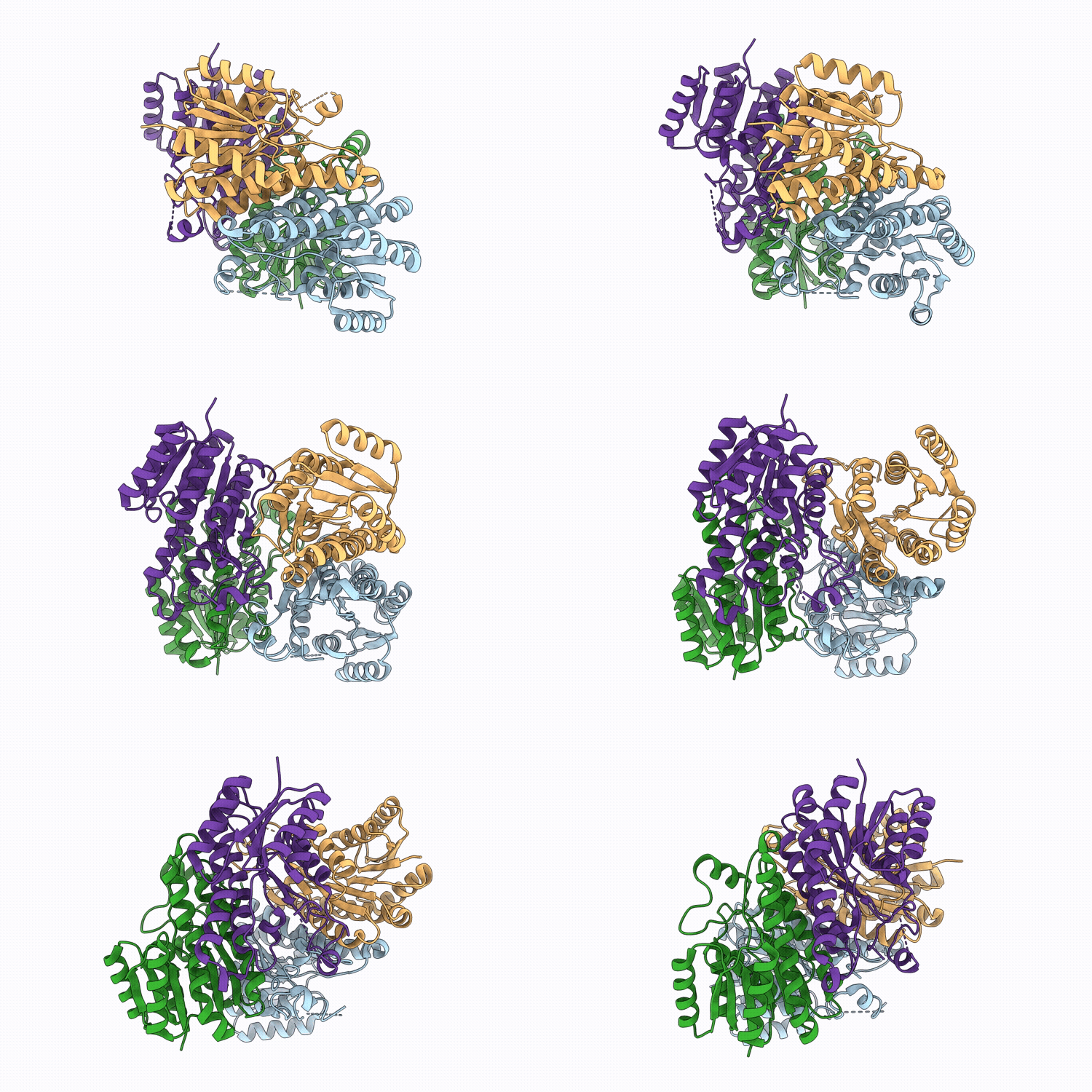
9NG1 image
Deposition Date 2025-02-21
Release Date 2026-05-20
Last Version Date 2026-05-20
Entry Detail
PDB ID:
9NG1
Keywords:
Title:
Crystal structure of FabG4 from Pseudomonas putida KT2440
Biological Source:
Source Organism(s):
Expression System(s):
Method Details:
Experimental Method:
Resolution:
1.91 Å
R-Value Free:
0.19
R-Value Work:
0.17
R-Value Observed:
0.17
Space Group:
P 21 21 21

Macromolecular Entities
Structures with similar UniProt ID
Protein Blast
Polymer Type:polypeptide(L)
Molecule:2,3-dihydroxy-2,3-dihydro-p-c
Chain IDs:A, B, C, D
Chain Length:268
Number of Molecules:4
Biological Source:Pseudomonas putida
Primary Citation
Protein-Protein Complex Stability Controls Substrate Scope in a beta-Ketoacyl-ACP Reductase Specific for Medium Chains.
Angew.Chem.Int.Ed.Engl. 64 e202508316 e202508316 (2025)
PMID: 40891111 DOI: 10.1002/anie.202508316

Abstact

Assembly-line enzymes carry out multistep synthesis of important metabolites by using acyl carrier proteins (ACPs) to shuttle intermediates along defined sequences of active sites. Despite longstanding interest in reprogramming these systems for metabolic engineering and biosynthetic chemistry, the mechanisms underlying their reaction order remain poorly understood and difficult to control. Here we describe a beta-ketoacyl-ACP reductase from Pseudomonas putida (PpFabG4) with an unusual selectivity for medium chains and use it to explore the molecular basis of substrate specificity in enzymes that pull intermediates from fatty acid synthesis, a common route to specialized products. X-ray crystallography shows no obvious barriers to short-chain binding. Molecular simulations and supporting mutational analyses indicate that substrate preference arises instead from a weak enzyme-ACP interaction that is stabilized by medium acyl chains but not by short chains. Indeed, mutations that strengthen this interaction for PpFabG4 or weaken it for EcFabG, an Escherichia coli beta-ketoacyl-ACP reductase with a broad substrate specificity, can enhance or reduce activity on short-chain substrates by over 100-fold. Our findings show how the stability of enzyme-ACP interactions can control substrate scope in promiscuous enzymes and guide the exchange of intermediates between (and within) assembly-line systems.

Legend

Protein

Chemical

Disease

Primary Citation of related structures
Feedback Form
Name
Email
Institute
Feedback