

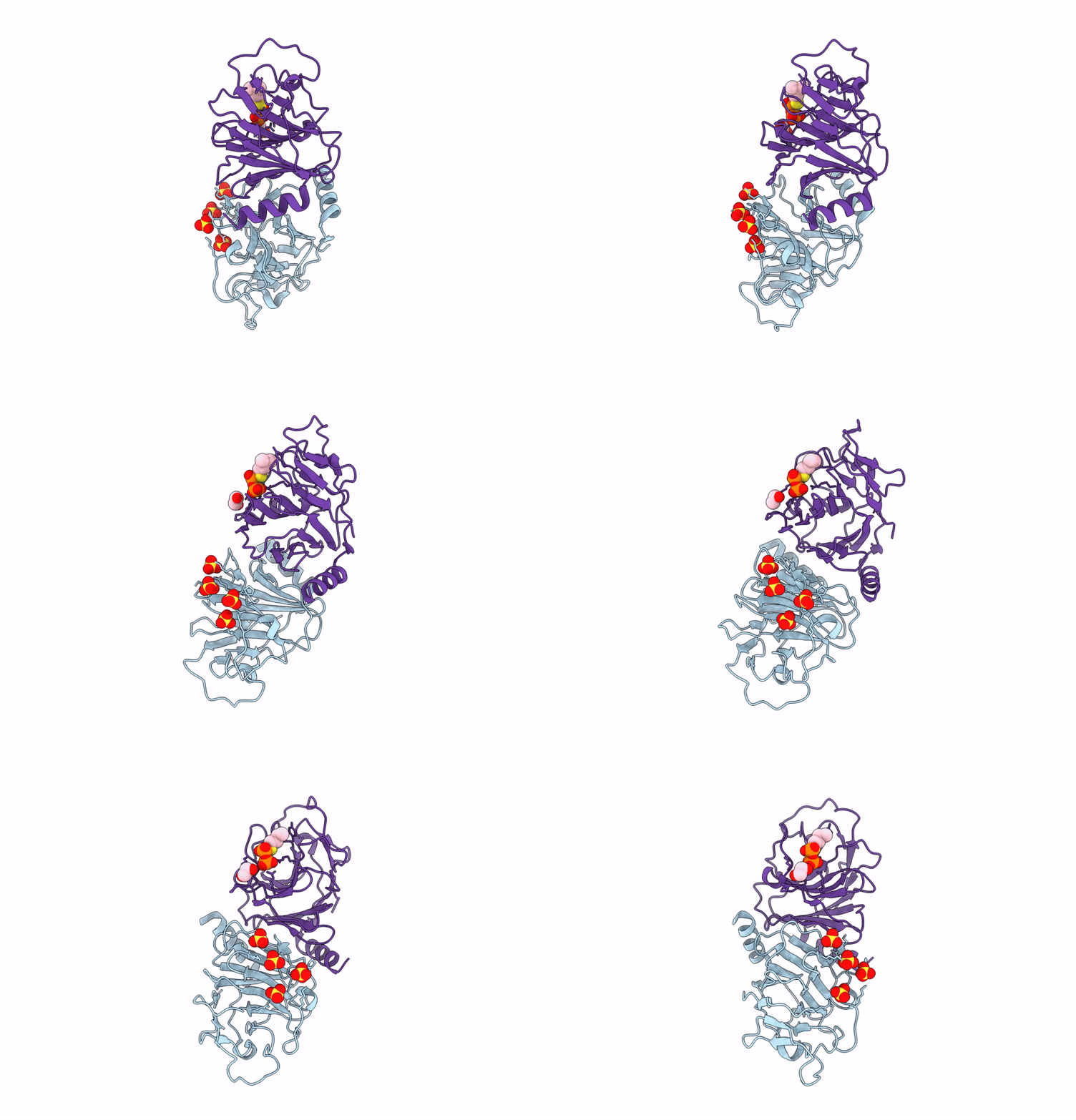
9LN2 image
Deposition Date 2025-01-20
Release Date 2025-05-14
Last Version Date 2025-05-14
Entry Detail
PDB ID:
9LN2
Title:
Crystal Structure of Intracellular B30.2 Domain of VpBTN3 in Complex with DMASPP
Biological Source:
Source Organism(s):
Vicugna pacos (Taxon ID: 30538)
Expression System(s):
Method Details:
Experimental Method:
Resolution:
1.77 Å
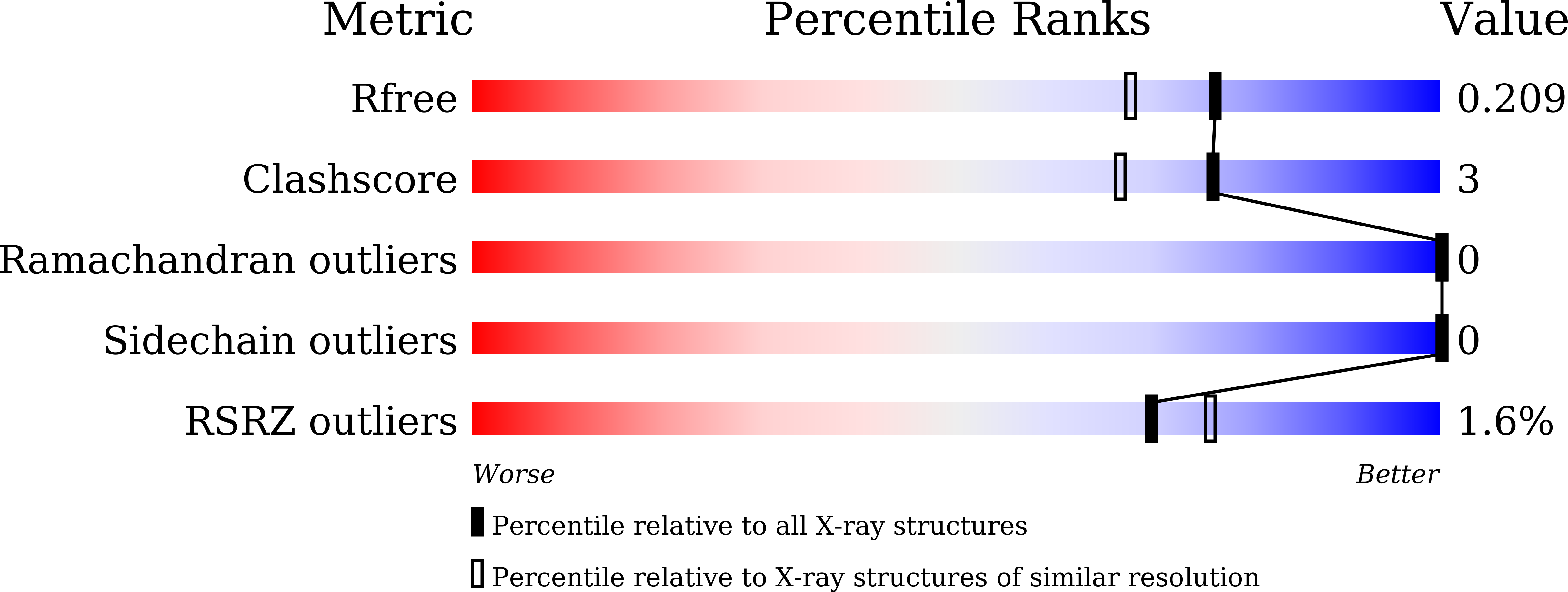
R-Value Free:
0.20
R-Value Work:
0.15
R-Value Observed:
0.15
Space Group:
P 21 21 21
Macromolecular Entities
Structures with similar UniProt ID
Protein Blast
Polymer Type:polypeptide(L)
Molecule:Butyrophylin 3
Gene (Uniprot):Btn3
Chain IDs:A, B
Chain Length:242
Number of Molecules:2
Biological Source:Vicugna pacos
Primary Citation
Molecular glue binding behavior of phosphoantigens to alpaca butyrophilins.
J. Biol. Chem. 301 108555 108555 (2025)
PMID: 40294650 DOI: 10.1016/j.jbc.2025.108555

Abstact

Vγ9Vδ2 T cells that respond to phosphoantigen (pAg) function as crucial sentinels of the immune system to eradicate pathogen-infected cells and tumor cells. Alpaca (Vicugna pacos) is the first nonprimate species identified to possess the pAg-reactive Vγ9Vδ2 T cell subset. However, the molecular mechanism accounting for the pAg recognition of alpaca Vγ9Vδ2 T cells remains unclear. Here, we report the crystal structures of alpaca butyrophilin 3 (VpBTN3) B30.2 domain in complex with the exogenous pAg analog, HMBPP-08, which is a valuable tool for studying the mechanism of butyrophilin-dependent Vγ9Vδ2 T cell activation, and the endogenous pAg analogue, dimethylallyl (S)-thiolodiphosphate (DMASPP). We elucidated that the function of pAgs is governed by their structural differences. Notably, DMASPP acts as a molecular glue in the interaction between the intracellular B30.2 domains of heterologous butyrophilins in alpaca and human. Interestingly, although HMBPP-08 has stronger affinity than DMASPP to VpBTN3 B30.2 domain, HMBPP-08 did not promote heterologous VpBTNs interaction. These findings establish a novel theoretical framework elucidating the mechanisms of Vγ9Vδ2 T cell activation and demonstrate the conserved evolutionary mechanisms underlying cross-species immune adaptation.

Legend

Protein

Chemical

Disease

Primary Citation of related structures
Feedback Form
Name
Email
Institute
Feedback