

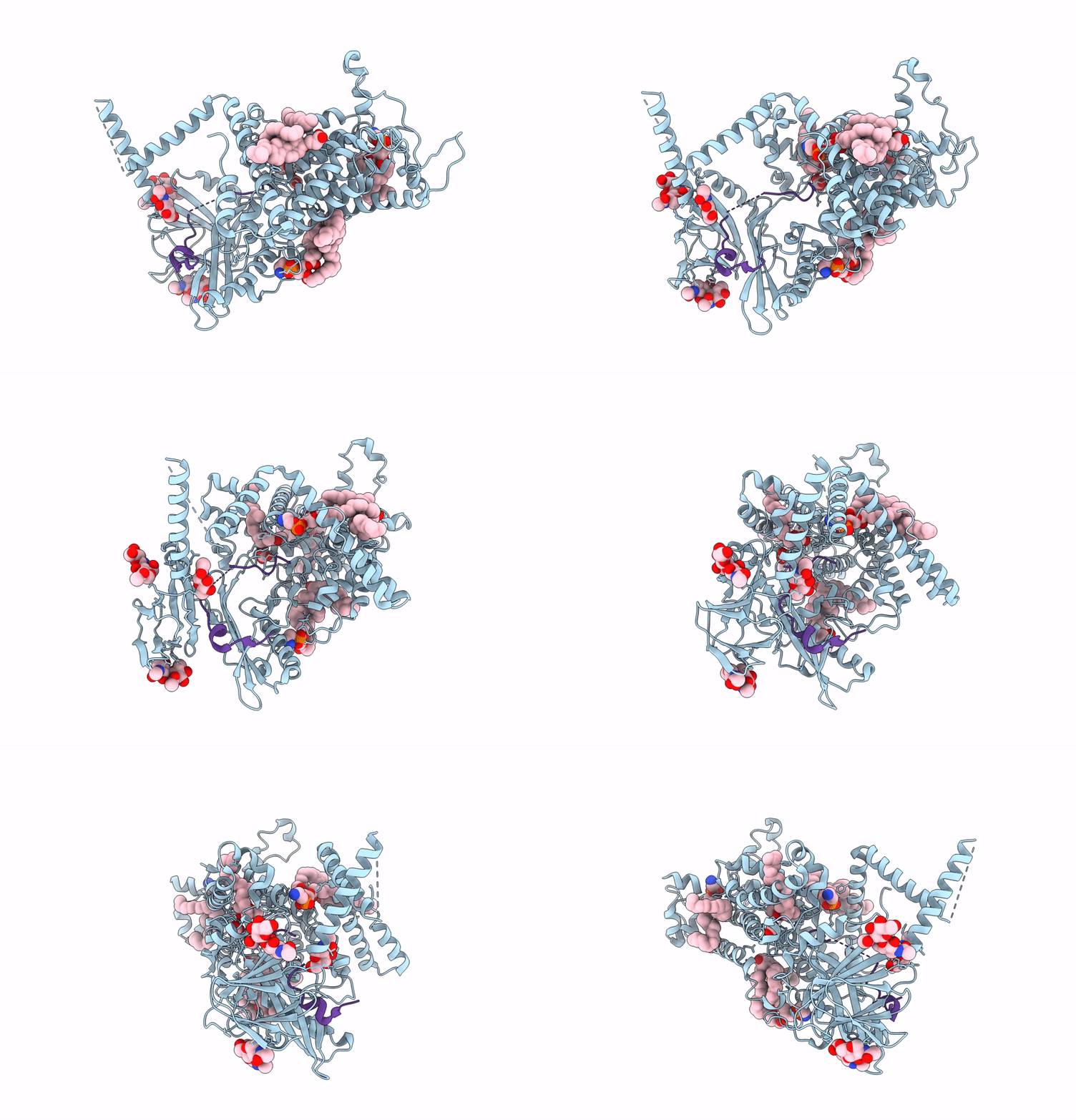
9L54 image
Deposition Date 2024-12-22
Release Date 2025-10-22
Last Version Date 2026-05-06
Entry Detail
PDB ID:
9L54
Title:
cryo-EM structure of Vitamin K-dependent gamma-carboxylase complexed with Vitamin K1 2,3-epoxide
Biological Source:
Source Organism(s):
Homo sapiens (Taxon ID: 9606)
Expression System(s):
Method Details:
Experimental Method:
Resolution:
3.04 Å
Aggregation State:
PARTICLE
Reconstruction Method:
SINGLE PARTICLE
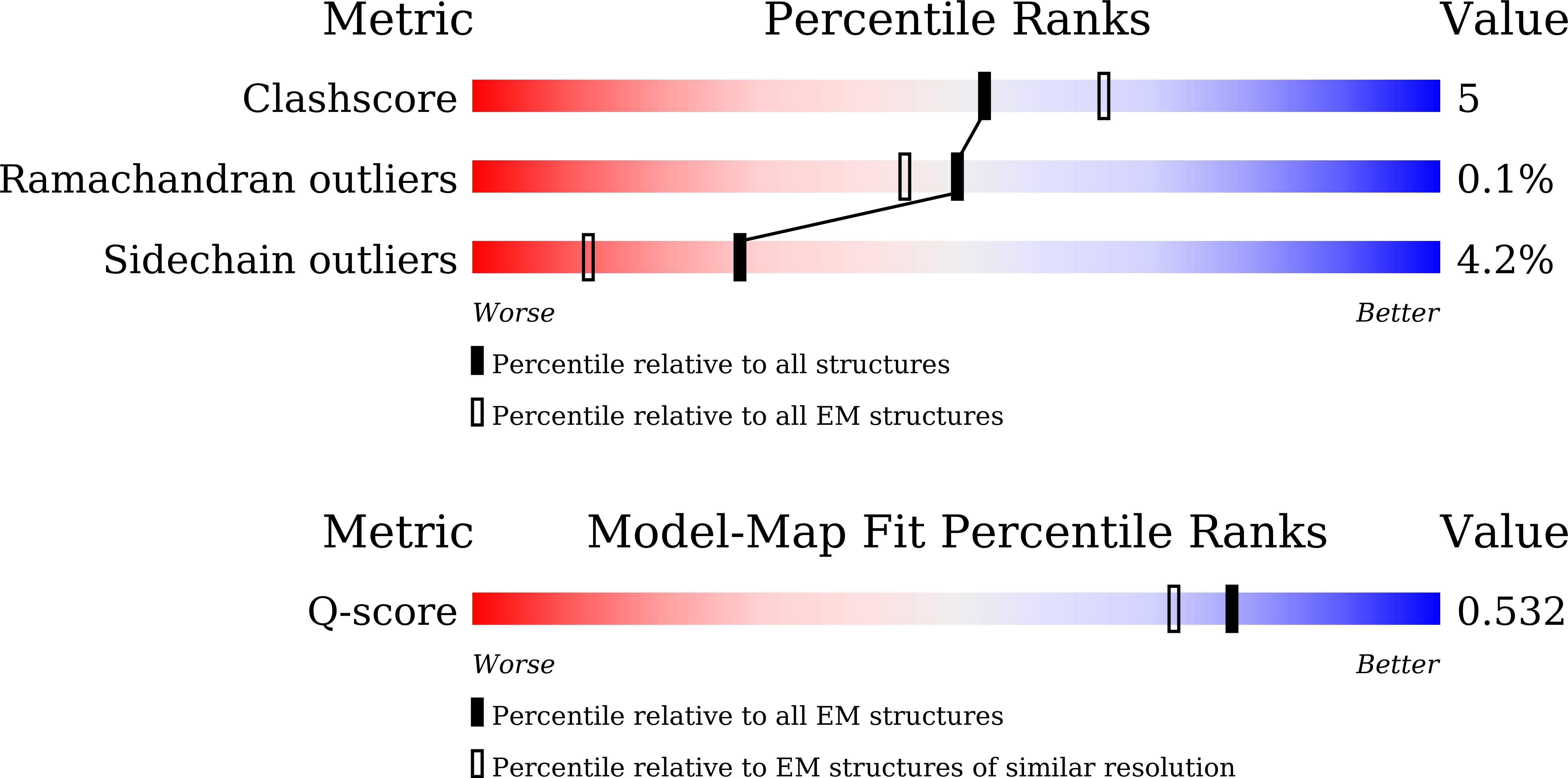
Macromolecular Entities
Structures with similar UniProt ID
Protein Blast
Polymer Type:polypeptide(L)
Molecule:Vitamin K-dependent gamma-car
Gene (Uniprot):GGCX
Chain IDs:A
Chain Length:698
Number of Molecules:1
Biological Source:Homo sapiens
Structures with similar UniProt ID
Protein Blast
Polymer Type:polypeptide(L)
Molecule:Vitamin K-dependent protein S
Gene (Uniprot):PROS1
Chain IDs:B
Chain Length:27
Number of Molecules:1
Biological Source:Homo sapiens
Primary Citation
Structural insight into bicarbonate-mediated carboxylation by human vitamin K-dependent carboxylase.
Nat Commun 16 10480 10480 (2025)
PMID: 41290650 DOI: 10.1038/s41467-025-65488-3

Abstact

Vitamin K-dependent (VKD) carboxylation, mediated by gamma-glutamyl carboxylase (GGCX), is essential for the maturation of VKD proteins involved in critical physiological processes such as blood clotting, vascular calcification and bone metabolism. Here, we present cryo-electron microscopic structures of human GGCX alone and in complex with VKD proteins, vitamin K, and inhibitor anisindione. GGCX specifically recognizes diverse VKD substrates through high-affinity propeptide binding, while substrates like osteocalcin utilize a secondary exosite to enhance interaction. GGCX employs a conserved dipeptide anchoring mechanism that ensures processive carboxylation of glutamate residues. GGCX undergoes allosteric conformational changes that enable coordinated binding of vitamin K and glutamate substrates, facilitating the catalytic process. Additionally, we reveal a bicarbonate-mediated CO(2) capture mechanism that is conserved across bacterial and eukaryotic species, suggesting that this strategy for CO(2) utilization is both ancient and universal. Our findings lay the foundation for developing targeted anticoagulant drugs and innovative enzymatic CO(2) fixation strategies.

Legend

Protein

Chemical

Disease

Primary Citation of related structures
Feedback Form
Name
Email
Institute
Feedback