

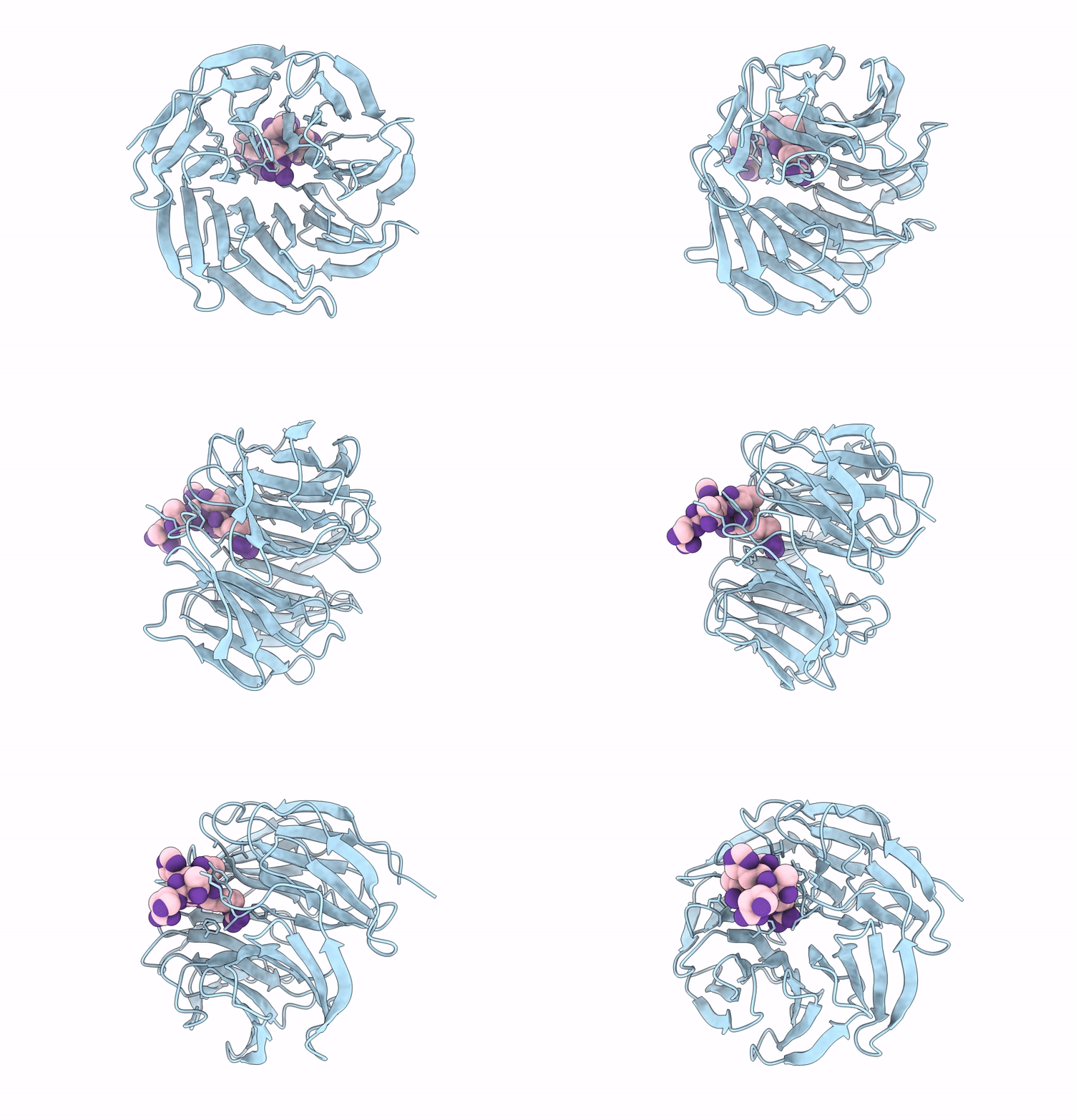
9L0V image
Deposition Date 2024-12-13
Release Date 2025-10-22
Last Version Date 2026-03-04
Entry Detail
PDB ID:
9L0V
Keywords:
Title:
Structure of WDR5 in complex with WIN motif containing ZSCAN10
Biological Source:
Source Organism(s):
Homo sapiens (Taxon ID: 9606)
Expression System(s):
Method Details:
Experimental Method:
Resolution:
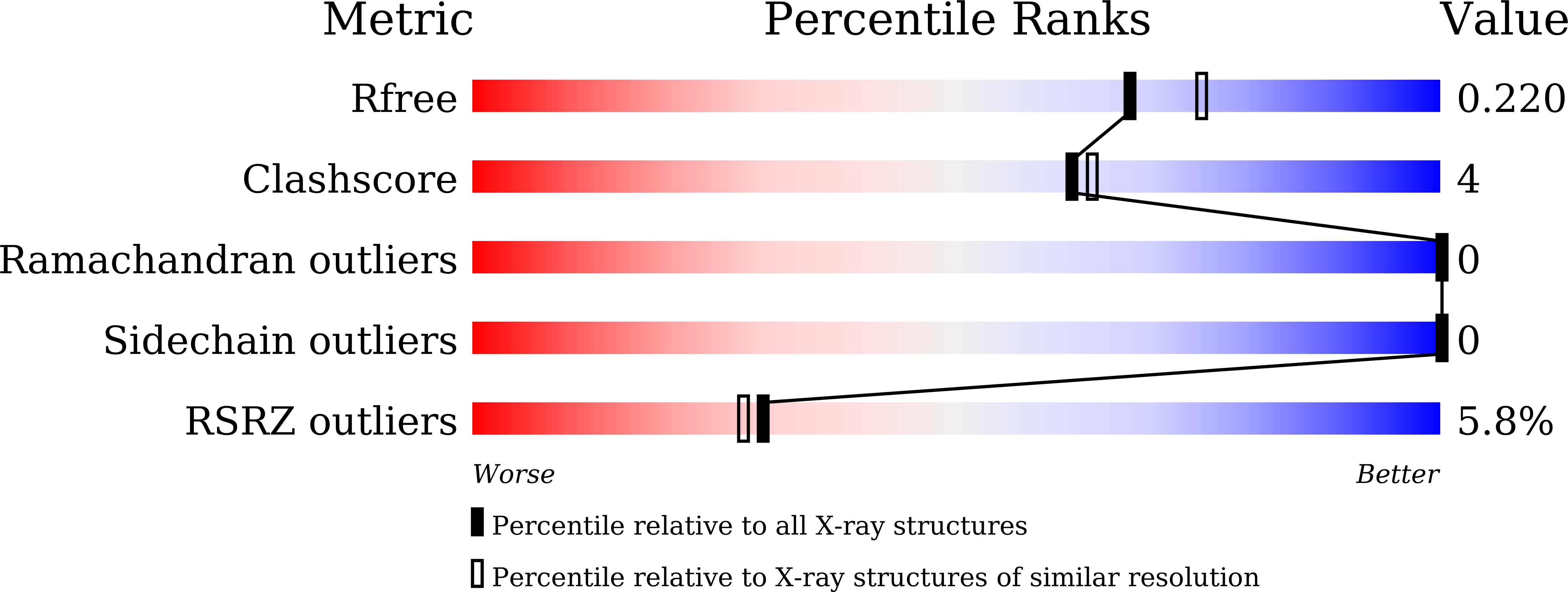
2.00 Å
R-Value Free:
0.22
R-Value Work:
0.17
R-Value Observed:
0.18
Space Group:
C 1 2 1
Macromolecular Entities
Structures with similar UniProt ID
Protein Blast
Polymer Type:polypeptide(L)
Molecule:WD repeat-containing protein
Gene (Uniprot):WDR5
Chain IDs:A
Chain Length:315
Number of Molecules:1
Biological Source:Homo sapiens
Structures with similar UniProt ID
Protein Blast
Polymer Type:polypeptide(L)
Molecule:Zinc finger and SCAN domain-c
Gene (Uniprot):ZSCAN10
Chain IDs:B (auth: C)
Chain Length:6
Number of Molecules:1
Biological Source:Homo sapiens
Primary Citation
Structural characterization of endogenous microprotein EMBOW reveals an alternative MRT motif for WDR5-interacting site recognition.
FEBS J. ? ? ? (2026)
PMID: 41689289 DOI: 10.1111/febs.70450

Abstact

WD repeat-containing protein 5 (WDR5) is a conserved chromatin regulator that engages numerous binding partners via a central arginine-binding pocket known as the WDR5-interacting (WIN) site. Endogenous microprotein binder of WDR5 (EMBOW, also known as SCRIB overlapping open reading frame protein), recently identified as an endogenous WDR5 interactor, lacks the canonical [ACR]-R-[TASCK] WIN motif, and its mode of recognition remains unknown. Here, we present the 1.80 A crystal structure of WDR5 in complex with an EMBOW-derived peptide. Our structural analysis reveals that EMBOW engages the WIN site through a Met1-Arg2-Thr3 (MRT) triad. The bulky Met1 residue occupies the conserved WIN site pocket, and mutation of Thr3 to valine reduces binding affinity, while N-terminal Gly-Ser insertion preserves binding, indicating a degree of structural tolerance. Binding assays and mutational analysis underscore the functional importance of the MRT triad. Furthermore, structural and biochemical studies of MRT-containing peptides from RNA-binding protein 15 (RBM15) and zinc finger and SCAN domain-containing protein 10 (ZSCAN10) suggest that this motif may serve as an alternative WIN site recognition signature. In summary, our findings define the molecular basis of EMBOW-WDR5 interaction and expand the sequence space compatible with WIN site engagement.

Legend

Protein

Chemical

Disease

Primary Citation of related structures
Feedback Form
Name
Email
Institute
Feedback