

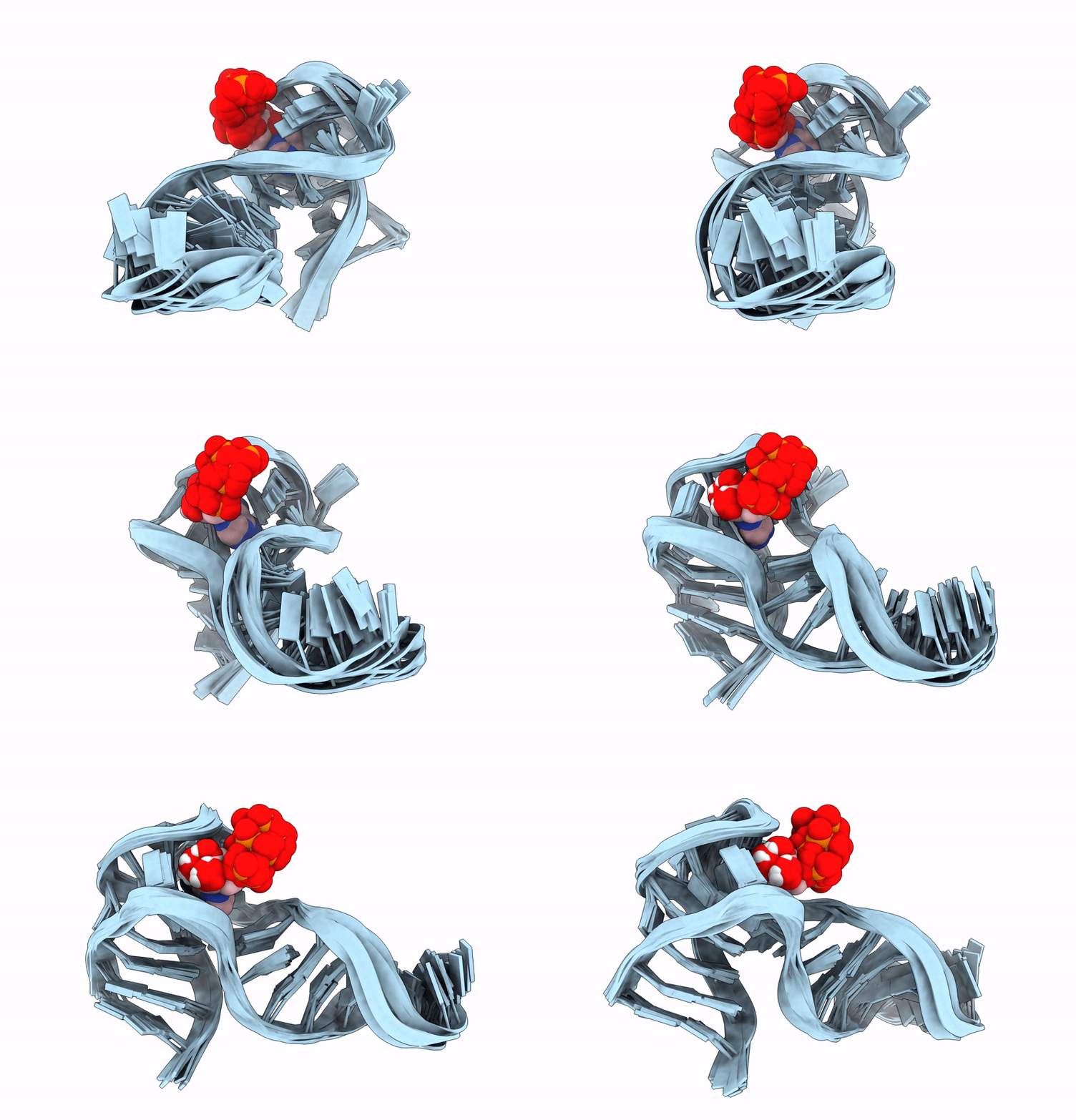
9KTJ image
Deposition Date 2024-12-02
Release Date 2025-08-06
Last Version Date 2026-02-18
Entry Detail
PDB ID:
9KTJ
Keywords:
Title:
Solution NMR structures of ATP-binding DNA aptamer in complex with ATP
Biological Source:
Source Organism(s):
Method Details:
Experimental Method:
Conformers Calculated:
100
Conformers Submitted:
10
Selection Criteria:
structures with the lowest energy

Macromolecular Entities
Polymer Type:polydeoxyribonucleotide
Molecule:DNA (34-MER)
Chain IDs:A
Chain Length:34
Number of Molecules:1
Biological Source:synthetic construct
Ligand Molecules
Primary Citation
Structural basis and affinity improvement for an ATP-binding DNA aptamer.
Proc. Natl. Acad. Sci. U.S.A. 122 e2506491122 e2506491122 (2025)
PMID: 40811466 DOI: 10.1073/pnas.2506491122

Abstact

DNA aptamers that bind small molecules with high affinity have revolutionized the fields of biosensing and bioimaging. Recently, a DNA aptamer named 1301b has been identified as the most potent DNA aptamer for the binding of adenosine triphosphate (ATP) with a dissociation constant (KD) of ~2.7 µM. However, the structural basis and recognition mechanism remain unclear, hindering further development of this DNA aptamer. In this study, we first design a shortened DNA aptamer namely 1301b_v1 that retains a good affinity for ATP and then determine the tertiary structure of 1:1 1301b_v1-ATP binding complex using solution NMR spectroscopy. The overall complex structure shows an "L" shape architecture with the binding pocket formed by two internal loops. The ATP intercalates into the binding pocket through forming hydrogen bond with G14 and stacking with T8·A28 and G9. We also reveal an adaptive binding mechanism where the DNA aptamer switches from a semifolded state to a stable tertiary structure upon ATP binding. Based on the structure-function relationship, we introduce 2'-O-methyl modification to residues in the central junction and obtain a DNA aptamer named 9/10/16OMe with a KD of ~0.7 µM for the binding of ATP. These results underscore the ability of DNA molecules to form intricate three-dimensional folds with sophisticated functionality, opening up avenues for designing novel DNA-based molecular tools.

Legend

Protein

Chemical

Disease

Primary Citation of related structures
Feedback Form
Name
Email
Institute
Feedback