

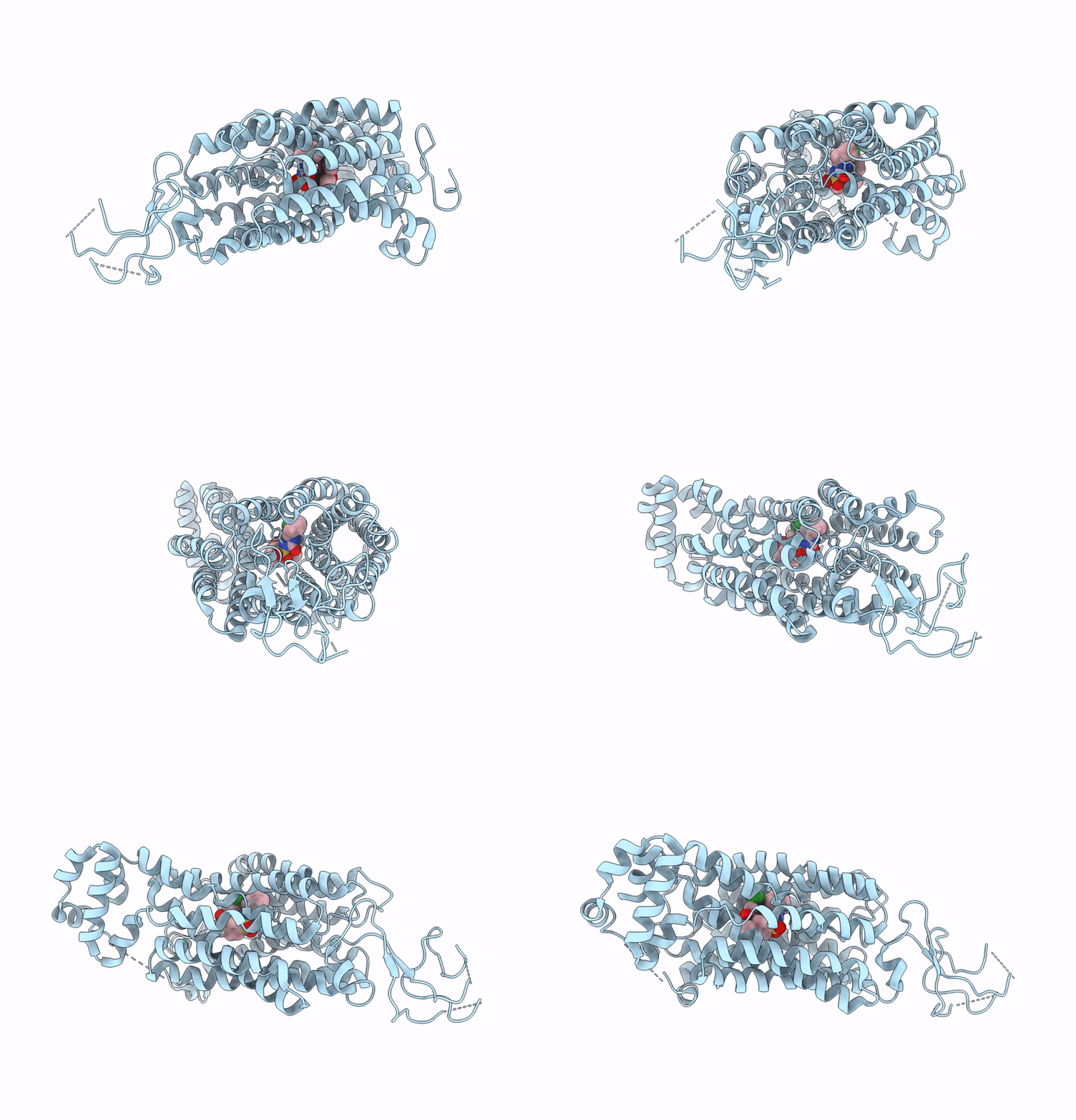
9J06 image
Deposition Date 2024-08-02
Release Date 2025-08-13
Last Version Date 2026-02-18
Entry Detail
PDB ID:
9J06
Title:
Cryo-EM structure of hOAT1 in complex with glibenclamide
Biological Source:
Source Organism(s):
Homo sapiens (Taxon ID: 9606)
Expression System(s):
Method Details:
Experimental Method:
Resolution:
3.68 Å
Aggregation State:
PARTICLE
Reconstruction Method:
SINGLE PARTICLE

Macromolecular Entities
Structures with similar UniProt ID
Protein Blast
Polymer Type:polypeptide(L)
Molecule:Solute carrier family 22 memb
Gene (Uniprot):SLC22A6
Chain IDs:A
Chain Length:563
Number of Molecules:1
Biological Source:Homo sapiens
Ligand Molecules
Primary Citation
Structures and membrane interactions of human OAT1 in complex with clinical used drugs.
Sci Adv 11 eads5405 eads5405 (2025)
PMID: 39951534 DOI: 10.1126/sciadv.ads5405

Abstact

Organic anion transporters (OATs) in mammals mediate the renal excretion of numerous structurally diverse organic anionic compounds. Therapeutically inhibiting OATs has emerged as a strategy to modulate the elimination or retention of these substrates. Among them, OAT1 plays a pivotal role in the pharmacokinetics and drug-drug interactions of a wide range of prescription medications. Despite extensive structural investigations, the molecular structure, and basis of polyspecific anionic drug recognition of human OAT1 (hOAT1) have remained elusive. Here, we present cryogenic electron microscopy structures of hOAT1 and its complexes with the antiviral drug cidofovir and an FDA-approved type II diabetes medication glibenclamide, respectively. Our findings reveal that both cidofovir and glibenclamide bind to a central binding site, capturing the transporter in inward-facing conformations. These structures elucidate how specific residues within the central site orchestrate the binding of chemically diverse inhibitors and provide a structural basis for the drug recognition mechanism of hOAT1.

Legend

Protein

Chemical

Disease

Primary Citation of related structures
Feedback Form
Name
Email
Institute
Feedback